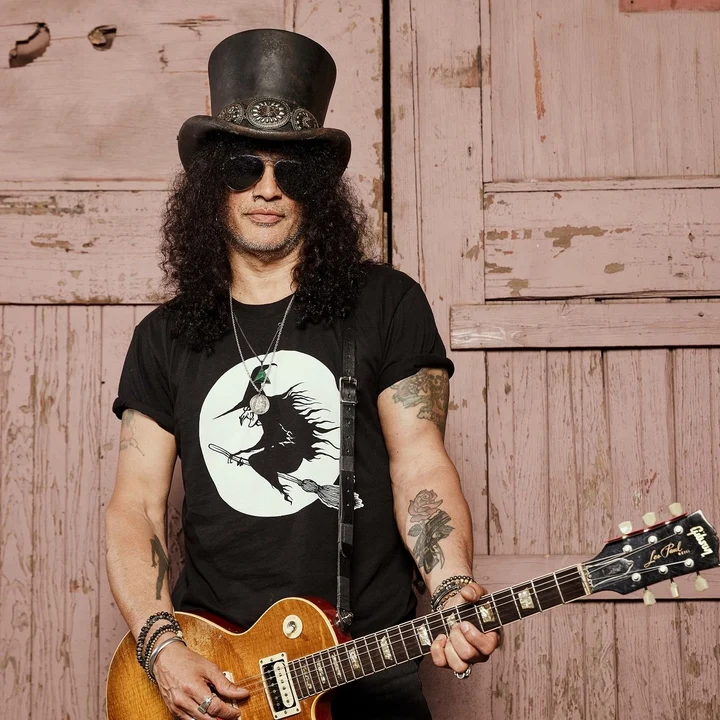
Slash says one studio session with Bob Dylan is a career moment he still regrets. The Guns N’ Roses guitarist told interviewers he laid down what he calls “one of the best one-offs” of his career for Dylan in the 1990s — only to be told the solo was being removed because, in Dylan’s words, it “sounded like Guns N’ Roses.” Slash called the collaboration “a drag” and admits he “really regrets” how it went.
Slash’s recollection is blunt and revealing. He says producer Don Was approached him after a session with Iggy Pop; excited because he grew up on Dylan, Slash accepted the call. He remembers laying down a solo he was proud of, but then watching it get scrapped at the last minute. “Bob Dylan then is not the same as Bob Dylan now,” Slash observed, adding that he hadn’t been following Dylan’s stylistic shifts and misread what the artist wanted from the session.
That single decision — removing the solo because it was “too Guns N’ Roses” — illustrates a deeper mismatch in sensibility. Dylan’s studio and live philosophy across the 1990s leaned toward stripped-down, sometimes intentionally rough or ragged textures; polished, high-voltage rock runs didn’t always fit his sonic goals. Slash framed the split as a clash of musical identities: a virtuoso rock soloist meeting a songwriter who, by that era, preferred weathered, less-glossy sonic palettes.
Slash isn’t shy about what the experience felt like. In interviews he’s described the session as disappointing precisely because he’d gone in as a fan and gave what he considered a great take. For Slash, the episode is a reminder that technical skill and star power don’t guarantee chemistry — especially when two artists are working from very different creative rulebooks.
The story also tracks with long-standing reports about Dylan’s studio habits. Across his career Dylan has been known to toss out perfectly good takes, shift arrangements mid-session, and deliberately undercut polish in favor of immediacy or imperfection — choices that, for many collaborators, can be confounding. For an arena-rock soloist whose signature sound helped define an era, being asked to dial back felt, to Slash, like being asked not to be himself.
What this anecdote reveals is twofold: a portrait of Bob Dylan as an artist who continually reinvents his priorities and an honest, human moment from Slash — an artist who rarely speaks of regret — admitting that not every legendary pairing produces magic. Both men remain towering figures in rock music, but the session stands as proof that even icons can misread one another.