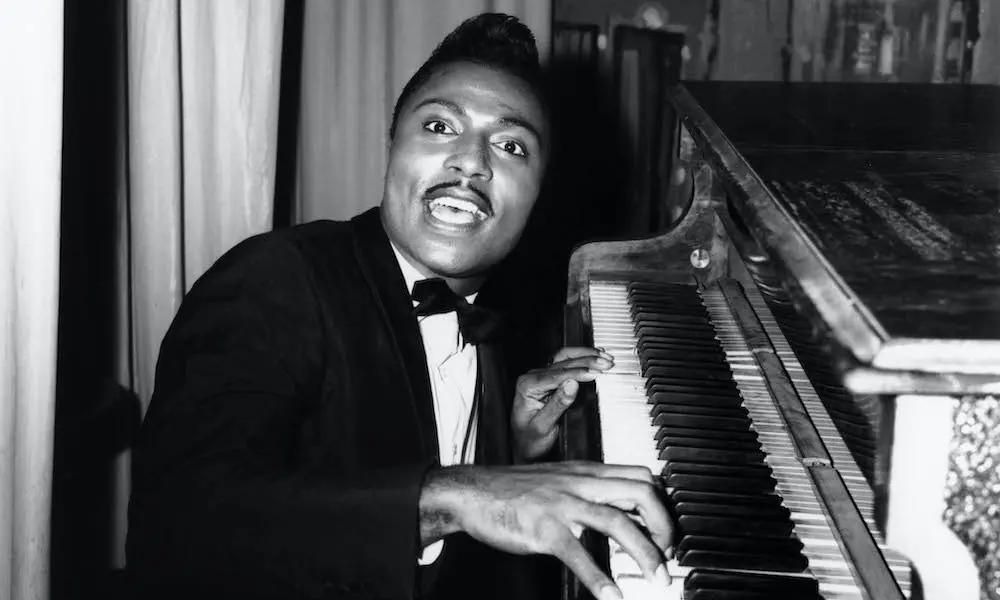
Little Richard’s story is one of raw genius, audacity, and transformation. Born Richard Wayne Penniman on December 5, 1932, in Macon, Georgia, he grew up in a deeply religious family where gospel music shook the walls of the church. But even in childhood, his voice — powerful, elastic, and utterly uncontainable — didn’t fit neatly into anyone’s expectations. Too loud for gospel, too wild for pop, and too unconventional for polite society, Little Richard became the spark that helped ignite a revolution.
His breakthrough came in the mid-1950s with Tutti Frutti, a record so explosive it feels like a fire alarm. That moment changed the trajectory of popular music. His delivery was a shockwave: frantic piano, howling vocals, and rhythms that made people get up from their seats whether they wanted to or not. The song charted across America and Europe, breaking racial and musical barriers at a time when the world behind it remained segregated.
That first burst of success was followed by a string of classics:
• Long Tall Sally
• Lucille
• Good Golly, Miss Molly
• Rip It Up
• Keep A-Knockin’
Onstage he was mesmerizing — sequined outfits, mascara, pounding tempos, a pompadour that defied gravity, and performances that felt more like spiritual possession than entertainment. He ran and jumped across the piano bench, shrieked and wailed, and turned concerts into controlled chaos. Before audiences ever saw Jimi Hendrix, Prince, or Freddie Mercury, they saw Little Richard invent the template.
Although he achieved massive fame, Little Richard lived between extremes. He pushed boundaries of gender, sexuality, and race with a freedom that terrified conservative America. In interviews he was painfully honest — admitting he never felt entirely accepted by the music industry that profited from his innovations. He walked away from rock and roll at the height of his popularity, turning towards gospel, only to return again when he realized the world still needed his sound.
Few artists have influenced more musicians. The Beatles opened for him. Elvis Presley covered his songs. James Brown, Otis Redding, Bob Dylan, David Bowie, Michael Jackson, Prince, and generations of rock and soul artists acknowledged him as a blueprint. In the words of John Lennon: “Before Elvis there was nothing. After Elvis there was Little Richard.”
Little Richard also helped break down racial barriers in live performance. His audiences in the South were among the first integrated concert crowds many venues had ever seen. When promoters tried to separate Black and white fans with ropes, his music made people vault over them.
Honors followed later, though often years after they were deserved. He was inducted into the Rock and Roll Hall of Fame, the Songwriters Hall of Fame, received a Grammy Lifetime Achievement Award, and was recognized by the Library of Congress. But the truest measure of his success is not trophies, it is transformation. He permanently changed what pop music could look and sound like.
Little Richard died on May 9, 2020, at age 87, but his legacy is still alive in every artist who screams, struts, or dares to be larger than life. His birthday is not just a memorial date; it is a reminder that rock and roll was born from risk, rebellion, and joy. He once said, “I am the originator. I am the emancipator. I am the architect of rock and roll.” History has proven him right.
He turned energy into art and art into revolution. The music world still vibrates with the aftershock.