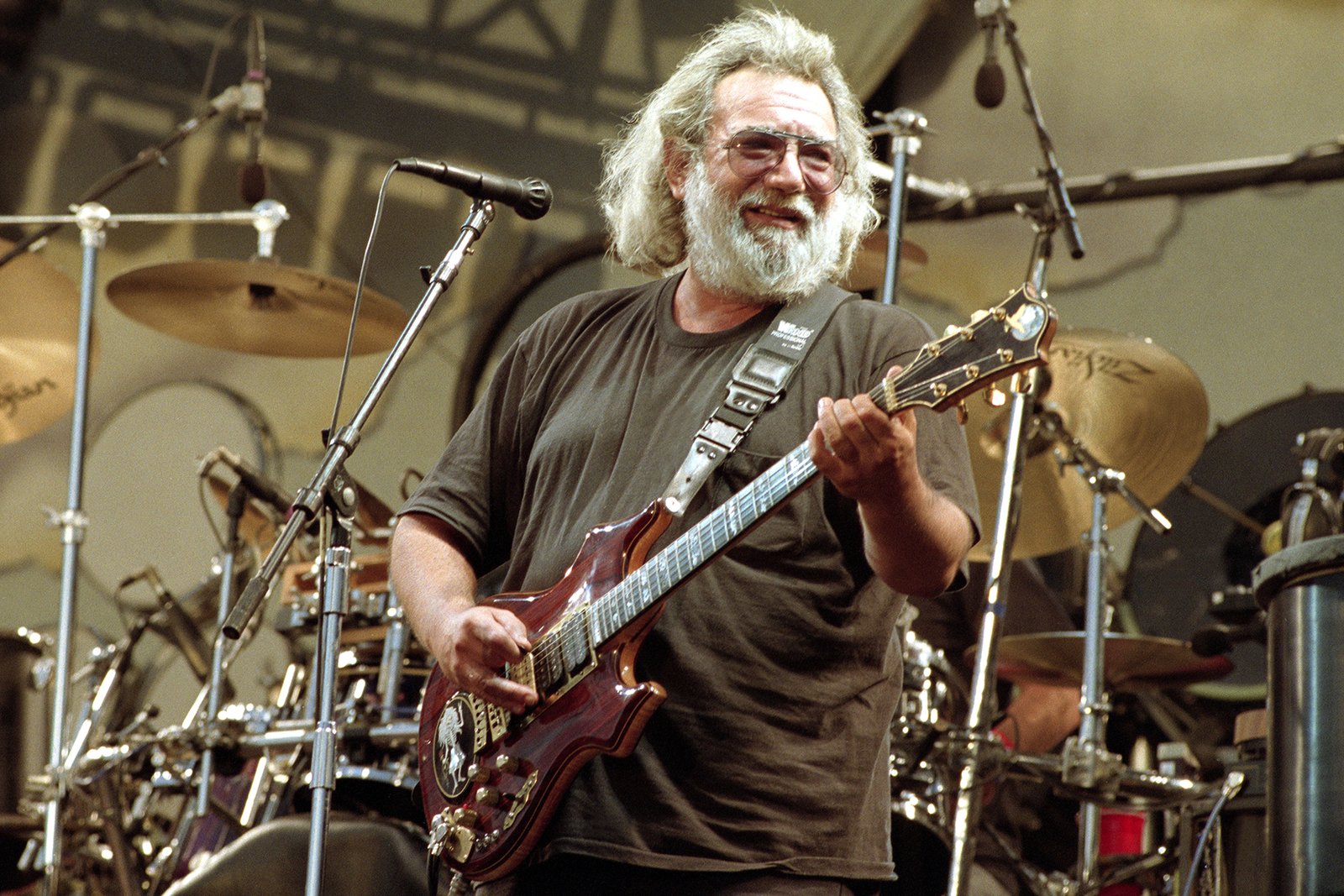
Jerry Garcia — the legendary guitarist and frontman of Grateful Dead — is celebrated as one of rock’s most curious and exploratory musicians, known for constantly pushing the boundaries of sound and improvisation. But despite his deep appreciation for innovation in music, Garcia wasn’t impressed by every major act of his era. In fact, there was one huge rock band he felt simply wasn’t interesting to him.
Garcia’s own musical approach was rooted in exploration rather than conformity. With the Grateful Dead, he helped pioneer an ever-evolving tapestry of psychedelic rock, blues, jazz and Americana that very deliberately moved beyond the conventional shapes of rock and roll. His focus was always on expanding sonic horizons — whether through extended live jams or genre-bending collaborations — rather than repeating tired formulas.
Even when Garcia contributed to other artists’ work, he brought something unique: his pedal steel guitar on Crosby, Stills, Nash & Young’s “Teach Your Children” elevated that song, emphasizing atmosphere and emotional texture more than technical flash.
But when it came to rock’s biggest names, Garcia was selective. Despite growing up with bands like The Rolling Stones, he bluntly stated that they failed to excite him creatively. As he put it:
“The Stones were what I grew up with. It was just a retake of those old Chess records… It wasn’t the music so much that interested me.”
Garcia’s critique wasn’t about the Stones’ success or legacy — they were undeniably one of rock’s most enduring acts — but rather about how their early music, rooted heavily in blues covers and traditional structures, failed to stretch into new territory. In Garcia’s view, their sound was something he already understood and had heard before, lacking the forward-leaning curiosity that propelled his own work.
This perspective fits with how Garcia saw his role in music: not as a replicator of familiar forms, but as someone driven to open doors into uncharted soundscapes. Where other bands repeatedly leaned on blues and established rock tropes, Garcia was drawn to musicians and genres that felt fresh, expansive or emotionally rich — an ethos that would shape both his own work and the Grateful Dead’s legacy.
The Rolling Stones, for their part, moved past their early blues imitation on records like Between the Buttons and Their Satanic Majesties Request, eventually producing classics like Gimme Shelter and Brown Sugar that helped redefine their artistic identity. Even so, Garcia’s remark highlights how differently two rock titans could perceive the same musical landscape.
In short, Garcia’s dismissal of one of rock’s biggest bands as “uninteresting” reflects not disdain for their success, but a musician’s deeper craving for novelty and sonic exploration — a drive that helped make him, and the Grateful Dead, enduring figures well beyond their own era.