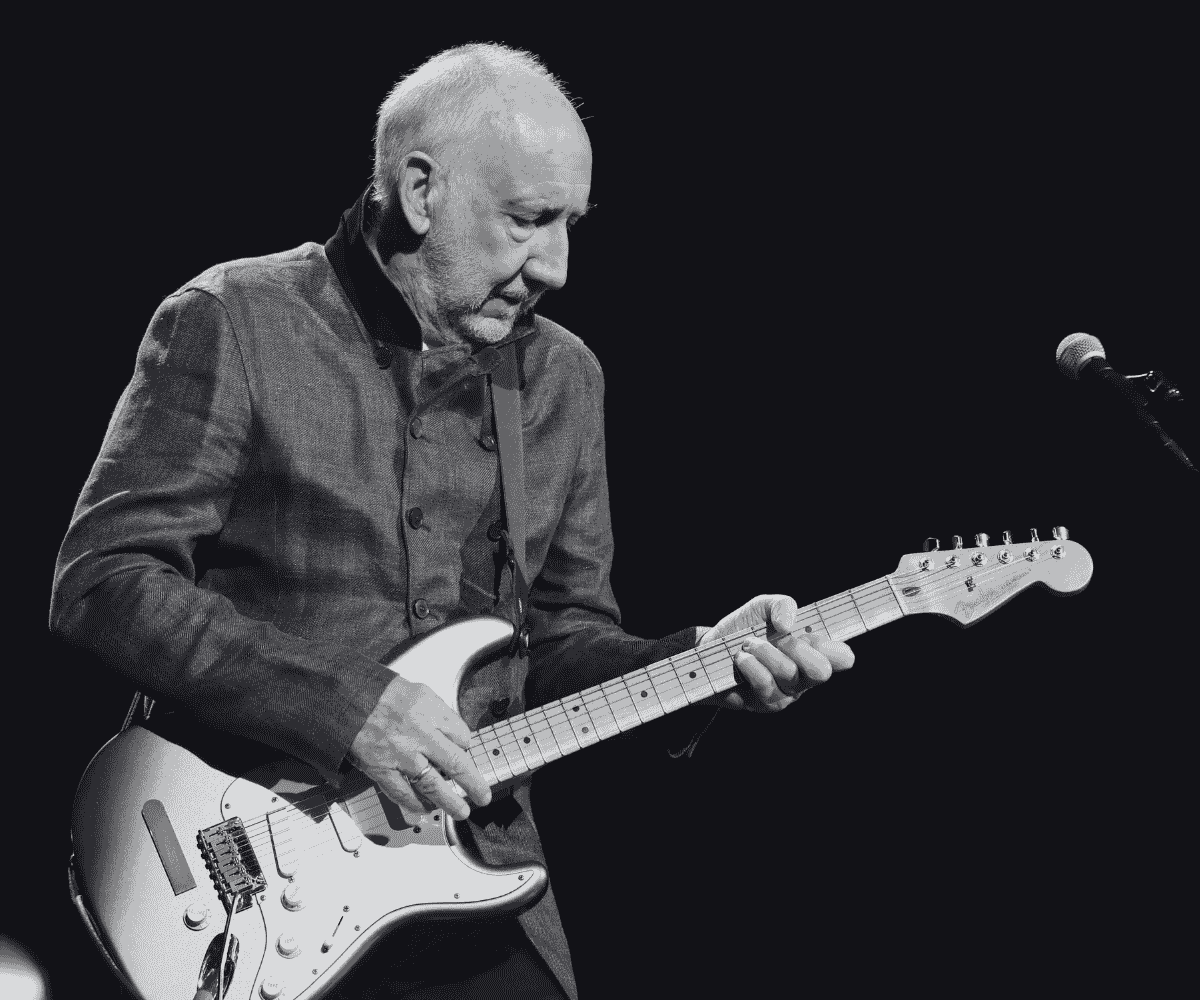
Pete Townshend is widely celebrated as one of rock’s most influential guitarists — a rhythm powerhouse whose windmill strums and explosive chord work helped define the sound of The Who. But in a candid look back at the band’s dynamics, Townshend has openly acknowledged that the role of lead guitarist in The Who wasn’t always what fans assumed. In fact, much of the band’s most striking lead lines came from someone unexpected: bassist John Entwistle.
Throughout his career, Townshend’s approach to guitar was rooted in rhythm. Long before technical lead pyrotechnics became synonymous with rock solos, he focused on driving songs forward with chordal force, inventive syncopation and stage-shaking presence. “I started out as a rhythm player,” he admitted, noting that he often developed his lead parts during recording sessions rather than improvising them onstage.
Townshend’s style was never about flashy flash — even his recorded solos were typically composed ahead of time, reflecting his priority on emotional connection and songcraft rather than shredding speed. Tracks such as “I Can’t Explain,” Tommy’s “Pinball Wizard,” and later work like Heathen’s “Slow Burn” showcase his unique blend of rhythm and melodic lead figures, but they aren’t built in the mold of traditional virtuosic guitar solos.
Despite Townshend’s central role, he has been refreshingly honest about how much lead work his bandmate John Entwistle contributed. In interviews dating back decades, Townshend described an unconventional internal setup: his rhythm playing laid the foundation, while Entwistle frequently stepped into the lead realm — especially when it came to bass parts that functioned like lead guitar lines.
For example, in fan-favorite “My Generation,” it’s Entwistle’s bass that takes the spotlight during the break, a moment typically expected of a lead guitar. Townshend has pointed to other songs as well — like “Dreaming From the Waist” — where Entwistle’s blazing bass lines command attention in ways that rival or exceed conventional guitar solos.
Entwistle himself shed light on this role, explaining that his bass playing was intentionally lead/rhythm rather than purely supportive. In order to recreate The Who’s layered studio sound on stage, he used a plectrum and played in a style that blended rhythm and lead techniques on bass, allowing his parts to stand out in ways not typically expected of the instrument.
Why It Worked — And Why It Confused Fans
The effect was so convincing that early audiences often misunderstood what they were hearing live. Entwistle’s tone — especially when using a Rickenbacker 4001 with lots of treble — cut through like a guitar, leading some listeners to believe Townshend was generating those lead lines when, in reality, it was Entwistle’s bass soaring above the mix.
Townshend has humorously recounted how surprising this realization could be for fans: people would watch him strumming basic chords while hearing what sounded like a blazing lead line — and assume it was Townshend somehow conjuring the sound despite his hands remaining on rhythm parts.
Ultimately, Townshend’s honesty about the band’s inner dynamics doesn’t diminish his role; it expands it. The Who’s sound was a true collaboration, with each member pushing instrument roles beyond conventional boundaries. Townshend’s rhythm work, Entwistle’s expressive bass, Keith Moon’s explosive drumming, and Roger Daltrey’s commanding vocals combined to create something far greater than the sum of its parts.
And by acknowledging Entwistle’s integral lead contributions, Townshend underscores one of rock’s great lessons: that innovation often happens when players don’t stick to the script.