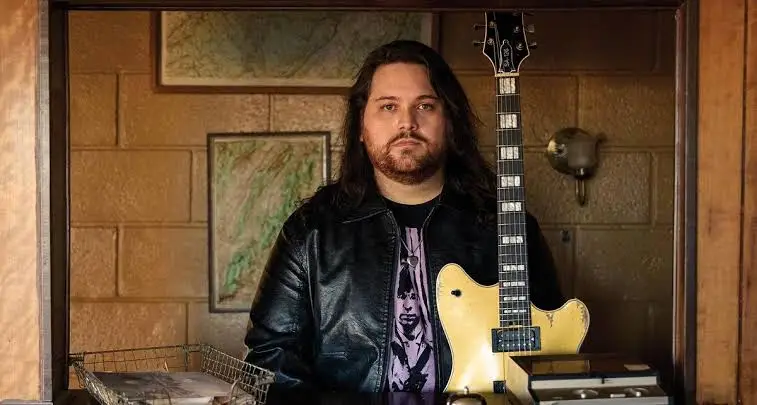
Wolfgang Van Halen has spent most of his life standing in the shadow of one of rock music’s most legendary figures. But now, after years of persistence, hard work, and quiet confidence, he says people are finally seeing him for who he really is — an artist in his own right.
In a recent interview, the Mammoth WVH frontman reflected on how public perception of his career has changed, admitting that the shift feels both validating and emotional.
“I’m very happy that people are beginning to take me seriously as my own artist,” Wolfgang said. “That means a lot to me.”
Being Eddie Van Halen’s son has always been both a privilege and a challenge. From the moment Wolfgang joined Van Halen as a teenager, scrutiny followed him everywhere. While many recognized his talent, others unfairly framed his success as inherited rather than earned.
Wolfgang has never denied his roots — but he’s made it clear that his goal was never to replicate his father’s legacy.
Instead, he focused on building something personal. Mammoth WVH, his solo project, became the vehicle for that vision. Writing, recording, and performing nearly every instrument himself, Wolfgang proved that his musicianship wasn’t symbolic — it was substantive.
Since launching Mammoth WVH, Wolfgang has leaned into total creative ownership. He writes the songs, records the parts, and leads the band with intention. That autonomy, he says, has been key to his growth.
His debut album earned strong critical praise, and follow-up releases continued to strengthen his reputation. Over time, audiences began responding not because of his last name, but because the music stood on its own.
“I’ve always wanted to be judged on what I make,” he explained, noting that recognition now feels rooted in merit rather than expectation.
Wolfgang acknowledged that acceptance didn’t come overnight. He toured relentlessly, opened for major acts, and faced the same grind as any emerging artist — just under a far brighter spotlight.
That journey, however, made the recent shift in perception more meaningful. Fans, critics, and fellow musicians are increasingly discussing Mammoth WVH without referencing Van Halen at all — a milestone Wolfgang never took for granted.
“It’s really rewarding to feel like the work is being seen for what it is,” he said.
Despite carving his own path, Wolfgang remains deeply connected to his father’s legacy. He has spoken openly about grief, memory, and the responsibility he feels to honor Eddie Van Halen’s influence — not by imitation, but by authenticity.
Rather than distancing himself from the past, Wolfgang has integrated it into who he is now: respectful of where he came from, but firmly focused on where he’s going.
As Mammoth WVH continues to evolve, Wolfgang Van Halen appears more confident than ever. The conversation around his career has shifted — not because he demanded it, but because he earned it.
For an artist who spent years being introduced as “Eddie Van Halen’s son,” being recognized simply as Wolfgang feels like a long-awaited victory.
And for him, that recognition means everything.