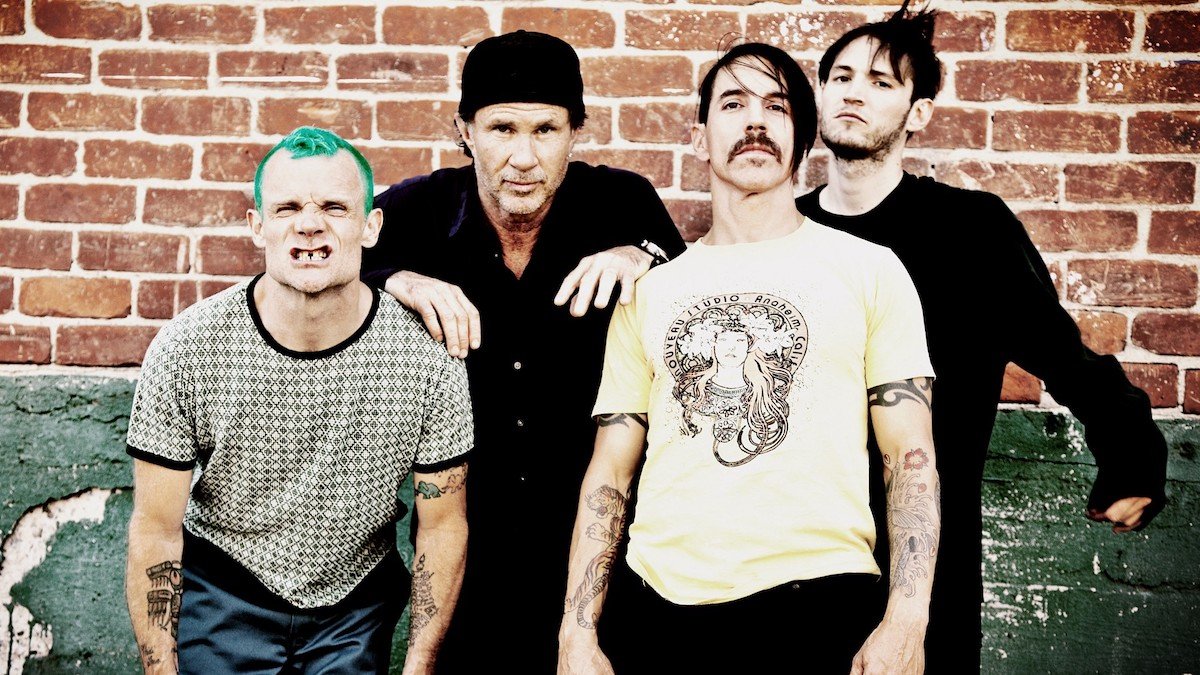
“Under The Bridge” stands as one of the most iconic songs in Red Hot Chili Peppers’ catalog — and one of the most emotionally resonant alternative rock anthems of the 1990s. First appearing on their fifth studio album Blood Sugar Sex Magik in 1991, the track was released as the second single in early 1992 and marked a dramatic stylistic shift for a band previously known for funk-punk aggression.
At its heart, Under The Bridge was born from vocalist Anthony Kiedis’ own experiences of isolation and recovery. During a period of sobriety in the late 1980s and early ’90s — and reeling from the death of former bandmate Hillel Slovak — Kiedis began feeling disconnected from his own world. The stark imagery in his lyrics reflects the loneliness he endured walking the streets of Los Angeles, feeling alienated not just from others but even from his bandmates.
Producer Rick Rubin discovered Kiedis’ handwritten poem — originally not intended as a song — and encouraged him to share it with the group. Initially hesitant, Kiedis eventually presented the piece to guitarist John Frusciante and drummer Chad Smith, who immediately began crafting music around the heartfelt words. The resulting ballad diverged from the Chili Peppers’ signature funk-rock style with an introspective melodic guitar intro that became instantly recognizable.
Musically, the track combines reflective acoustics with emotional intensity. The gentle opening riff by Frusciante sets a contemplative mood that underscores Kiedis’ lyrics about feeling alone even in a bustling city. Lines like “Sometimes I feel like / My only friend / Is the city I live in” capture a universal ache for connection that resonated widely with listeners.
Upon its release as a single, Under The Bridge was an unexpected commercial success. The song climbed to No. 2 on the Billboard Hot 100, becoming the band’s highest-charting single at that point and bringing them massive mainstream exposure. Its radio-friendly blend of vulnerability and melody helped the Red Hot Chili Peppers cross over from alternative clubs to global audiences.
The accompanying music video — featuring slow-motion shots of Anthony Kiedis walking through various Los Angeles neighborhoods — became a staple on MTV and further solidified the song’s emotional pull. Filmed under the direction of Gus Van Sant’s collaborator and capturing the band’s hometown in evocative detail, the video helped cement the track’s status as an early 1990s classic.
Critics also embraced the song. Rolling Stone praised Under The Bridge for its pensive tone and lyrical honesty, noting that it helped “drop-kick” the band into the Top 10. Its success wasn’t just commercial — it marked a turning point for the Chili Peppers’ artistic identity, showing they could move beyond high-octane grooves to create deeply personal and broadly relatable rock music.
Beyond its impact on the band’s career, Under The Bridge has endured as an anthem of vulnerability and resilience. Countless fans cite it as a song that helped them through their own moments of isolation, and it remains a centerpiece of the band’s live performances decades later.
More than a commercial milestone, Under The Bridge stands as a universal reflection on loneliness, redemption, and the search for belonging — a song born from one man’s struggle that ultimately connected with millions around the world.