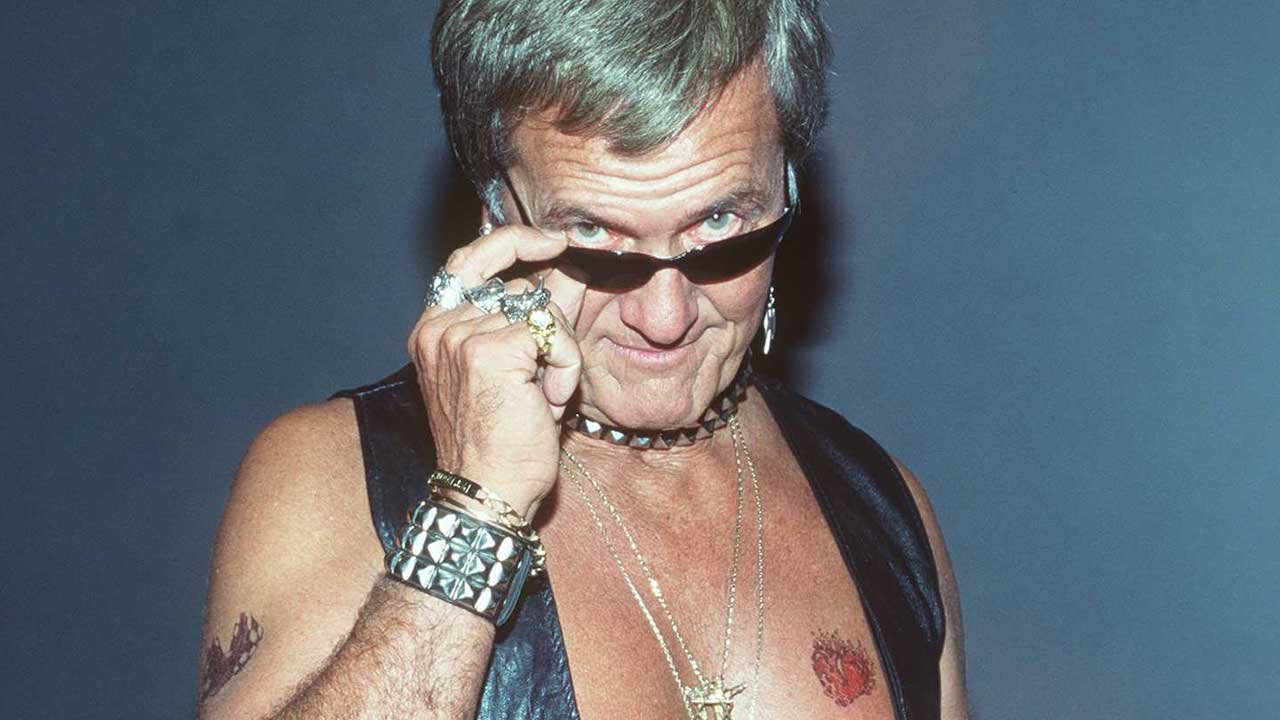
In the early 1990s, Pat Boone — the clean-cut pop singer and emblem of wholesome family entertainment — shocked fans and critics alike by embracing a sound most would never have associated with him: heavy metal.
Boone’s pivot wasn’t a fleeting flirtation or a novelty act. At a time when metal was dominating the charts and MTV, Boone released material that leaned hard into the genre’s aggressive guitars, pounding rhythms and confrontational attitude. The move startled listeners familiar with his image as a paragon of 1950s pop, a pillar of mainstream Christian values, and a symbol of squeaky-clean entertainment.
The reaction — particularly from parts of the Christian community — was swift, sharp, and often less than charitable.
Pat Boone’s career had already spanned four decades by the time he ventured into heavier music. Rising to fame in the 1950s with polished covers of rock ’n’ roll hits, Boone became a household name with chart-toppers like “Love Letters in the Sand” and “April Love.” Over time, he also established himself as a televangelist and outspoken conservative commentator who championed traditional values, particularly within segments of the Christian community.
When Boone first began incorporating rock elements into his work in the late 1980s and early 1990s, it turned heads. But as his riffs got heavier and his songwriting adopted the sonic traits of metal, the divide between his reputation and his new sound became glaring.
Boone’s metal-leaning tracks weren’t jokes or parodies — he took the genre seriously, collaborating with seasoned musicians who understood rock and metal’s technical demands. His approach blended classic metal instrumentation with lyrics informed by his personal beliefs, resulting in music that was earnest in ambition if unconventional in execution.
For fans of traditional metal, Boone’s entry was bewildering. For his longstanding audience, it was bewildering in a different way — many had invested in an image of Boone that was miles removed from distorted guitars and driving double bass drums.
The most notable reaction came from within the Christian world, where Boone had cultivated a reputation both as an artist and a moral voice. To some conservative critics, Boone’s embrace of heavy rock was more than a stylistic oddity — it was a betrayal.
Where metal was often associated with rebellion, darker themes, and imagery that clashed with traditional Christian values, Boone’s adoption of that sound left some religious commentators unsatisfied, confused, or outright angry. Critics accused him of abandoning a wholesome legacy and aligning himself — musically, if not ideologically — with a culture they viewed as spiritually corrosive.
Letters to magazines, heated radio calls, and public denouncements followed. Some argued that Boone’s foray into metal undermined his credibility as a moral figure; others simply saw it as incoherent with everything he had stood for.
Boone never framed his work as a betrayal of faith or a cynical bid for relevance. In interviews from the era, he described his interest in heavier music as a creative evolution, an attempt to meet listeners where they were and to bring his message into a different musical context.
For Boone, the shift wasn’t about chasing trends — it was about artistic exploration and connecting with people outside his traditional audience. Behind the riffs and louder production, he saw a potential bridge between spiritual themes and a genre he believed had emotional honesty.
Looking back, Boone’s metal period remains a curious footnote in both his career and rock history. It didn’t redefine heavy music, nor did it shift Boone’s overall legacy as a pop figure and cultural commentator. But it did raise interesting questions about genre boundaries, artistic identity, and the tensions that arise when public personas evolve in unexpected directions.
In later years, many observers have come to see the episode less as a scandal and more as an example of how an artist can challenge expectations — even at the risk of alienating segments of their own fanbase. Boone’s metal detour may never have topped any rock charts, but it certainly proved one thing: even icons with the most established reputations can surprise us.