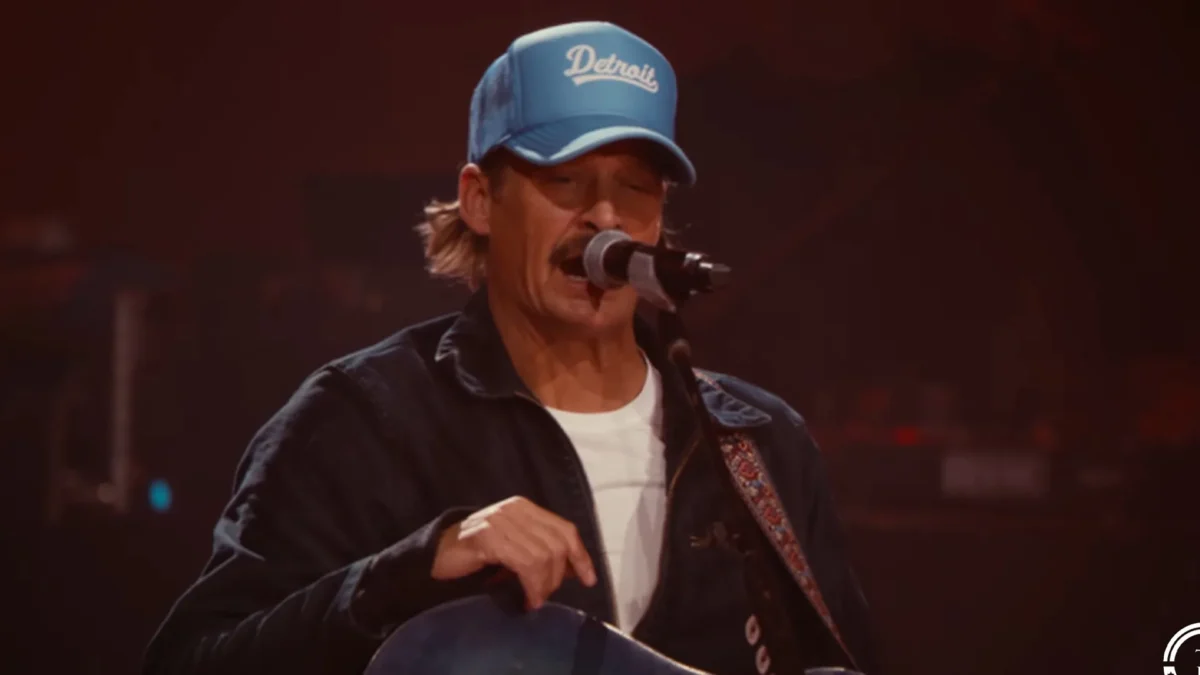
Kid Rock’s highly marketed All-American Halftime Show — a conservative-leaning alternative performance streamed during Super Bowl LX — became the subject of heavy criticism after viewers and commentators accused the rocker of lip-syncing during his set. The performance, hosted by Turning Point USA and meant to run alongside the NFL’s official halftime show, drew widespread attention for all the wrong reasons as fans and critics dissected what they saw.
Kid Rock — real name Robert James Ritchie — headlined the All-American Halftime Show, performing two songs: his rap-rock hit “Bawitdaba” and a slower cover of “Til You Can’t.” However, several sharp-eyed viewers noticed an unsettling discrepancy: his mouth didn’t sync up with the vocals being heard on the livestream. In many moments during “Bawitdaba,” the recorded vocal track continued even when his mouth was closed or not aligned with the lyrics, prompting instant claims that the set was either pre-recorded or lip-synced rather than performed live.
Viewers flooded social media with reactions ranging from outright mockery to disbelief. Comments noted that the audio continued while his mouth remained still, leading some to compare it to infamous lip-sync mishaps in music history. “Worst lip syncing ever,” one comment read, while others made sharp jokes about the disconnect between movement and sound.
The alternative show was pre-recorded in Atlanta, not broadcast live from the Super Bowl venue, which only deepened the skepticism. Reports confirmed the performance was taped ahead of time and then streamed during the Super Bowl halftime window, with difficulties even preventing it from airing on some platforms due to licensing restrictions.
Kid Rock and Turning Point USA had framed the event as a patriotic alternative to Bad Bunny’s official halftime show, with the stated goal of presenting “great songs for folks who love America.” But while Bad Bunny’s live appearance reached an audience of over 135 million viewers, the alternative livestream — featuring Kid Rock alongside Brantley Gilbert, Lee Brice, and Gabby Barrett — peaked around 5-6 million concurrent viewers.
The response was sharply divided:
- Broad criticism online: Many viewers on platforms like X (formerly Twitter) and Reddit mocked the performance as “embarrassing” and poorly executed, especially compared to the official halftime show. Some compared Kid Rock’s lip sync flubs to notorious past incidents in entertainment.
- Media commentary: Sports and entertainment commentators also weighed in. An NFL analyst called the performance “embarrassing” and noted that Kid Rock “didn’t sing a single song,” with the audio seemingly detached from his stage presence.
- Double-edged praise: Supporters of the alternative show still praised its patriotic tone and intent, while a few conservative personalities defended the set as a sincere effort, even as many conceded the technical execution was weak.
Facing a flood of lip-sync accusations, Kid Rock later suggested that the sync issues were technical, claiming that he was “out of sync” with his DJ during the pre-recorded performance. He acknowledged that the production team attempted to fix the mismatch in post-production but found it difficult to correct. This explanation confirmed that the show was not live and highlighted how the recording process may have contributed to the visible disconnect.
🎭 Broader Impact
The controversy highlights how the All-American Halftime Show — conceived as a counterpoint to mainstream Super Bowl entertainment — was overshadowed by discussions about execution and authenticity rather than musical content or patriotic messaging. While the event succeeded in drawing millions of viewers to an alternative performance, the lip-syncing claims quickly became the main talking point and, for many observers, the most memorable aspect of Kid Rock’s set.