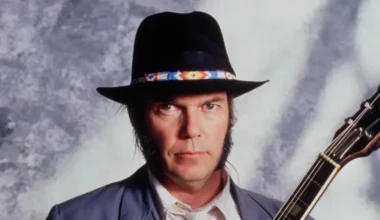

Before he was Lemmy Kilmister, the iconic frontman of Motörhead, he was just a young musician with very little formal training — especially on his instrument, the bass. But that lack of traditional experience didn’t hold him back. In fact, it became one of the biggest reasons he developed a style that was instantly identifiable, hugely influential, and in many ways impossible to replicate.
Unlike many virtuoso bassists who train for years on theory, technique, and complex playing, Lemmy approached the bass with the spirit of a complete outsider. He didn’t think in terms of “proper” technique. Instead, he treated the bass more like a lead instrument — aggressive, forward, driving — and that perspective changed hard rock forever.
When Lemmy first picked up the bass in the late 1960s and early ’70s, he didn’t come from a background of music lessons or formal study. He learned by listening, experimenting, and playing with bands, absorbing rhythms and grooves from records and gigs. Rather than worrying about what he should play, he focused on what sounded good, what felt powerful, and what hit hard.
That gave him a huge advantage: he didn’t shy away from playing loud, fast, and full‑bodied lines that cut through the mix — exactly what Motörhead needed. Rather than locking into supportive, background patterns, Lemmy’s bass anchored the songs like a second guitar, syncing with the drums but also pushing the energy forward.
Lemmy’s bass lines were rarely flashy. They weren’t about solos or intricate runs. Instead, they were about drive, momentum, and attitude. That simplicity was deceptive — it wasn’t laziness, it was intention. Playing strong, repeated rhythms with distortion and bite, his bass became a backbone that could sustain entire anthems.
This approach meshed perfectly with Motörhead’s music — fast, loud, and unrelenting — and helped define what would later be called speed metal and thrash metal. Bands like Metallica, Slayer and many others have cited Lemmy’s playing as a key inspiration, not because it was complex, but because it worked in a way nothing else did.
Because he wasn’t bound by rules, he helped break them. Musicians and fans alike came to realize that musical identity doesn’t require textbook training — it requires personality, presence, and a sense of purpose.
Lemmy’s influence shows that sometimes the best way to innovate is not by knowing all the rules, but by not being afraid to break them. His style helped reshape how bass could function in rock music — not as a polite foundation, but as a commanding force.
Even now, years after his passing in 2015, Lemmy’s approach continues to inspire players of all skill levels. His playing didn’t just support songs — it propelled them. And that’s why a lack of formal training didn’t make him a lesser bassist — it made him unforgettable.