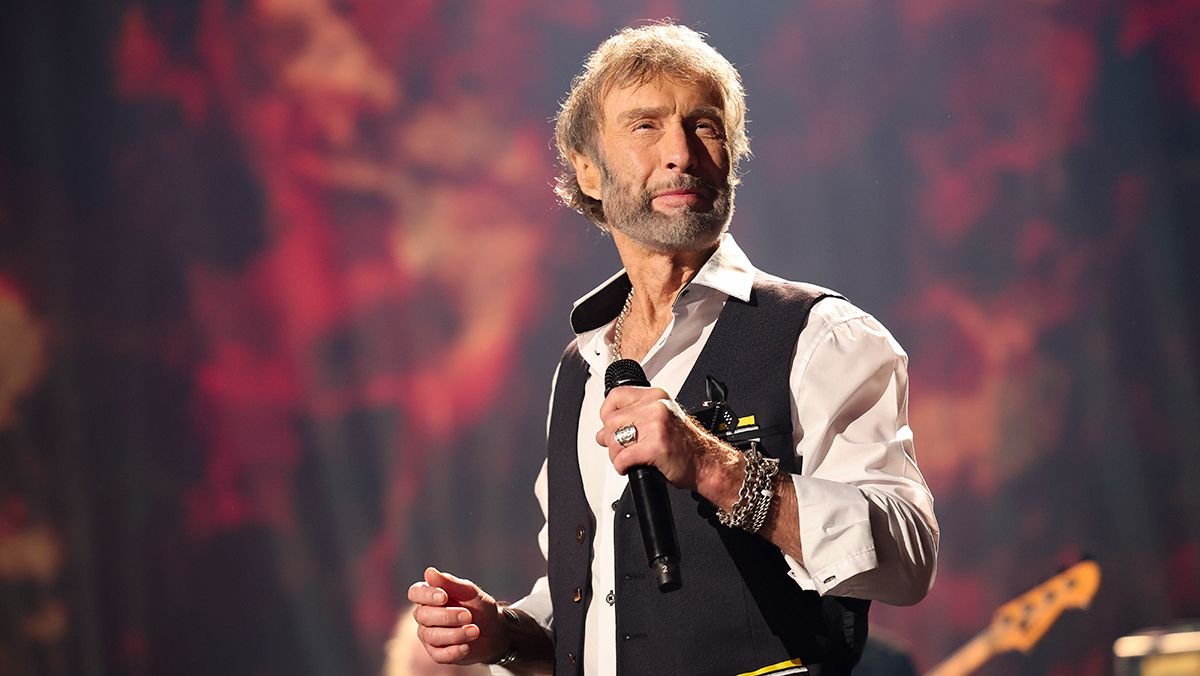
When rock legends like Van Halen lose a lead singer, the question every fan asks is: who could replace him? In the early 1990s, after David Lee Roth’s first departure, one name that came up was Paul Rodgers — the powerhouse vocalist behind Free and Bad Company. But unlike others who stepped into Van Halen’s orbit, Rodgers decided not to join the band, and the reason reveals a lot about his priorities as an artist.
In a recent interview, Rodgers explained that although he was seriously considered for the role and even discussed the possibility with Van Halen’s guitarists Eddie and Alex Van Halen, he ultimately turned it down because it just didn’t feel like the right fit for him creatively or personally.
“It’s not that I didn’t respect the band — I do — but I couldn’t see myself stepping into someone else’s identity,” Rodgers said. “I’ve always just tried to be me. The voice I have, the bands I was in… that’s what I’m comfortable with.”
Rodgers made his name in the late 1960s and ’70s with Free — most famously on the blues-rock anthem “All Right Now.” Later, he co-founded Bad Company, another hugely successful outfit defined by Rodgers’ rich, soulful vocals and emotive delivery. His background was rooted in that classic blues-rock style, which clashed stylistically with Van Halen’s high-octane, technically precise hard rock.
According to Rodgers, stepping into Van Halen — a band so closely associated with its former singers and a particular hard-rock swagger — would have meant abandoning his own musical identity, something he wasn’t prepared to do.
He pointed out that while he admired Van Halen’s talent and success, the prospect of adapting to a very different sound and legacy felt less like collaboration and more like impersonation — and he didn’t want to compromise who he was as an artist.
After Roth departed the band the first time, Van Halen famously searched for a new voice. They eventually chose Sammy Hagar, whose smoother power-rock tone pushed the band into new commercial territory throughout the mid-1990s and beyond.
Over the years, Van Halen’s lineup has shifted multiple times, and fans have speculated about countless potential singers who might’ve stepped in — but Rodgers always remained a particularly intriguing possibility precisely because his voice was so iconic. His decision not to join saved what could have been one of rock’s most unexpected pairings, but in his view, it preserved his own identity and the integrity of both careers.
For Rodgers, it’s not just about vocal ability — it’s about authenticity. He’s often spoken about music as a personal expression rather than a brand or franchise, which explains why he poured his energy into his own bands rather than seeking a place in another legacy act.
“I’ve always tried to follow what felt true to me,” he said. “If it feels like imitation, it’s not worth it to me.”
That philosophy guided his choice — and while fans will always wonder what a Rodgers-fronted Van Halen would’ve sounded like, his stance offers a lesson in prioritizing artistic integrity over headline-grabbing collaborations.
Rodgers’ decision didn’t close the door on great music — Van Halen flourished with Hagar, and Rodgers continued his own storied path. But the “what if” lingers in rock conversations, a reminder that even in the world of legends, choices are deeply personal and rooted in identity as much as talent.