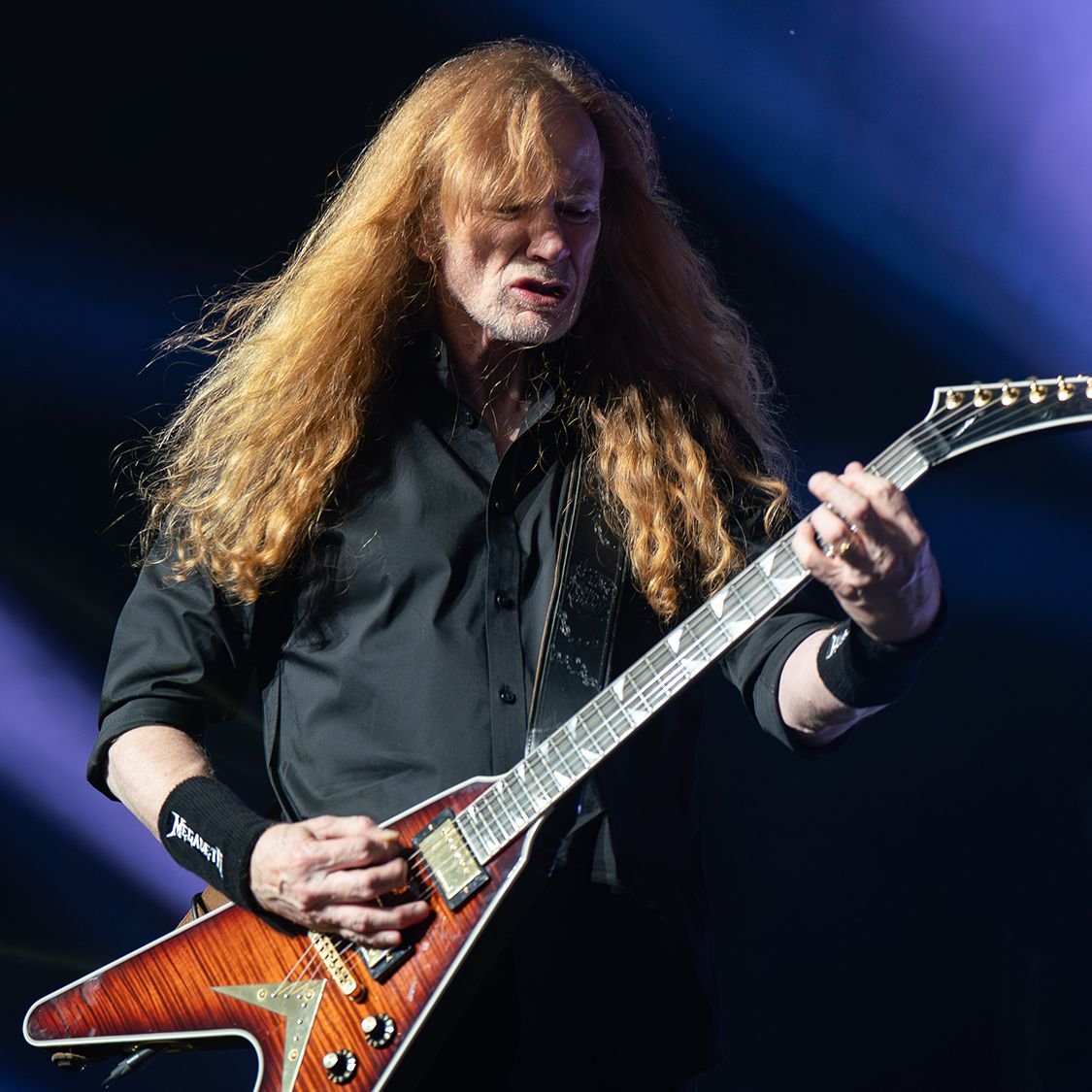
Megadeth frontman Dave Mustaine has reignited one of heavy metal’s longest–running rivalries by claiming that Metallica and others in the industry tried to hold him back during the early years of his career — and that adversity ultimately helped shape his success with Megadeth.
Mustaine, who was Metallica’s original lead guitarist in 1982–83 before being fired from the band, has frequently spoken about the tension surrounding his departure. In a new interview with The LA Times, he reflected on those years, saying that the hostility and competitive atmosphere with Metallica — as well as resistance from some in the scene — became a powerful motivator for him.
“Where would I be right now if I didn’t have one of the biggest bands in the world spending their time trying to hold me back?” Mustaine asked, adding that, for a long time, it felt like “me against the world.”
Mustaine’s comments highlight how the razor–sharp rivalry between Megadeth and Metallica — two of thrash metal’s “Big Four” — shaped his worldview and drive. He argued that the pushback he faced wasn’t limited to Metallica, but came from a broader set of industry forces that made his early path more difficult.
He’s credited that struggle with giving him a fire to succeed. “They don’t do it anymore,” Mustaine said about Metallica’s attitude, “but most of the time when they did, it just made me shake my head.”
Mustaine’s long history with Metallica goes back to before the first Metallica album was released, when he wrote riffs that later appeared on Kill ’Em All and Ride the Lightning — albums that helped define the early thrash metal sound. He was ultimately fired from the band in 1983 due to issues with alcohol, drugs, and interpersonal tension with members.
Interestingly, Mustaine also touched on his complicated feelings about his Metallica legacy in recent interviews connected to Megadeth’s self-titled final album, which includes a new version of Ride the Lightning — a song he co-wrote in the early days of both bands.
While Mustaine retains respect for the musicianship of Metallica and has hinted at reconciliation, he has also acknowledged that personal tensions remain. In past discussions, he has noted that he and Metallica guitarist James Hetfield have not spoken in years, with disagreements over publishing and other issues contributing to the sustained distance between them.
Despite the historic drama, Mustaine has framed these past conflicts as part of what made Megadeth stronger, saying that his “me against the world” mentality helped fuel not just the band’s aggression and ambition, but also its identity as a cornerstone of metal.
As Megadeth continues to promote its farewell album “Megadeth”, released in January 2026, Mustaine’s reflections on his personal and professional history with Metallica underscore just how complex and enduring one of metal’s most famous rivalries has been — and how those frictions helped shape an entire genre.