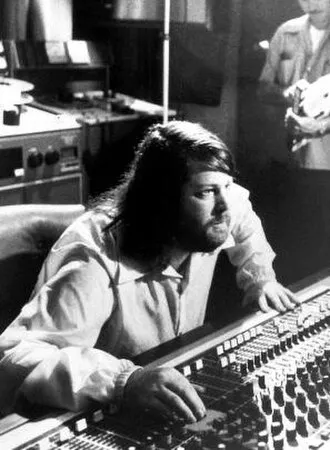
By the mid-1970s, Brian Wilson had become more of a myth than an active force within The Beach Boys. Once the creative engine behind some of the most influential pop records ever made, he had spent years largely withdrawn from the spotlight, dealing with personal struggles that kept him away from consistent work with the band. So when the group began promoting his return in 1976 with the bold claim that “Brian is back,” it immediately sparked curiosity—and heavy expectations.
For fans, that phrase suggested something monumental. It hinted at a revival of the brilliance that had defined albums like Pet Sounds. But the reality behind the comeback was far more complicated. Wilson was re-entering the band’s world after a long and difficult period, and while he was physically present again in the studio, the circumstances surrounding his return were anything but stable.
That comeback materialized in the form of 15 Big Ones, a record that carried enormous symbolic weight. It marked the first time since Pet Sounds that Wilson had taken on sole production duties for a Beach Boys album, a detail that only intensified the anticipation. The band and their label leaned heavily into the narrative, positioning the release as a triumphant reawakening of their original genius.
But the album itself told a different story. Instead of a bold artistic leap forward, 15 Big Ones felt uneven and, at times, uncertain. It leaned heavily on covers and lacked the cohesion many had hoped for. The gap between expectation and reality became impossible to ignore, and critics were quick to point out that the “comeback” didn’t match the scale of its promotion.
Still, within the band, Wilson’s presence carried a different kind of value. His bandmates recognized that even in a fragile state, he remained capable of unexpected creativity. Al Jardine later reflected on that period by noting how Wilson could still surprise everyone around him with sudden ideas and musical instincts. That unpredictability—sometimes brilliant, sometimes chaotic—was part of what defined his role in the group.
The recording sessions themselves reflected that tension. Progress was often disrupted by disagreements, shifting directions, and a general lack of clarity about what the album should be. Adding to the strain was the presence of Eugene Landy, whose involvement introduced an unusual dynamic into an already fragile environment. The studio became a place where creativity and conflict existed side by side, making it difficult for the band to find a steady rhythm.
Looking back, 15 Big Ones stands less as a triumphant return and more as a snapshot of a complicated transition. The idea that Brian Wilson could simply step back into his former role and immediately recreate past greatness ignored the reality of what he had been through. The comeback campaign promised clarity and revival, but what it delivered was something far more human—messy, uncertain, and incomplete.
In that sense, the story of Brian Wilson’s 1976 return isn’t just about an album that didn’t meet expectations. It’s about the gap between myth and reality, and how even the most celebrated artists can’t simply pick up where they left off. The surprises were still there, just as his bandmates said—but they didn’t always arrive in the way anyone expected.

Michael Thomas
Michael Thomas is a music historian obsessed with the '70s and '80s rock scene. He collects vinyl and argues about Led Zeppelin daily.