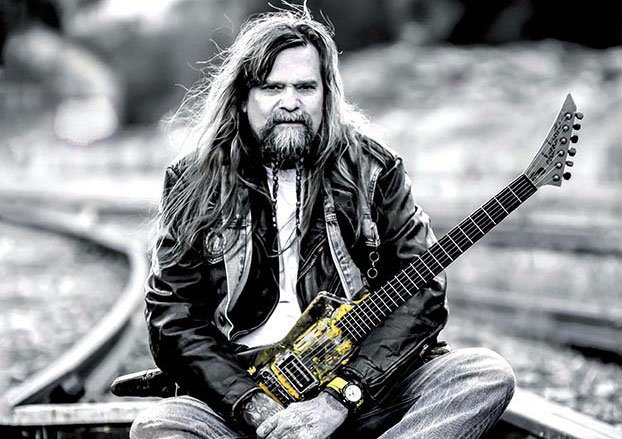
Chris Holmes has once again shut the door on a return to W.A.S.P., and he is making it clear that money, trust, and old resentment are still at the center of the fallout. In a new interview with Thomas S. Orwat, Jr. of the Rock Interview Series, Holmes was asked whether he would ever rejoin the band if Blackie Lawless asked him to. His answer was blunt: no — and, in his words, he would “be an idiot to go back.” Holmes said the issue is not hypothetical for him, but tied directly to what he says happened with his publishing and how he was treated during his time in the band.
Holmes claimed that before he would even consider a reunion, Lawless would have to pay him the publishing money he says he is owed. He argued that the arrangement made no sense to him, saying that while drummer Frankie Banali was being paid $1,850 a week, he was making only $500 weekly despite being one of the core faces fans came to see. Holmes said Lawless tried to justify the imbalance by pointing to future publishing income, but Holmes now believes that explanation was part of the problem rather than a solution.
He went further, accusing Lawless of deliberately taking his money and saying he was listed as a session player rather than a full band member. Holmes described that as deeply disrespectful and asked what kind of person would do that. He said he would not even want to sit in a room with Lawless, let alone perform with him again. Holmes also called Lawless a “malignant narcissist” and said that no amount of money could make him want to be around people like that anymore.
The guitarist also took aim at the way W.A.S.P. operated musically during its later years. He said that from Kill Fuck Die onward, the live show became depressing for him because the band was using samples, which he felt made the performance less than fully live. Holmes said it “hurt” him to play while knowing the band was essentially faking parts of the performance, adding that he hated himself for being part of something that felt dishonest. He said that is another major reason he has no desire to return.
Holmes made it plain that his frustration is not limited to reunion talk. He said he cannot stand the band, cannot stand what Lawless has done, and prefers to play with people he actually enjoys being around. In his view, music should come with good energy, humor, and trust — not bitterness and suspicion. He also repeated his long-running claim that he never received a penny of his publishing and said he is still angry about it.
That feud has been brewing for years. In earlier interviews, Holmes said W.A.S.P. was effectively a one-man project after the first album and argued that his guitar work helped shape the band’s sound in its formative years. He has also said he only discovered later that he had been written in as a session player, which intensified his belief that he had been sidelined from the beginning. Holmes has previously said that if Lawless paid the publishing he believes is owed, a reunion could be possible — but without that, he would rather leave the idea buried.
Lawless has also been firm about not revisiting the original lineup. In a separate 2024 interview, he said he had no desire to see Holmes’ documentary and rejected the idea of taking part in something he viewed as one-sided. He also said the current W.A.S.P. lineup features world-class musicians and that going back to the original lineup would be “a step backwards.” Lawless argued that the band evolved musically over time and that the later records required a higher level of musicianship than the original lineup could deliver.
Holmes’ latest comments arrive as he continues to deal with health issues as well. The article notes that he recently canceled a planned U.K. and Scandinavia tour because of a minor prostate issue requiring immediate attention, following his 2022 throat and neck cancer diagnosis and treatment. Even so, his tone about W.A.S.P. remains unchanged: he says the damage is done, the trust is gone, and a reunion would only make sense if the financial dispute were addressed first. Until then, he says, the past stays where it is.