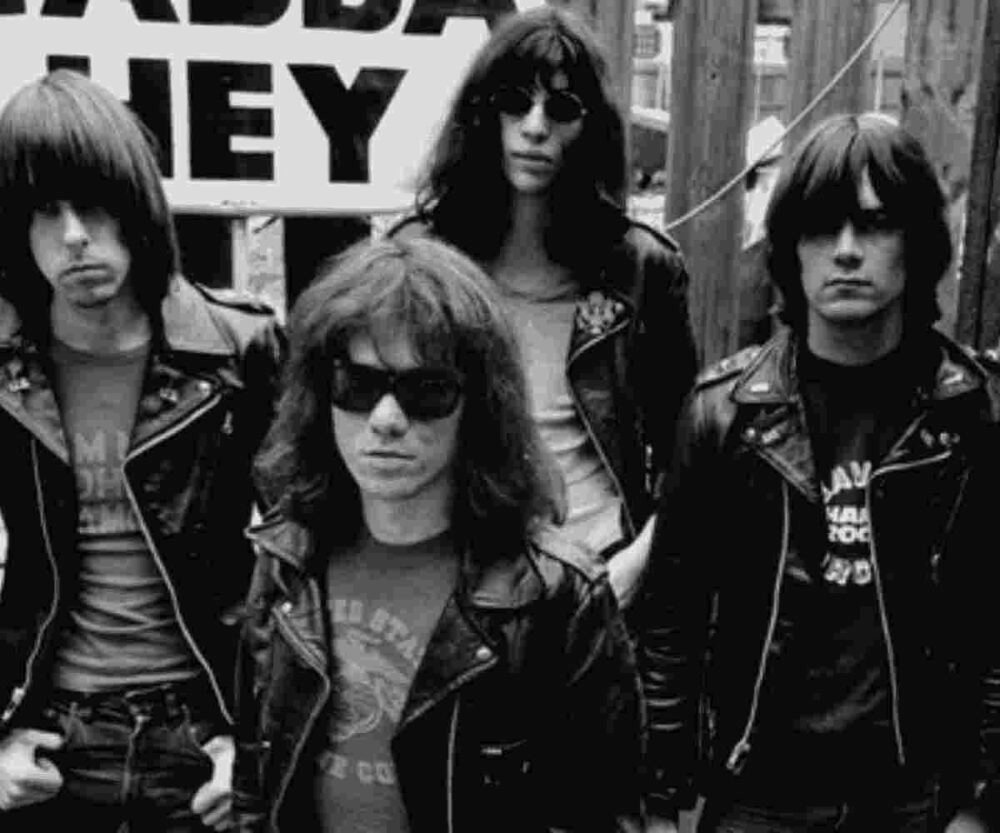
Fifty years after its release, the Ramones’ self-titled debut still sounds like a dare that the music world never quite saw coming. Released on April 23, 1976 through Sire Records, the album arrived as a stripped-down, fast, and funny antidote to everything bloated about mid-1970s rock, and it has spent the decades since becoming one of the clearest blueprints for punk.
SPIN’s anniversary piece revisits the making of the record through the memories of producer Craig Leon, Joey Ramone’s brother Mickey Leigh, and engineer Rob Freeman. Leon summed up the band’s identity with one great phrase: “They were the Unfab Four.” He described the whole project as a kind of Beatles-in-reverse experiment, a “Bizarro World” version of rock where the point was not polish or grandeur, but personality, speed, and inversion.
That idea shaped every part of the album. Leon said he wanted something that reflected the band itself rather than turning them into a slick version of the Stooges or MC5. The Ramones liked the concept of being the negative Beatles, and the result was a record built on short, three-chord bursts that were usually under three minutes long. It was a minimalist doctrine, but one packed with attitude, humor, and a strange kind of warmth.
The people around the band were part of the story too. Mickey Leigh was not just Joey Ramone’s younger brother; he was already deep inside the Ramones’ early world, helping out with gear, soundchecks, transportation, and even playing and singing where needed. He also traced the roots of some of Joey’s earliest songs back to their childhood rehearsals in Queens, when a borrowed guitar and a handful of chords slowly became the Ramones’ first writing experiments.
Leigh recalled teaching Joey on a guitar that had been altered into a makeshift two-string setup for the left-handed singer, who learned from Alice Cooper’s “I’m Eighteen.” From those early repetitions came the beginnings of songs like “I Don’t Care” and “Here Today, Gone Tomorrow.” Long before the album deal, the Ramones were already building the DNA of their sound in bedrooms and basements in Forest Hills.
By the time the band signed in late 1975, the whole operation was still gloriously improvised. Leigh said he was paid a modest weekly salary and functioned as a kind of all-purpose utility player, helping with notation, copyright work, drum parts, and backing vocals. That DIY spirit defined the sessions themselves. The album was recorded in January 1976 at Plaza Sound Studios in New York with a budget of just $6,400 and only seven days to finish it.
Craig Leon leaned into the rawness rather than sanding it down. He said the band’s inspiration from The Who’s Live at Leeds helped settle a disagreement over overdubs, with the group ultimately deciding to keep the record stripped back and live-sounding. That meant split stereo, isolated rooms, a flashing metronome, and a setup that made the whole thing feel more like captured force than a conventional studio production.
The result was a record that sounded homemade in the best possible way. Leon described how instruments were separated across different spaces and how the band had to work inside a weird patchwork of studio rooms and the Rockettes rehearsal hall. He also recalled that vocals, handclaps, and other small touches came from whoever happened to be in the room, including Leigh, Freeman, manager Danny Fields, and artist Arturo Vega. Even Michael Bolton almost ended up on the album, but the label refused to pay for his train ticket.
Musically, the album moved like a manifesto. From the opening blast of “Blitzkrieg Bop” to the humor and menace of “Beat on the Brat,” “Chain Saw,” and “I Don’t Wanna Go Down to the Basement,” the record made noise feel simple again. It also made room for surprise tenderness in “I Wanna Be Your Boyfriend,” street-level grit in “53rd and 3rd,” and oldies obsession in “Let’s Dance.” That mix of chaos, melody, and cheap thrills became the Ramones’ whole formula in miniature.
The album did not explode commercially at first. It sold slowly in the United States and did not become a hit in the traditional sense, but the long-term impact was enormous. According to Time, it was eventually certified gold nearly 38 years later, and it has repeatedly been named one of the most influential punk records ever made. Its reputation grew the way legends often do: quietly at first, then all at once, once people realized how much of modern rock had been built on its foundations.
That influence reaches far beyond punk’s first wave. The album helped shape bands such as the Clash, the Damned, Black Flag, Misfits, Green Day, and countless others, while its speed, simplicity, and blunt force also left fingerprints on heavy metal, thrash, indie rock, grunge, and post-punk. In other words, the Ramones did not just make a debut album; they made a language that other bands learned to speak.
What makes the 50th anniversary so striking is how little the record has aged out of relevance. It still feels immediate because it was never really chasing trends in the first place. The Ramones were not trying to build a monument. They were trying to get in, get loud, and get out. Half a century later, that’s exactly why the album still matters.