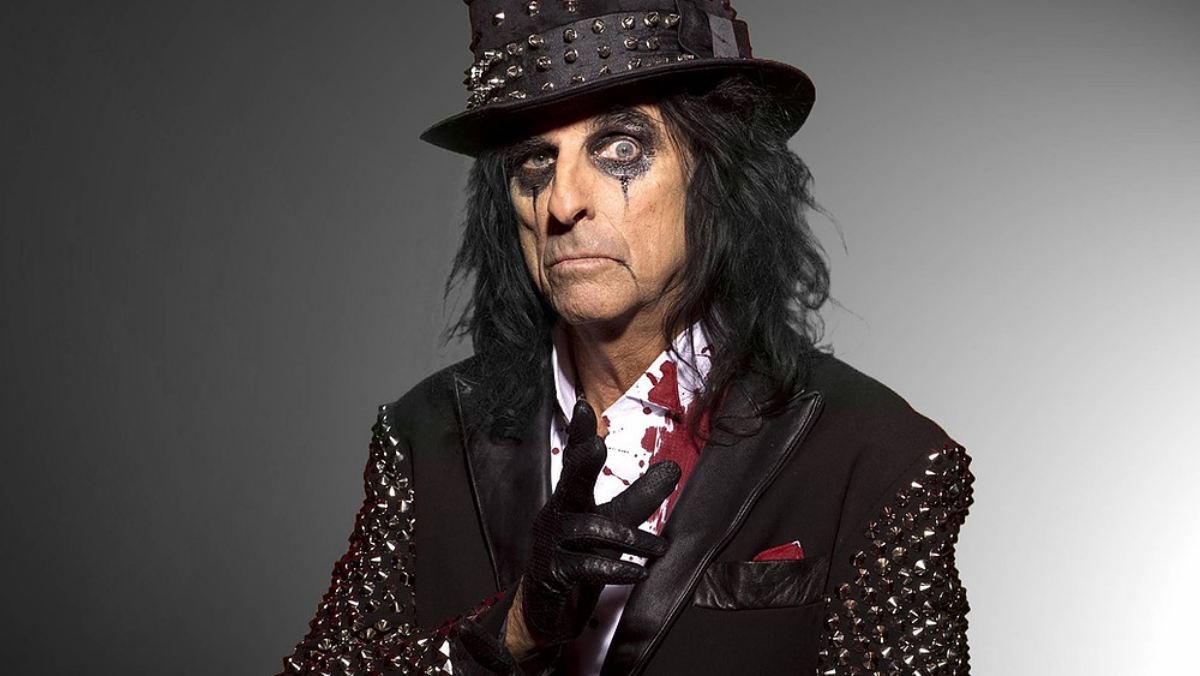
During a May 21 appearance on SiriusXM’s “Trunk Nation With Eddie Trunk”, legendary shock rocker Alice Cooper shared his definitive thoughts on the rapid integration of artificial intelligence (A.I.) in the music industry. In a conversation, Cooper analyzed the growing popularity of the technology, weighing in heavily on its future implications for how human beings make, produce, and distribute music.
The Ghost in the Machine: Creating Fake Icons
Cooper outlined a startlingly realistic scenario where a completely fictional rock star could be engineered from scratch to achieve mainstream success.
“Well, here’s the deal. I could right now create a rock star,” Cooper explained. “I could create a Yungblud, a guy that’s really appealing, rock, tough, cool looking. I could create a guy named — I don’t care — Starboy or whatever, and make him look great. He doesn’t actually exist.”
He noted that creators could simply instruct an A.I. program to blend the distinct vocal styles of icons like Tom Petty and Freddie Mercury, pitch a concept, and order the algorithm to write an entire record. This hypothetical scenario raises unprecedented legal, ethical, and financial dilemmas for the entertainment business.
“Okay, now you’ve got a rock star that doesn’t exist, and you’ve got an album that doesn’t exist except in this world. And what happens if it sells? Who gets the money? A.I. wrote the songs. This guy had nothing to do with the creativity of the songs. So who’s gonna get that money? They have to write the check to the A.I.? That’s gonna happen. You watch that happen, because the guy that just suggested what it should be did not write the songs.”
The Soulless Limit of Technology
While algorithms can seamlessly mimic technical song structures, Cooper firmly argues that digital intelligence falls flat because it completely lacks lived human experience. He joked that if he told an A.I. to write a track about radio host Eddie Trunk joining The Rolling Stones, it would spit out a technically competent song—but it would completely lack a vital human spark.
According to Cooper, the technology ultimately fails because it can only simulate vocabulary without understanding the emotional weight behind it:
“The one thing it can’t do — it’s never been in love. It’s never had its heart broken. It’s never been angry. It’s never been happy. It only knows words. And it only knows how to put words together. But it has no emotion. It has no heart, it has no feel, has no soul to it, and that’s where it dies right there. That’s why you could put an album out and you listen to it and go… You know that it doesn’t come from any root inside, any heart, any experience. When they get that, then I think… I don’t know what’s going to happen to music.”
Looking Ahead: Autobiography and U.K. Speaking Tour
Outside of his critiques of modern technology, Cooper is preparing to pull back the curtain on his own analog life story. His definitive autobiography, titled “Devil On My Shoulder”, is scheduled to be published by Ebury Spotlight on October 8, 2026.
Building upon more than sixty years of rock ‘n’ roll folklore, the Rock and Roll Hall of Fame inductee will support the book’s high-profile launch with an intimate, eight-date speaking tour across the United Kingdom. Each evening of the tour will feature Cooper in an open conversation with a special guest moderator, followed by a live audience question-and-answer session—giving fans a rare, unvarnished glimpse behind his iconic greasepaint and stage guillotines.
A Legacy Built on Real Human Experience
Cooper’s strict standard for artistic authenticity comes from a lifetime of doing things entirely his own way. Having cast a massive shadow over the history of rock music, Cooper has sold more than 50 million albums worldwide, earned a coveted star on the Hollywood Walk of Fame in 2003, and was formally inducted into the Rock and Roll Hall of Fame as part of the class of 2011.
His highly influential catalog features timeless anthems like “School’s Out”, “No Mr. Nice Guy”, and “Poison”. His critical and commercial high points span several decades, featuring numerous certified-platinum touchstones:
-
Love It To Death (1971): Platinum-certified and cited by Rolling Stone among the “500 Greatest Albums Of All Time”.
-
Killer (1971): A seminal platinum-certified release.
-
School’s Out (1972): A landmark platinum success.
-
Billion Dollar Babies (1973): Reached the absolute pinnacle as a Billboard 200 No. 1 album.
-
Welcome To My Nightmare (1975): A legendary platinum concept album.
-
Trash (1989): A platinum-certified smash hit later named among Rolling Stone’s “50 Greatest Hair Metal Albums Of All Time”.
A Cultural Pioneer
Cooper’s footprint is deeply embedded in multiple generations of popular culture. Beyond music, he made a cult-classic appearance in the 1992 film Wayne’s World, starred alongside John Legend and Sara Bareilles in NBC’s 2018 production of Jesus Christ Superstar Live In Concert, and memorably appeared on The Muppets, That ’70s Show, and Tim Burton’s Dark Shadows film adaptation.
His compositions boast hundreds of commercial syncs and have been covered by a wildly diverse array of musical legends, including Etta James, The Smashing Pumpkins, Megadeth, and The Flaming Lips. Meanwhile, hip-hop and rock giants like The Beastie Boys and Disturbed have sampled his tracks.
Throughout his career, Cooper’s human collaborations have included the late Vincent Price, Aerosmith, Guns N’ Roses, and Jon Bon Jovi. He also famously co-founded the supergroup Hollywood Vampires alongside Aerosmith’s Joe Perry and Johnny Depp. Most recently, his 2025 studio album, The Revenge Of Alice Cooper, reunited the surviving members of the original Alice Cooper band to widespread critical acclaim. After thousands of live gigs and easily over a million miles traveled on the road, Alice Cooper continues to march forward as a living, breathing testament to the power of human rock ‘n’ roll.