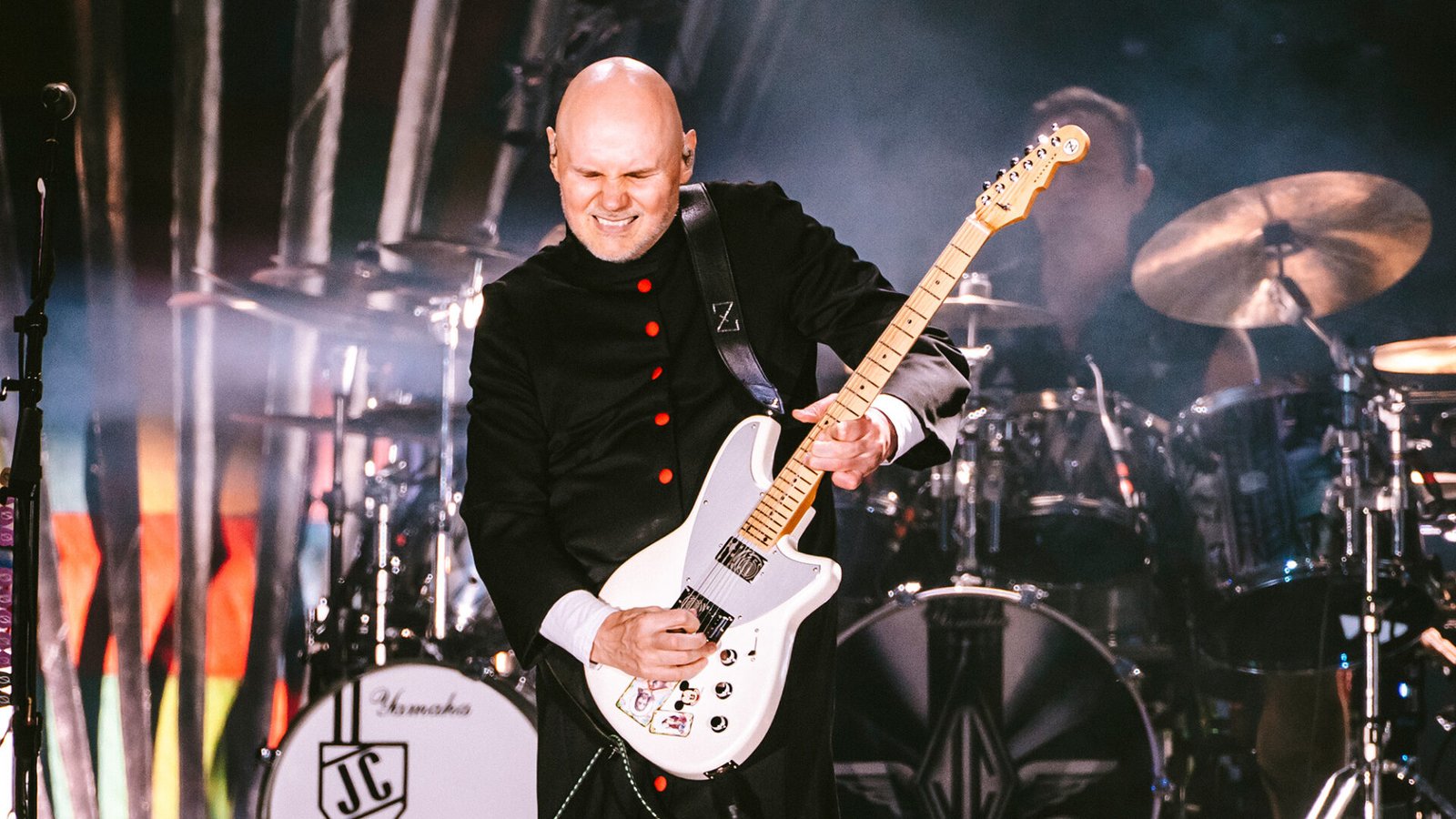
Billy Corgan is drawing a hard line on artificial intelligence in songwriting. In a new interview on the And The Writer Is… podcast, the Smashing Pumpkins frontman said he has no interest in using AI to create music and made it clear that his stance is not up for debate. Corgan said, “I refuse, refuse, patently refuse to use A.I. in my music creation,” adding that, to him, it is “a deal with the devil.”
Corgan’s comments came as he discussed how fast AI music tools such as Suno and Udio are improving, with generative systems now able to produce songs that can sound strikingly close to human-made work. Even with that progress, he rejected the idea that convenience should outweigh the creative process. For him, songwriting is supposed to involve doubt, frustration, and the struggle to find something worth saying, and he argued that those tensions are part of what gives music its value.
He also drew a sharp distinction between working with AI and collaborating with real musicians. Corgan said that if he is writing with a bandmate or another person, there is accountability, friction, and something real at stake. With an app, in his view, there is no true creative relationship and no meaningful limit to the process. That is one reason he believes AI removes something essential from the art form rather than adding to it.
The warning went beyond his own preferences. Corgan said he believes AI could hurt the long-term future of songwriting by pushing out generations of creators who might otherwise develop their craft the hard way. He suggested the technology could create a new class of music-makers who know how to use programs well but do not really understand music in the deeper artistic sense, and he predicted that many people could lose work as AI becomes more common in the industry.
Corgan also framed the issue as bigger than music alone. In his view, leaning too far into AI is not just an artistic gamble but a broader cultural mistake. He argued that the industry may be inviting long-term damage by handing too much power to systems that can imitate creativity without living it. That warning fits with a broader anxiety many musicians have voiced in recent years as AI tools move from novelty to mainstream production tools.
This is not the first time Corgan has raised concerns about the technology. He said three years ago on the Zach Sang Show that AI would change music forever, but he now sounds even more alarmed about the pace of that shift. At the same time, he acknowledged that listeners may ultimately trust music more when it comes from a recognizable human voice with a real history behind it.
That is the heart of Corgan’s argument: music should come from conflict, instinct, and lived experience, not from software trying to shortcut the process. For an artist who has spent decades building a catalog around emotional tension and self-examination, the refusal to use AI is not just a technical choice. It is part of his identity as a songwriter.