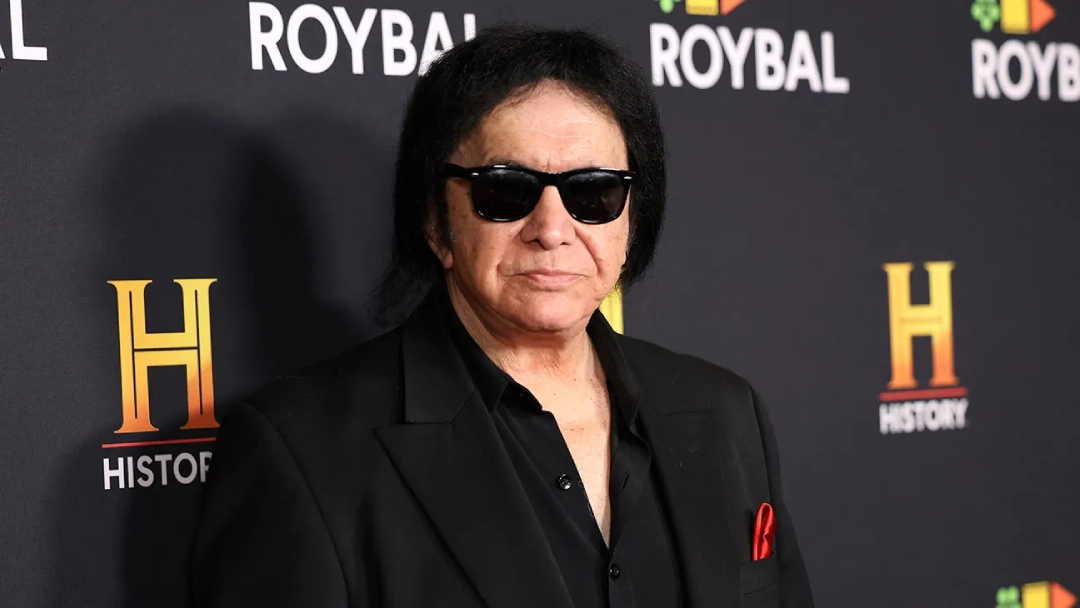
Gene Simmons has reignited a long-running KISS debate by making one of his most provocative claims yet — declaring that drums are not a musical instrument — and, unsurprisingly, former bandmate Peter Criss is pushing back hard.
The controversy stems from Simmons’ recent appearance on the Professor of Rock podcast, where he was discussing songwriting credit within KISS and specifically downplaying Criss’ creative contributions. In doing so, the bassist drew a sharp and controversial distinction between melody-based instruments and percussion.
“He doesn’t play a musical instrument,” Simmons said bluntly. “Drums are not a musical instrument, by definition. They’re called a percussive instrument. Really important, sometimes extremely important in a band. It was for us.”
Simmons went on to frame his argument around copyright law rather than musicianship, suggesting that the value of an instrument lies in its ability to generate protectable intellectual property.
“But you cannot play a drum fill that could be copyrighted,” he continued. “But you can come up with a riff that you can own, and a melody and a lyric. Those can be copyrighted. But nothing you do on drums will prevent anybody else from directly copying whatever you did and applying it to another song.”
The remarks immediately raised eyebrows, not only because of their dismissal of percussion as a musical discipline, but also because they reopened old wounds surrounding KISS’ internal dynamics — particularly the long-standing tension between Simmons and original drummer Peter Criss.
Criss did not let the comments slide. Speaking to Billboard, he directly rejected Simmons’ definition and offered a detailed rebuttal rooted in both musical history and theory.
“I do play an instrument,” Criss stated. “I play drums within the percussion family and drums are one of the oldest groups of musical instruments and a fundamental part of music.”
He went further, reframing the role of drums not as secondary or auxiliary, but as central to how music functions across genres.
“Acting as the rhythmic heartbeat that provides structure, tempo and energy, uniting other instruments and guiding the groove in most genres,” Criss explained. “Drums are critical for timekeeping, creating the foundation that allows other musicians to synchronize, making them essential for cohesive and popular music like rock, pop and jazz. By definition.”
At the heart of the dispute is a philosophical split over what constitutes musical authorship. Simmons’ argument leans heavily on traditional copyright structures, where melody, harmony and lyrics are formally protected, while rhythm is often treated as communal or non-exclusive. Criss, on the other hand, emphasizes music as a collaborative ecosystem — one where feel, groove and timing are just as vital as riffs and words.
The irony is difficult to ignore: KISS built its legacy not only on bombastic hooks and arena-sized choruses, but also on unmistakable rhythms that powered songs like Beth, Detroit Rock City and Black Diamond. Criss’ drumming style — rooted in swing, jazz influence and dramatic dynamics — played a key role in giving early KISS its identity.
While Simmons has long been outspoken about hierarchy within bands and ownership of ideas, his statement touches a broader nerve in the music world. Drummers and percussionists across genres have historically fought for recognition equal to their melodic counterparts, despite being foundational to how music is felt, danced to and remembered.
In the end, the debate is less about semantics and more about perspective. Simmons sees music through the lens of intellectual property and authorship. Criss sees it through history, rhythm and collective experience.
And judging by the reaction, many musicians would argue that without drums, there’s nothing left to argue over — just silence, perfectly in time.