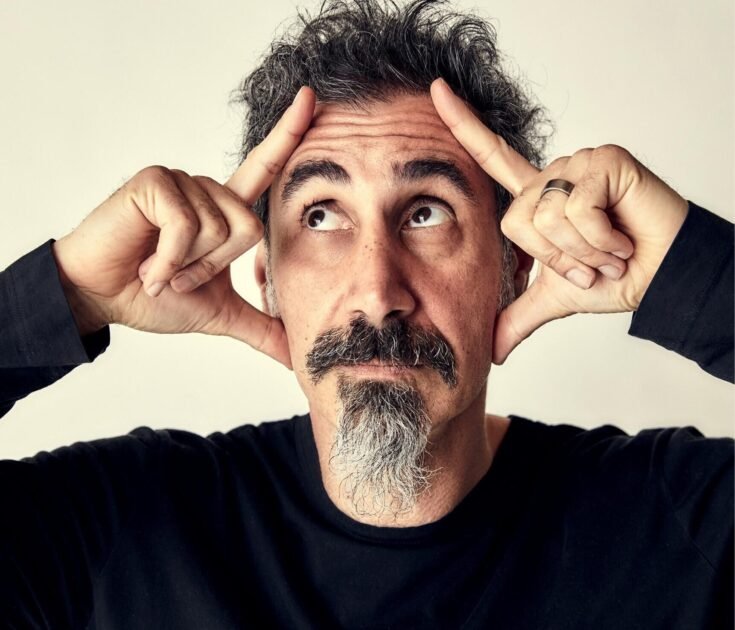
The intersection of rock music and volatile global politics has rarely felt as combustible as it does today. System of a Down vocalist and longtime activist Serj Tankian has responded with absolute fury to a historic policy shift by the Israeli government, turning what should have been a moment of historical vindication into a bitter, high-profile confrontation.
On June 29, 2026, the Israeli cabinet voted to officially recognize the Armenian Genocide of 1915—the systematic mass murder and ethnic cleansing of approximately 1.5 million Armenians by the Ottoman Empire. For many, the vote marked a long-overdue acknowledgment of historical truth. For Tankian, whose own grandparents survived the atrocities, the move was an unforgivable insult.
Taking to his Instagram story, the singer bypassed any diplomatic pleasantries, launching a direct assault on the motives behind the cabinet’s decision.
A History of Lobbying and Betrayal
Tankian’s grievances began with a look back at the decades-long geopolitical dance between Israel, the United States, and Turkey. For generations, the Israeli government—often working alongside powerful lobbying arms like AIPAC (the American Israel Public Affairs Committee)—actively pressured the U.S. Congress to avoid using the word “genocide” when discussing the events of 1915. This was done primarily to protect Israel’s strategic intelligence-sharing and military relationship with Turkey.
For Tankian, Israel’s sudden change of heart is not a moral awakening, but a calculated pivot.
“For many years, Israel’s government used AIPAC to lobby the US Congress to not recognize the Armenian genocide… due to their relationship with Turkey, their intelligence sharing with Turkey, et cetera,” Tankian stated.
The Hitler Comparison and the “Political Advantage”
The System of a Down frontman didn’t stop at historical lobbying. He drew a sharp, provocative line between the 1915 atrocities and the subsequent horrors of the 20th century, noting that the failure to punish the original genocide emboldened future dictators.
“Today, the Netanyahu cabinet decided to recognize the Armenian genocide of 1915 — a genocide that led Hitler thinking that he could do what he could do to the Jews in the 1930s and 1940s.”
Tankian’s core outrage, however, stems from the current military actions being carried out by the Israeli government in Gaza and Lebanon. He argued that a state currently facing intense global scrutiny for its own military conduct has no moral standing to validate the suffering of Armenians.
“The fact that this government is already committing genocide in Gaza and Lebanon decided to recognize the genocide of my grandparents is the worst fing thing that they could have done to Armenians — by using our history, our genocide, our pain to their political advantage,” he declared, before closing the video with a stark, singular message: “F* you.”*
A Community Divided
Tankian’s statement has predictably fractured public opinion. Supporters praise him for his unflinching consistency and for refusing to let historical narratives be co-opted by state actors for modern public relations campaigns. Critics, meanwhile, argue that historical truth should be recognized regardless of who recognizes it, and have labeled his reaction as inflammatory and counterproductive.
As of now, the Israeli government has not issued a direct response to Tankian’s video, but the clip continues to circulate rapidly, ensuring that the debate over who has the right to claim—and define—historical trauma will continue to rage on.