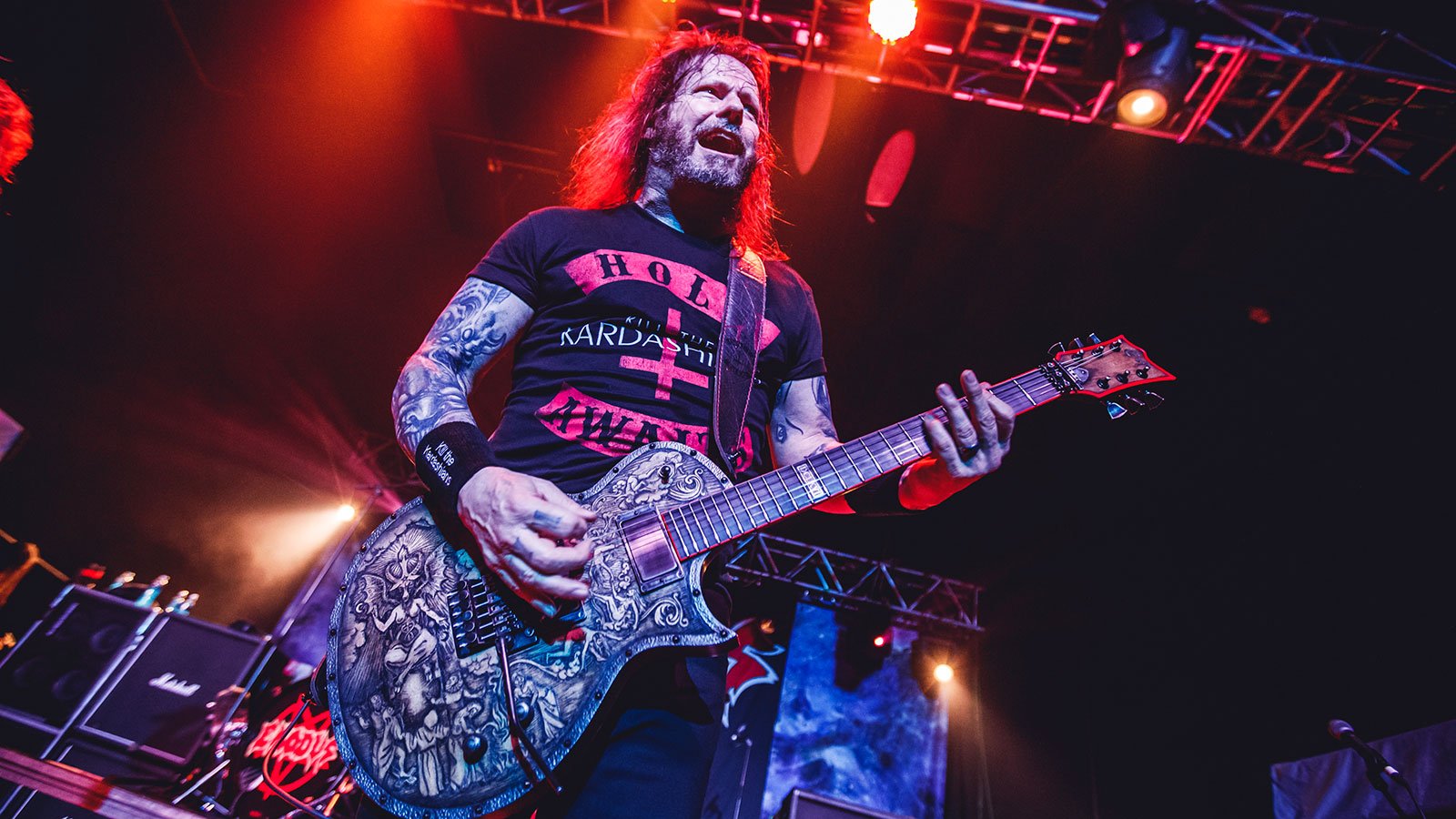
Veteran thrash guitarist Gary Holt recently joked that he might deserve a payment from Metallica after claiming some of his lyrics indirectly made their way into one of the band’s most famous songs from the classic 1984 album Ride the Lightning.
Holt, best known for his long career with Exodus and for his time playing with Slayer, shared the story while reflecting on the early days of the Bay Area thrash metal scene. According to him, the connection traces back to a song recorded by Exodus in the early 1980s — before Kirk Hammett joined Metallica.
At the time, Kirk Hammett was still a member of Exodus. The band recorded a demo track titled “Die by His Hand” in 1983. Holt explained that while Hammett had written the main riff, he had contributed the lyrics for the song.
Not long afterward, Hammett left Exodus to join Metallica, replacing original guitarist Dave Mustaine just before the recording of the band’s debut album Kill ’Em All. When Metallica began working on material for their second album, some elements connected to the Exodus track resurfaced.
Holt noted that the famous chant in Metallica’s song “Creeping Death” — featured on the 1984 album Ride the Lightning — closely echoes the phrase used in the Exodus demo. In the original song, the lyric was “dying by his hand,” while Metallica’s version famously became “die by my hand.”
Looking back on the situation, Holt made it clear he was speaking mostly in jest. Laughing about the similarity, he said that since his lyrics were used as inspiration, perhaps he deserves a financial reward from Metallica frontman James Hetfield.
“You know, I mean, I’m entitled to some money, James,” Holt joked. “I’ll send you my bank info! It’ll be a fat cheque.”
Despite the playful tone, Holt acknowledged that the riff itself belonged to Hammett and that he never had any ownership of the music that later appeared in Metallica’s material.
“It’s Kirk’s riff,” Holt explained, noting that Hammett had every right to reuse it after leaving Exodus. Holt added that he never received songwriting credit and doesn’t truly expect compensation, emphasizing that his comments were mostly a humorous reflection on the interconnected nature of the early thrash scene.
The story highlights how closely intertwined the Bay Area thrash metal community was in the early 1980s. Many of the genre’s biggest musicians — including members of Metallica, Exodus, and other emerging bands — frequently shared ideas, riffs, and influences while developing what would become one of metal’s most important movements.
Released in July 1984, Metallica’s Ride the Lightning became one of the defining albums of thrash metal, helping push the band to international recognition and eventually selling millions of copies worldwide.
For Holt, the anecdote is simply another reminder of how small the scene once was — and how songs and ideas sometimes traveled between bands before anyone realized they were becoming part of metal history.
Even if the payment never arrives, Holt seems content knowing that a tiny piece of his early work may have played a role in one of thrash metal’s most iconic records.