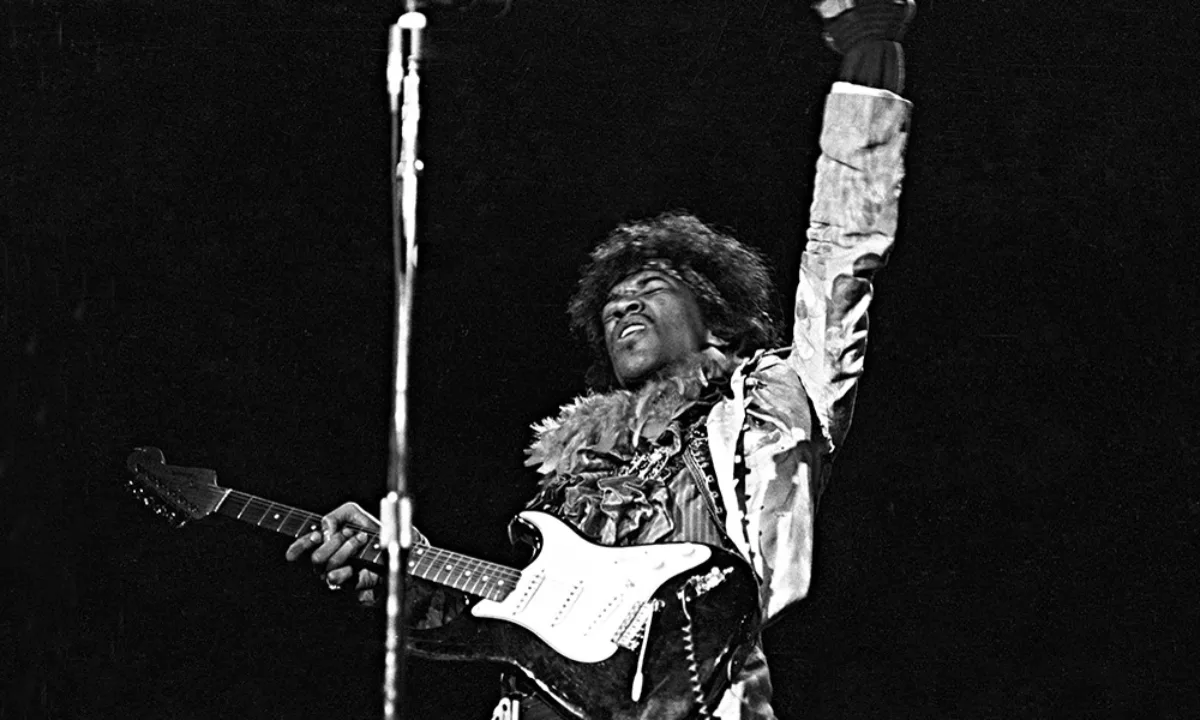
“Guitar, you can play it — or transcend it. Jimi showed me that. He was at one with his instrument.”
Those words from Neil Young hit like a spark igniting kindling. For decades, Young has stood as a rock‑n‑roll philosopher — not just a musician — and at times like this, you get a glimpse of the fire that shaped his vision of what music can be. In a recent reflection, he likened true rock to a “molotov cocktail on complacency,” suggesting that guitar music still holds the power to challenge, inspire — to tear down old walls even after a lifetime of sound.
Young’s quote frames the guitar not as a mere instrument but as a vessel of transformation. Referencing Hendrix — a pioneer who made the guitar sing, scream, and burn — Young acknowledges how transcendence lies beyond technique, past notes per minute or perfect phrasing. It’s emotional, raw, and spiritual. Hendrix, in Young’s view, didn’t just play guitar; he became it. And that becoming challenged conventions, pushed boundaries, set the stage for change.
For Young, that’s the point: rock should shake more than amplifiers. It should wake up listeners, provoke thought, stir emotion. The “molotov cocktail” metaphor wasn’t about violence or destruction. It was about disruption — a call to arms for musical authenticity, for art that refuses to be comfortable, predictable, or safe.
Neil Young came of age at the height of social and musical upheaval — the late 1960s and early 1970s, when rock wasn’t just background noise; it was protest, counterculture, and revolution. Hendrix’s searing solos and psychedelic improvisations weren’t just performance: they were statements. They captured anger, pain, hope, and rebellion.
Decades later, Young argues, much of that flame dimmed. Rock became polished, marketable, sometimes empty. But that didn’t mean the spark was gone. It meant it was dormant — waiting for someone willing to reignite it, to throw that figurative cocktail again. In Young’s mind, Hendrix set the blueprint. The rest? Depends on who picks up the guitar.
Young’s rallying cry isn’t nostalgia. It’s not a demand to return to the past. It’s a challenge — to musicians, listeners, and the industry: don’t let instruments become props. Don’t let concerts become choreography. Don’t let music become a formula.
He wants real sound, real emotion, real risk. He wants the heart of rock to bleed again. “When you transcend the guitar,” Young says, “you speak with more than chords. You speak with soul.”
That’s why, even now, decades after he first picked up a guitar, it matters when he raises his voice. Because some reminders aren’t just about music — they’re about what music can still be.