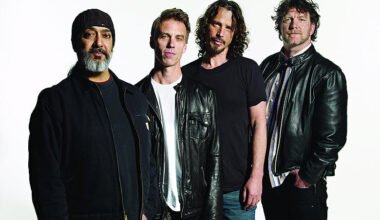
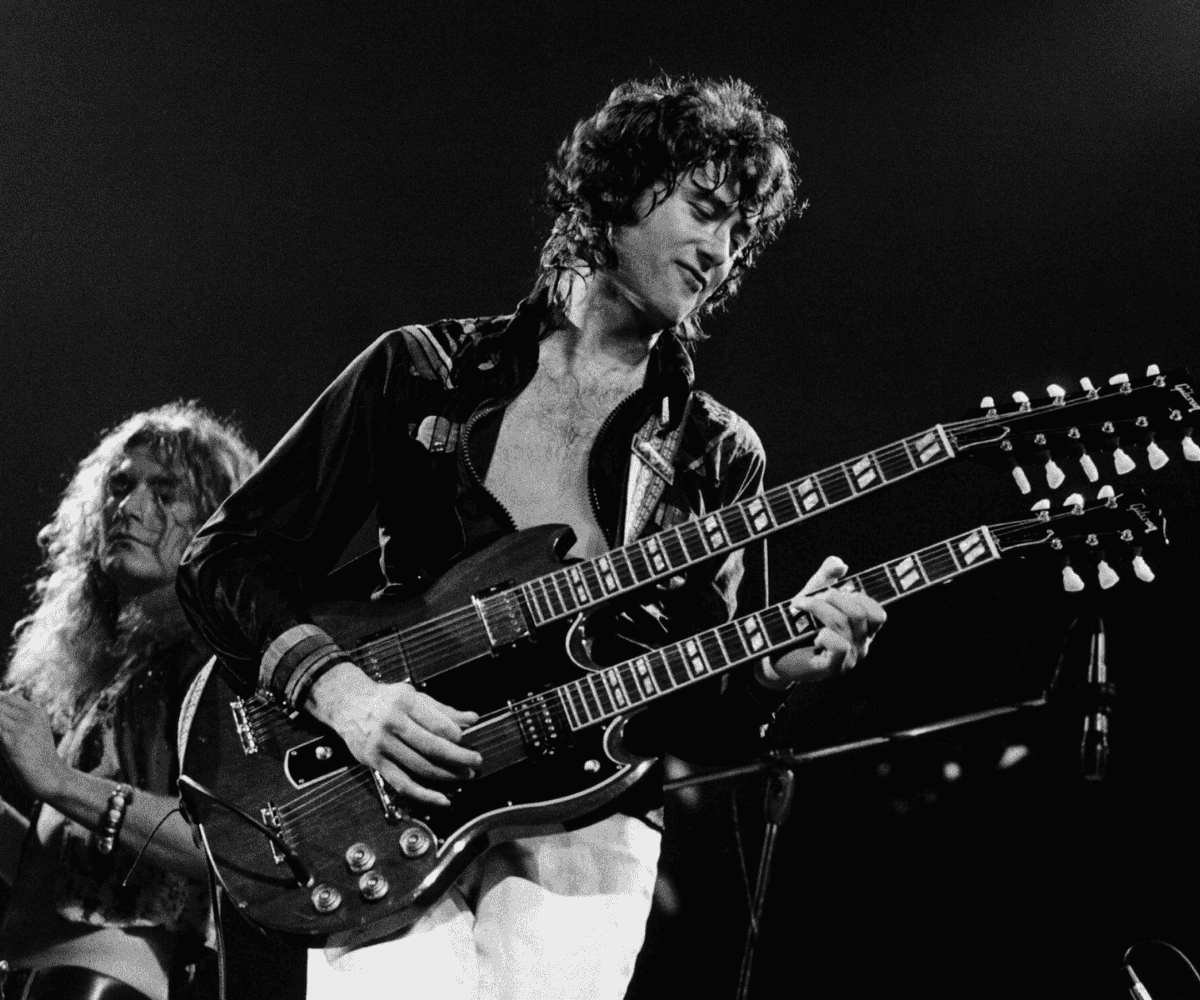
Soundgarden helped bring grunge from the underground to the mainstream alongside heavyweights like Nirvana, Pearl Jam, and Alice in Chains. But their influence reached far beyond the Seattle scene—so much so that even Led Zeppelin’s Jimmy Page counted himself among their admirers.
When Soundgarden frontman Chris Cornell tragically took his own life in 2017, Page responded with heartfelt sorrow. Sharing his grief publicly, he tweeted: “RIP Chris Cornell, incredibly talented, incredibly young, incredibly missed.” It was a brief message, but one that captured the deep respect and sadness felt by a fellow legend.
Page’s admiration for Cornell and Soundgarden became even more apparent during the 2019 tribute concert held in Cornell’s honor. Though unable to attend in person, Page sent a video message that was played at the event. In it, he addressed Soundgarden’s surviving members—Matt Cameron, Kim Thayil, and Ben Shepherd—saying:
“Hello, I’m Jimmy Page, and I’m actually over here in London sending this video link to Matt, Kim, Ben. I’m sorry I can’t be with you there this evening, but, believe me, I’m there in spirit. I want to congratulate you for having got this event together to celebrate Chris’ music.”
Page didn’t stop at praising Cornell alone. He extended his admiration to the whole band:
“I also want to note the input that you put into Soundgarden, from the records. Because I got hooked on your music from the first album. I also came to hear you play. I was always astonished at the way you all glued together. I mean, it was just really what, for me, bands are all about.”
The respect between Page and Cornell was mutual. In 2015, just two years before his death, Cornell had the chance to interview Page for Guitar World. During the conversation, Cornell revealed just how deeply Led Zeppelin’s pathbreaking spirit had influenced him.
“You touched on the idea that there was something besides hit radio,” Cornell told him. “It was chart-driven and hit-driven. Right at this time, when maybe there is a format to do something that isn’t hit-driven, you seem to kind of walk right into it. I didn’t know that you were actually doing something that would allow someone like me years later to have a career doing what I wanted—not having to have hit-driven rock and roll music.”
Cornell saw in Led Zeppelin a blueprint for artistic freedom, and Page, in turn, saw in Soundgarden a band that carried that torch forward. While Cornell may have never known the full extent of Page’s admiration, it’s clear that the bond between these two icons ran deep—one forged through shared values, musical integrity, and fearless creativity.