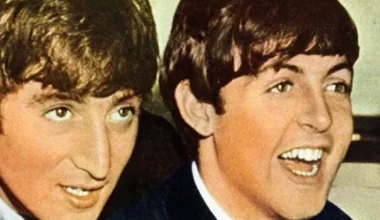
When Brian Wilson died, tributes poured in from across the music world — but few carried as much weight as Paul McCartney’s. Despite decades of so-called rivalry between The Beatles and The Beach Boys, McCartney openly celebrated Wilson’s genius.
“Brian had that mysterious sense of musical genius that made his songs so achingly special,” McCartney wrote. “The notes he heard in his head and passed to us were simple and brilliant at the same time. I loved him, and was privileged to be around his bright shining light for a little while. How we will continue without Brian Wilson, God Only Knows.”
That message carried a simple truth: rivalry can bring out greatness. The Beatles and Beach Boys pushed each other creatively throughout the 1960s, sparking innovations that reshaped modern music. Far from destructive, their competition was fuel — each band’s chart success inspired the other to dig deeper, take risks, and reach higher.
The idea isn’t confined to the past. Kendrick Lamar’s ongoing battle with Drake has fueled some of the biggest moments in hip-hop’s current era, with Lamar’s pointed diss track “Not Like Us” turning into both a cultural event and a massive career milestone. Rivalry, at its best, keeps artists sharp.
Pink Floyd vs. Genesis: Prog Rock’s Quiet Duel
Rock history is full of these rivalries, sometimes unspoken, sometimes blunt. One of the more overlooked examples is the tension between Pink Floyd and Genesis in the 1970s.
In interviews, Roger Waters recalled his irritation with a comment made by an unnamed Genesis member following Peter Gabriel’s departure. The band member contrasted Genesis’s music with Pink Floyd’s, saying Genesis required careful attention while Floyd’s work was “just wallpaper, not just high-class musak like Pink Floyd or Tubular Bells.”
Waters shot back with characteristic sharpness.
“My theory is that if Genesis ever start selling large quantities of albums now that Peter Gabriel — their Syd Barrett if you like — has left, the young man who gave this interview will realise he’s reached some kind of end in terms of whatever he was striving for, and all that stuff about good music is a load of fucking bollocks,” he said.
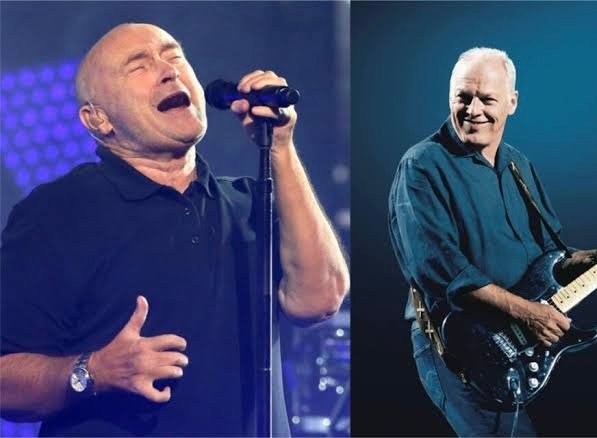
Waters wasn’t entirely wrong. When Phil Collins took over as frontman, Genesis shifted toward a more radio-friendly, pop-oriented sound, breaking through to a wider audience. Pink Floyd, meanwhile, doubled down on sprawling, conceptual albums like Wish You Were Here and The Wall. The rivalry may never have been openly acknowledged in the same way as The Beatles and Beach Boys, but it nonetheless sharpened both bands’ identities.
Why Rivalry Matters
These examples reveal an uncomfortable truth about creativity: competition can be a gift. Artists rarely admit it, but the presence of a rival forces sharper focus, bolder risks, and higher ambition. For The Beatles and Beach Boys, it meant trading masterpieces like Pet Sounds and Sgt. Pepper. For Pink Floyd and Genesis, it meant refining their roles within prog rock’s landscape.
Rivalry doesn’t diminish art. At its best, it propels it forward.