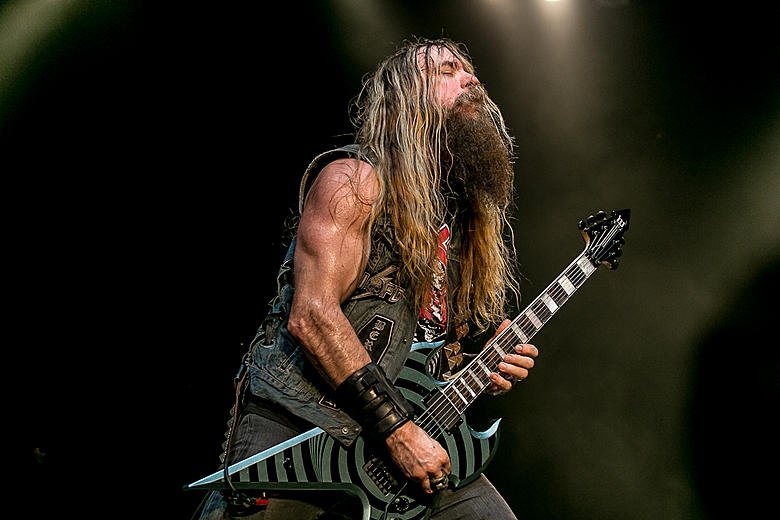
When Zakk Wylde launched Black Label Society, it wasn’t just another side project — it was his personal escape hatch. After years of touring with Ozzy Osbourne, Wylde was tired of depending on someone else’s vision. He wanted a band that could channel his creative restlessness: sometimes mellow, sometimes brutal, always honest. “If I want to do a fucking ballad … or rock out … this band lets me do whatever I want,” he says.
From Crisis to Creation
The origins of Sonic Brew go back to a rough patch in Wylde’s career. At the time, Ozzy was taking a break, and Wylde found himself courted by Axl Rose — but tangled in legal and managerial drama instead of making music. That moment of creative limbo nudged him toward making his own album. He realized that if he wanted his music heard his way, he’d have to do more than just write riffs — he’d have to perform nearly everything himself.
Wylde took over almost every instrument on Sonic Brew — guitar, bass, piano, even vocals — limiting outside input so he could maintain control. His only collaborator was drummer Phil Ondich, who he met via email. Ondich flew to Miami, and the two locked into a cycle of jamming, recording, and… late-night pub sessions. According to Wylde, that loose, alcohol-backed energy fueled the album’s raw feel more than any over-polished studio discipline ever could.
Recording
Sonic Brew
Wylde co-produced the album with Ron and Howard Albert, and during the sessions he emphasized authenticity. “We did whatever felt right,” he says. “If I hear the Beatles doing ‘Hey Jude’ on the radio… I might think, ‘Let’s write a fucking ballad.’” That improvisational spirit came through in the final work — a mix of heavy riffs, soulful singing, and raw Southern rock.
He also revealed that his initial name for the band was Hell’s Kitchen. They changed it only when they couldn’t trademark the name — eventually settling on Black Label Society, inspired by Johnnie Walker Black Label whisky.
Troubles With the Label — and the Cover
The album first saw release in Japan in October 1998, before coming to the U.S. in May 1999. Wylde’s first album cover design? A literal whisky label — until Johnnie Walker lawyers intervened. Apparently, they weren’t thrilled about being linked to “greaseball douchebags” like him. That forced a last-minute change; today, original pressing copies with the whisky label are rare and highly collectable.
Musical Identity: Tribute and Tone
While Sonic Brew is undeniably heavy, it also channels Southern rock influences. On the track “No More Tears” (a cover of the Osbourne classic), Wylde brought in Mike Inez — another Ozzy veteran — to join him in the studio. For Wylde, it was a nod to his past, a way to pay tribute without repeating it.
20 Years Later: Revisiting the Brew
Two decades after its original release, Sonic Brew was revisited in celebration with a refreshed “20th Anniversary Blend (5.99 – 5.19).” The goal wasn’t to remix or re-record, but to “re-blend” — enhancing the fidelity while preserving the raw performances that gave the album its soul.
Wylde explained that they don’t have the original two-inch master tapes anymore; instead, they worked from digital masters, tightened up the steady parts (like bass and drums), but didn’t try to recreate the performances. He pointed out that the album remains “a snapshot in time” — powerful, flawed, and alive.
He even joked that they “soaked the whole album in Viagra” during the re-blending, a tongue-in-cheek reference to the way they pumped up the sound. As for changes, they added two bonus cuts: a piano version of “Spoke in the Wheel” and an acoustic take on “Black Pearl.”
Legacy & Purpose
While Sonic Brew wasn’t a chart-topper, it became the launchpad for Black Label Society’s long-term existence. According to Wylde, the album captured the raw essence of his vision — both heavy and sensitive — the kind of music he wanted to make without constraints.
Reflecting on the album’s spirit, Wylde says the record remains about connection. “Everything I do is about putting a smile on people’s faces,” he says. Sonic Brew may have been born out of frustration, but it became the foundation of a band that continues to thrive.