Trent Reznor, the uncompromising creative force behind Nine Inch Nails, has never shied away from confronting his inner demons through his music. But the making of 2007’s Year Zero marked a pivotal turning point — a moment when the industrial rock pioneer stepped away from the edge of self-destruction and channeled his hard-won clarity into one of the most ambitious and forward-thinking albums of his career.
By the mid-2000s, Reznor had survived the darkest chapters of his life. The late 1990s and early 2000s were defined by intense substance abuse, emotional turmoil, and the overwhelming pressure of success following groundbreaking releases like The Downward Spiral (1994) and The Fragile (1999). He reached a breaking point where it was “time to clean up or die.” Sobriety became the foundation for his next chapter, beginning with 2005’s With Teeth — his first major work after getting clean.
In a powerful 2007 interview with Metal Hammer around the release of Year Zero, Reznor was strikingly candid about the fragility of his recovery. “I could walk out of here, go get a drink and within a week I could be dead. But I’m not interested in doing that,” he stated, highlighting both the constant temptation and his firm commitment to staying sober.
Year Zero arrived as a bold conceptual project — a dystopian narrative set in a near-future America under authoritarian control, plagued by environmental collapse, surveillance, and a mysterious drug-like force called “The Presence.” The album’s innovative rollout included an elaborate alternate reality game (ARG) that expanded the story across websites, viral marketing, and immersive clues, engaging fans in unprecedented ways.
Reznor described the creative process as liberating compared to previous struggles. He started writing on a laptop during downtime on the With Teeth tour, embracing limitations that sparked new ideas. He eventually retreated to a remote house in the California hills for focused writing sessions. The result was a record that blended political commentary, social warning, and personal reflection with the signature sonic intensity of Nine Inch Nails.
“It was an epiphany of sorts,” Reznor explained. “And it revolves around sobriety. When you’re an addict you feel like your problems are the biggest problems in the world. I’m not saying I can change the world, but now I feel like it’s my duty as a human to try and do something.”
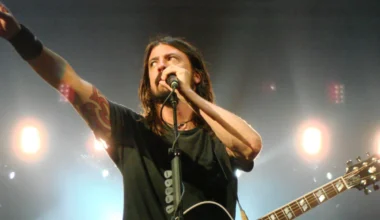
Fans and critics alike noticed the shift during live performances. At a Glasgow show, Reznor was seen smiling, joking with the crowd, and bantering between songs — a stark contrast to the tormented figure of earlier tours. The once self-proclaimed “Prince of Darkness” appeared serene and uncharacteristically happy, a visible sign of the internal transformation that fueled Year Zero.
The album wasn’t strictly autobiographical, but Reznor acknowledged that authentic emotion was essential. “For anything to be believable it has to have ‘you’ in it.” He rejected any notion of compromising his vision for commercial reasons, insisting he would rather walk away than dilute his art.
Looking back, Year Zero stands as a landmark not only for its sonic innovation and ambitious storytelling but as a testament to Reznor’s resilience. The project bridged his darker industrial roots with a clearer, more purposeful creative outlook. Since then, Reznor has continued to evolve — winning Oscars with longtime collaborator Atticus Ross for film scoring work while occasionally returning to Nine Inch Nails with fresh intensity.
For fans, the story behind Year Zero remains one of rock’s most compelling redemption arcs: an artist who stared into the abyss, chose life, and emerged with a haunting warning about the future that feels more relevant than ever.