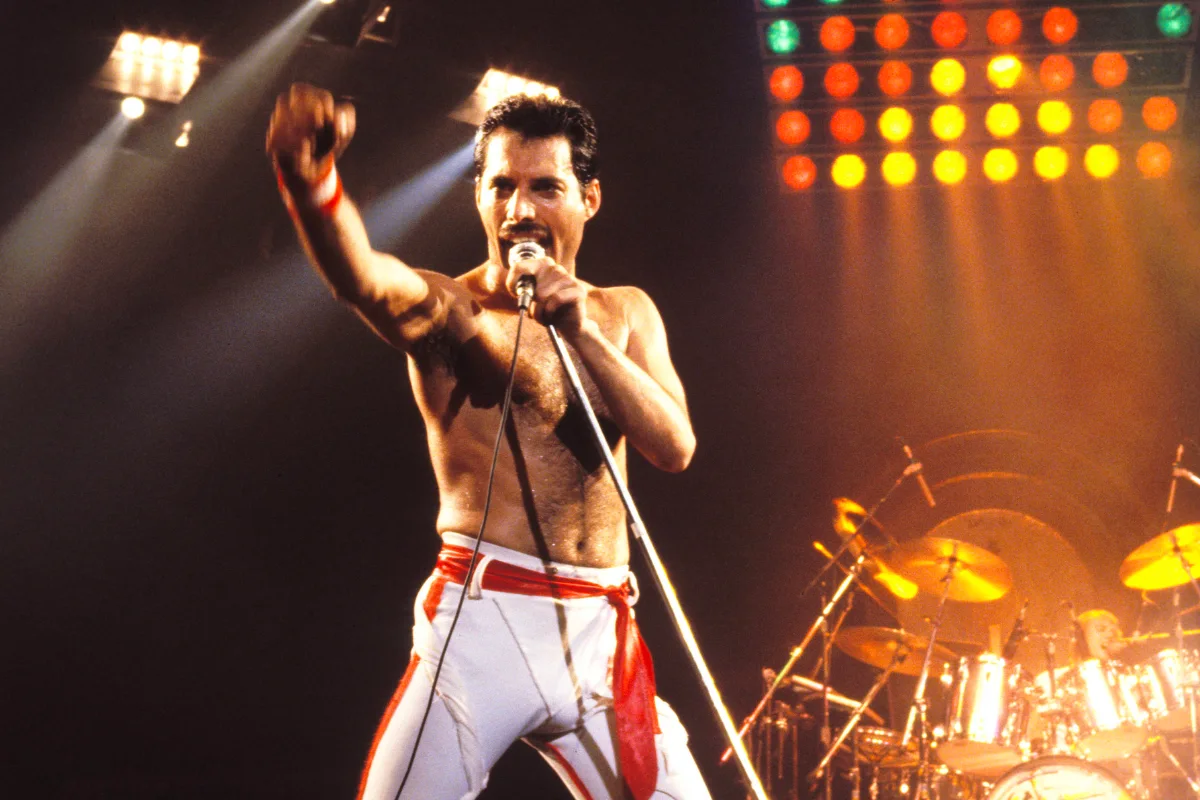
Axl Rose has never been subtle about the artists who shaped him, but his admiration for Freddie Mercury goes beyond the usual rock-star praise. In a 2018 interview with Atlas Magazine, the Guns N’ Roses singer said Queen was the greatest band of all time and Mercury was the greatest frontman ever, pointing to the group’s range and fearlessness as a huge part of what made them so important to him.
Rose did not stop at calling Mercury his favorite. He described Mercury’s lyrics as one of the most important musical lessons of his life, saying that if he had not had those words to lean on as a kid, he did not know where he would have ended up. He added that Mercury’s songs opened his mind to all forms of music and, in his view, were unlike anything else he had ever learned from.
That kind of praise carries extra weight because Rose has long been associated with other formative acts, including Led Zeppelin, the Sex Pistols, and ELO. The AXS TV piece notes that Rose’s turbulent upbringing makes his comments about Mercury feel less like standard hero worship and more like a real emotional anchor that helped shape his musical worldview.
The admiration also goes back much further than the 2018 interview. In a 1989 conversation with Rolling Stone, Rose said that when he had access to a cassette deck on the road, two albums he always tried to have with him were Never Mind the Bollocks and Queen’s Queen II. That detail matters because it shows how deeply Queen was already part of his listening habits while Guns N’ Roses were rising toward their own peak.
There is also a clear musical connection between Rose and Mercury in the way they approach their voices. Rose has said he sings in “five or six different voices” that are all part of him, and the AXS TV article points out that Mercury worked in a similarly broad register, moving from operatic flair to power and restraint inside the same song. That overlap helps explain why Mercury remained such a benchmark for Rose even as Guns N’ Roses built a very different identity.
The article also argues that Mercury’s influence helps explain why Guns N’ Roses sounded larger and more flexible than many of their hard rock peers. Rose and the band came out of the mid-1980s West Coast scene, but they never stayed neatly boxed into one lane, and the spirit of Queen’s stylistic freedom is part of that story. In that sense, Appetite for Destruction was not just a hard rock record with punk edges; it also reflected the kind of melodic and dynamic ambition Queen normalized for a generation of singers.
Rose’s comments fit a wider pattern among technically ambitious rock vocalists. The article notes that singers like Rob Halford, Ronnie James Dio, and Steven Tyler have also pointed to Mercury as a standard-bearer. And with Mercury’s legacy kept alive by projects like Bohemian Rhapsody and Queen’s continued live work with Adam Lambert, Rose’s praise lands as part of a long-running consensus rather than a one-off compliment.
In the end, what makes Rose’s statement stand out is that it sounds earned. He was not simply picking a legend because that is what rock singers are supposed to do. He was describing an artist whose lyrics, range, and refusal to be limited genuinely changed the way he heard music. For Axl Rose, Freddie Mercury was not just the greatest frontman of all time. He was the teacher who helped shape the way he sang, wrote, and thought.