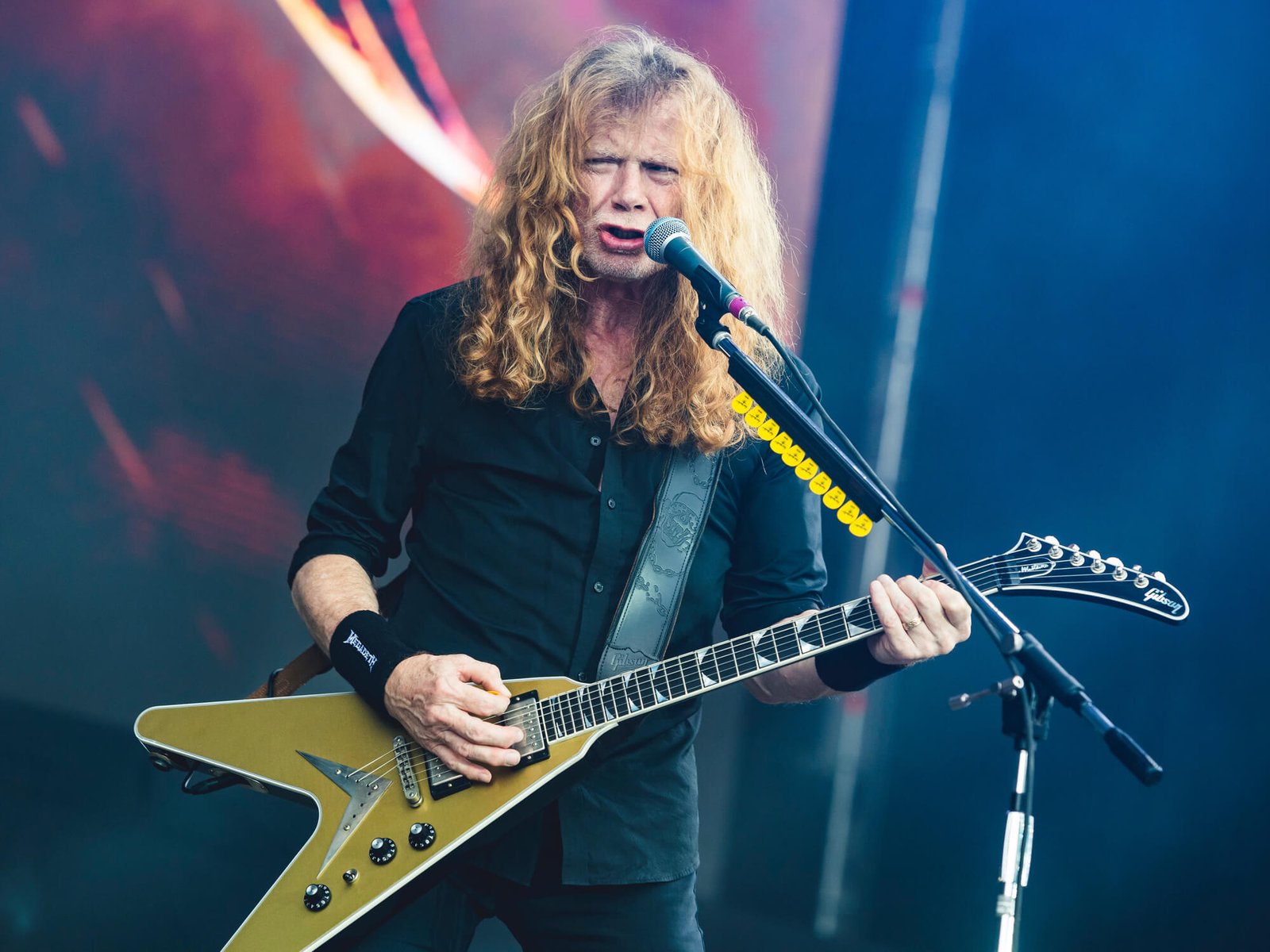
Dave Mustaine, Megadeth frontman and former Metallica lead guitarist, has reflected on one of the most formative moments in early Metallica history: the day he realized James Hetfield was far more than just the band’s singer.
In the early 1980s, Metallica were still cycling through musicians as they tried to solidify their lineup and identity. One night at the Whisky A Go Go in Hollywood, Mustaine found himself watching a rhythm guitarist named Brad Parker (also known as Damian Phillips) play with the band. Mustaine admitted he wasn’t impressed. He described Parker’s appearance as “mid-1980s Rudy Sarzo garb,” complete with a dramatic feather earring, and immediately thought: “This guy’s not gonna be here very long.”
He was right. At the next rehearsal, Parker was gone. But what Mustaine saw instead changed his view of the band forever. James Hetfield, previously focused on vocals and rhythm parts, quietly picked up a guitar and started playing on his own. Mustaine remembers freezing in place as he listened.
It wasn’t polished. It wasn’t rehearsed. It was raw, aggressive, and powerful.
In Mustaine’s words, it was “just James playing guitar like a motherfucker.”
The moment hit him hard. “How did this guy go from singer to a great guitar player?” he remembered thinking, suddenly excited for what Metallica could become with Hetfield stepping into a bigger musical role.
That early spark eventually helped shape one of the most influential sounds in metal history. And although Mustaine was famously dismissed from Metallica in 1983, leading to decades of rivalry, he has grown increasingly open in recent years about the respect he holds for Hetfield and his former bandmates.
Today, with Megadeth approaching the end of its studio era, Mustaine has repeatedly called Hetfield “an exceptional guitar player” and acknowledged the musical foundation they built together in those chaotic early years.
What began as a surprising rehearsal room moment ultimately marked the start of Hetfield becoming one of metal’s most influential rhythm guitarists — and a turning point Mustaine still remembers vividly.