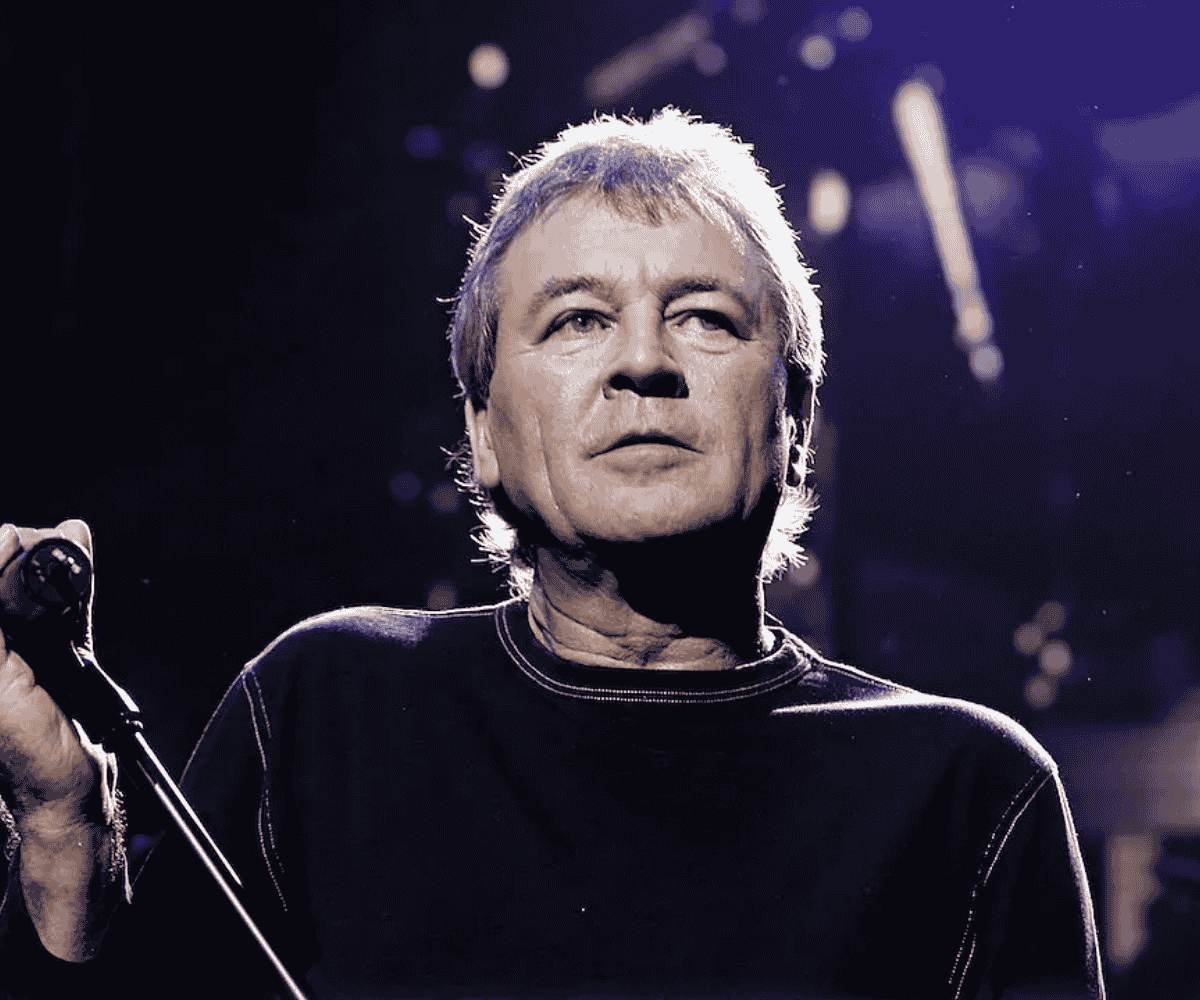
Ian Gillan has revisited one of Deep Purple’s most emotional and consequential breakups, saying the band’s first major split was not just about egos and exhaustion, but about the slow intrusion of “outside influences” that changed how the members related to one another. Speaking on the Rockonteurs podcast, Gillan recalled that Deep Purple began as “five guys” doing everything together, but as the band grew, personal circles expanded, people stopped staying in the same hotels, and the chemistry began to fray. He also said he was “as much to blame as anyone, probably more than anyone” for the Mark II lineup’s collapse.
Gillan said the breakup was not sudden so much as inevitable. In his view, the band’s internal balance shifted when relationships outside the core group started pulling people in different directions. He explained that the members were once tightly bound — even sharing rooms and holidays — but later “outside influences don’t gel quite as well” as the guys themselves, and that was the beginning of the problems. He also said he and Ritchie Blackmore had begun drifting musically, with Blackmore moving toward the tighter song construction that would later define Rainbow, while Gillan felt some of Deep Purple’s “excitement and craziness” was slipping away.
That tension finally broke in the summer of 1973, after Who Do We Think We Are and the punishing touring schedule that followed it. Deep Purple’s Mark II era ended after the band’s second Japan tour that year, with Gillan quitting and Roger Glover being dismissed soon after. In Deep Purple history, that split has long been treated as one of the great “what if” moments in rock, because the band were commercially huge but creatively fraying at the exact moment they might have gone even further.
The emotional weight of the breakup is still echoed by the people who lived through it. Gillan later remembered the 1984 Mark II reunion as healing rather than cynical, saying the band quietly gathered in a basement in Vermont and, when the first jam started, “the smiles” came back. He said it felt “like being at Hanwell in 1969,” a sign that the musical chemistry had survived even after the personal damage. That reunion produced Perfect Strangers, and it remains one of the clearest reminders that Deep Purple’s best years were never just about volume — they were about a very specific group dynamic that could flare up or collapse depending on the pressure around it.
The sadness of the split is underscored by Jon Lord’s later verdict on the end of Mark II. Lord called it “the biggest shame in rock and roll,” saying the band had been writing so well that nobody could know what they might have achieved over the next few years. That line still hangs over the story today, because Gillan’s comments suggest the breakup was not one dramatic explosion but a gradual erosion of trust, timing, and shared purpose.
The band’s live legacy from that final chapter is still easy to trace. The last Mark II concert on June 29, 1973, in Osaka featured a stripped, towering set built around the songs that defined the lineup: “Highway Star,” “Smoke on the Water,” “Strange Kind of Woman,” “Child in Time,” “Lazy,” “The Mule,” and “Space Truckin’.” That setlist has become part of Deep Purple’s mythology because it captures the band at its peak and its breaking point at the same time.
What makes Gillan’s reflection land so hard now is the contrast with Deep Purple’s present. The band has just released Splat!, their 24th studio album, on July 3, 2026, with Gillan still fronting the group alongside Ian Paice, Roger Glover, Don Airey, and Simon McBride. Deep Purple are also touring heavily behind the record, which makes Gillan’s memory of the old split feel less like nostalgia and more like testimony from someone who has watched the same band survive its own fractures for more than half a century.