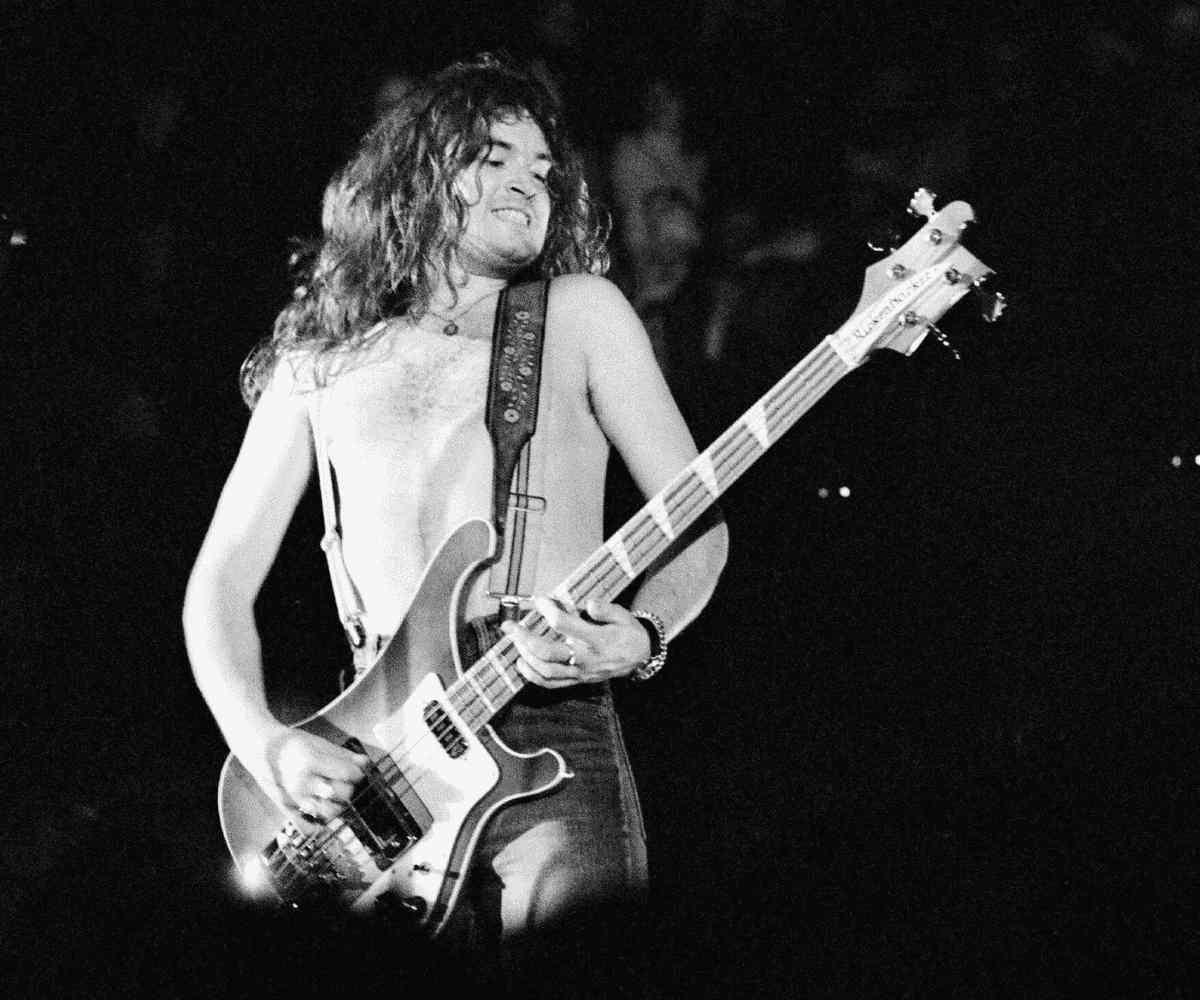
Some moments in a rock legend’s life change everything — and for Glenn Hughes, one of the hardest knocks came not from a rotten review or bad record sale, but from a literal punch in the face.
In the mid-1980s, Hughes — already famous as the powerful voice and bassist of Deep Purple and the funk-rock outfit Trapeze — was tapped by Black Sabbath guitarist Tony Iommi to sing on what was supposed to be Iommi’s solo project. The idea was bold: a legendary guitar player working with a voice equally compelling but stylistically different.
That album ultimately became Seventh Star, released under the Black Sabbath name — a decision driven by label pressure and one that neither Hughes nor Iommi really wanted. Hughes himself has said he wasn’t entirely comfortable with it: “Some of the riffs are quite heavy, but lyrically and melodically, I’m not a metal singer.”
But the real tragedy wasn’t the style clash. It happened right before the supporting tour began.
Just days before the U.S. tour was due to kick off, Hughes got into a confrontation with the tour’s production manager. According to Hughes, he was hit in the face — a blow that broke a bone in his nose and left dried blood around his vocal cords.
He later recalled how surreal it felt: being asked to sing a show right after being struck so hard that his voice was nearly unusable. With his voice compromised after just three performances, the tour quickly fell apart and Hughes was replaced, ending what could have been a career-defining run.
“It was a very tragic moment,” Hughes said — not with bitterness, but with the heavy insight of someone who’s lived a lifetime in rock.
That broken nose didn’t just hurt physically — it reshaped a chapter of his career. Instead of a long run fronting one of metal’s biggest bands, Hughes’ stint lasted only a handful of shows before he was replaced by Ray Gillen.
Had that incident never happened, music fans might remember Seventh Star not as a controversial Sabbath off-shoot but as a bridge between heavy metal and Hughes’ soul-rock roots. Instead, it became one of the most infamous sidetracks in rock history.
Despite the setback, Glenn Hughes went on to continue a storied career — battling addiction, reinventing himself as a solo artist, and even crediting another moment as a life-saving turning point when he worked on the track America: What Time Is Love? with The KLF in the early ’90s.
He’s reflected on the tragedy not with anger but with perspective, acknowledging that even the darkest episodes helped shape him into the artist he became.
Even legends get knocked down. For Glenn Hughes, that infamous fight wasn’t the end — just one of the most dramatic detours in a life lived hard and sung even harder.