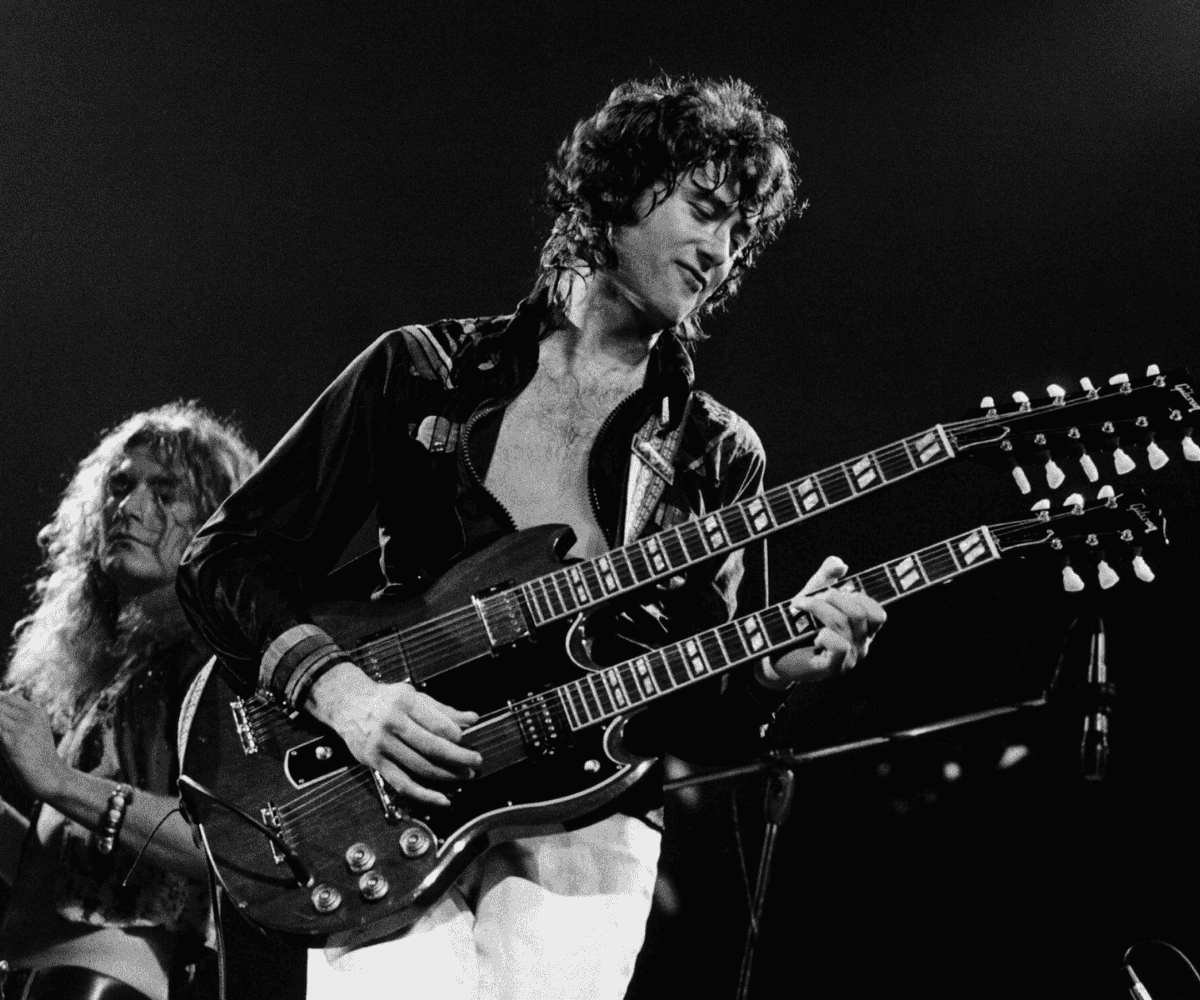
Jimmy Page is more than a legendary guitarist — he’s practically a mythic figure in rock history. From his haunting riffs to his otherworldly tones, the Led Zeppelin mastermind helped redefine what the electric guitar could do. So when Page praises another guitarist — and not just with casual admiration, but with utter reverence — it’s something every rock fan should take seriously.
Before Page rose to international fame, he had already carved out a formidable reputation in the London music scene of the 1960s. Alongside names like Eric Clapton, Jeff Beck, and Big Jim Sullivan, Page was considered one of Britain’s premier guitar talents. Long before he became Led Zeppelin’s sonic architect, he was a go-to session guitarist, lending his skills to records by The Who, The Kinks, and even Marianne Faithfull’s haunting hit “As Tears Go By.”
That path eventually led Page to The Yardbirds in 1966, where he briefly teamed up with Jeff Beck and began shaping a heavier, more experimental style of rock. One of the defining moments came with the 1968 single “Happenings Ten Years Time Ago” — a psychedelic track that hinted at the dense, thunderous sound he would later perfect in Led Zeppelin.
By the early 1970s, with albums like Led Zeppelin IV, Page had already staked his claim as perhaps the finest rock guitarist of his generation. But while the world was hailing him as a genius, Page himself was looking to another peer with equal awe: Deep Purple’s Ritchie Blackmore.
Like Page, Blackmore came out of the same bustling session scene in London. Before founding Deep Purple, he even crossed paths with Page and Beck on various recording gigs. But when Deep Purple emerged in 1968, they forged their own powerful legacy, helping shape the future of hard rock and heavy metal. Blackmore’s aggressive, baroque-inspired playing and blistering solos quickly set him apart.
In an interview with Classic Rock, Blackmore credited Led Zeppelin’s breakthrough as a key inspiration. “I was impressed with what Zeppelin did,” he admitted. “I wanted to do that kind of stuff. We did it with In Rock, and it took off.”
But the real twist comes from Page himself — not just acknowledging Blackmore, but admitting that in one key area, he couldn’t even compete.
“When it comes to a solo, I cannot touch him,” Page once said bluntly. He doubled down during a talk at Oxford University in 2016, saying of Blackmore: “I couldn’t touch that guy in the live concert arena, improvisation stakes.”
Coming from someone as respected as Jimmy Page, that kind of praise is monumental. Guitarists spend their entire careers chasing recognition, but when one of the greatest of all time calls you untouchable, that’s a different level entirely.