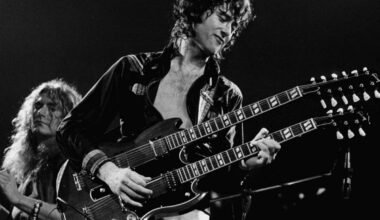
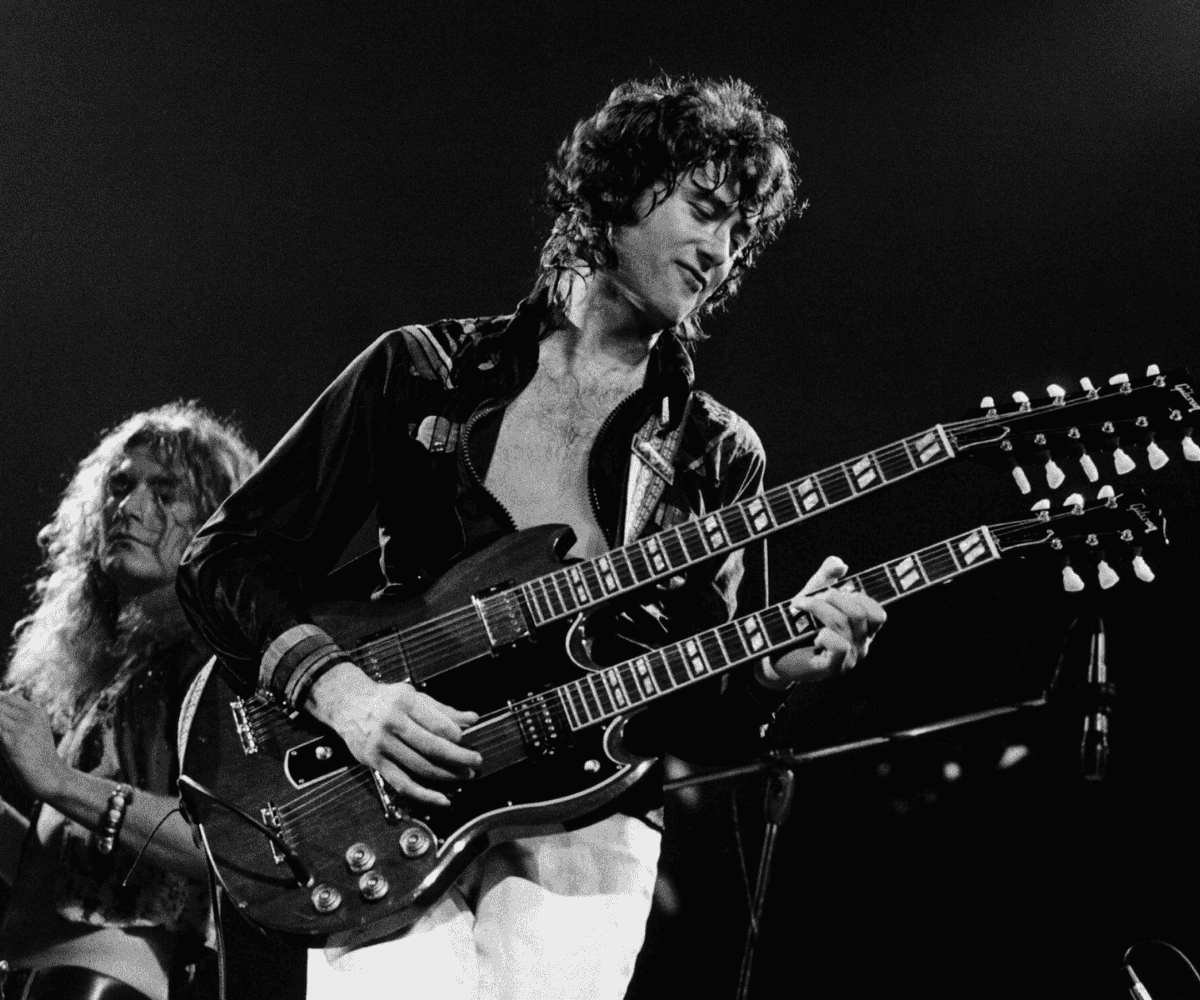
Ask any rock fan to name the greatest guitarists of all time, and Jimmy Page will nearly always make the list. As the architect behind Led Zeppelin, Page didn’t just play guitar—he reinvented it. From monstrous riffs to psychedelic explorations, his sound shaped an era. But long before “Stairway to Heaven” echoed through stadiums, before he even joined The Yardbirds, there was a young Jimmy Page… and there was Duane Eddy.
Before the mystique, before the violin bow solos, Page was a fan.
Long before Zeppelin roared onto the scene in 1968, Page was already a respected name in the London music circuit. A session player with endless credits—backing everyone from The Who on “I Can’t Explain” to Shirley Bassey and Marianne Faithfull—Page had built a reputation not just on creativity, but on precision, tone, and taste. His foundation was solid rock ‘n’ roll, and he credited that foundation to Duane Eddy, the man who first made the guitar sing like thunder.
Eddy, known for his iconic “twang” tone, wasn’t just a player—he was a pioneer. Alongside Buddy Holly and Les Paul, Eddy helped pull the electric guitar into the spotlight in the late ‘50s and early ‘60s. His sound was cinematic, driving, and bold—perfect for the young ears of a teenage Jimmy Page.
“I first saw him perform at the Granada in Kingston in November 1963,” Page once remembered with boyish excitement. “Topping the bill that evening was Gene Vincent, but it was Duane who left the biggest mark.”
Years later, when Page had become a guitar god himself, he never forgot who lit the fuse. He paid homage in interviews and tributes, always speaking of Eddy with reverence. “Duane Eddy twanged the thang in the late ’50s and ’60s,” Page said following Eddy’s passing in 2024. “You can hear his character sound appearing throughout the decades of popular music.”
What’s most touching, though, is how Page—this towering figure in rock history—became a fan again every time he spoke of Eddy. He recalled moments of awe not just as a listener, but later as a peer. “Duane was hosting a tribute programme to Les Paul,” Page shared. “We discussed the massive pioneering contribution that Les had presented to the world.” For Page, these conversations weren’t just industry chatter—they were full-circle moments.
Even as Led Zeppelin evolved into thunderous rock operas and transcendent live shows, Page carried the twang of Duane Eddy in his soul. It wasn’t about copying style—it was about carrying the spirit forward. A deep tone. A bold riff. A musical signature that told you exactly who you were listening to.
In Page’s playing, Duane Eddy’s influence echoes not in imitation—but in intention.
Because sometimes, even guitar gods never forget their heroes.