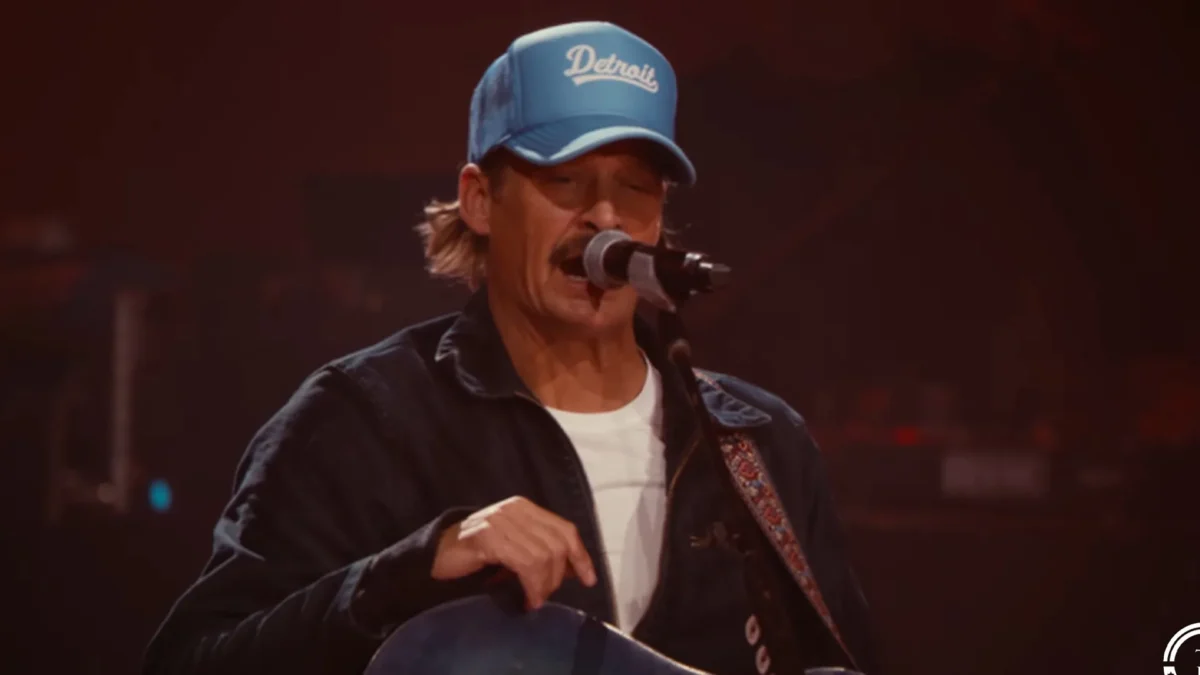
Kid Rock headlined Turning Point USA’s All-American Halftime Show on Super Bowl Sunday (Feb. 8, 2026) — a livestreamed alternative performance running concurrently with the NFL’s official halftime show. The program, framed as a patriotic counter to Bad Bunny’s Super Bowl set, featured a mix of country and rock artists and was streamed across multiple platforms including YouTube, Rumble and TPUSA’s channels.
Rather than a single long concert, the All-American Halftime Show was a multi-artist lineup with each performer delivering a short but spirited selection of songs. The show also included tributes and patriotic elements, including an opening guitar solo of the “Star-Spangled Banner.”
Brantley Gilbert
- “Real American” — A rowdy patriotic anthem setting the tone for the evening.
- “Dirt Road Anthem” — A country staple performed with energy and crowd engagement.
Gabby Barrett
- “I Hope” — One of Barrett’s biggest hits, delivered with powerful vocal control.
- “The Good Ones” — A heartfelt ballad that drew strong audience response.
Lee Brice
- “Drinkin’ Class”
- “It Ain’t Easy Bein’ Country”
- “Hard 2 Love”
Brice’s set blended favorites with emotional resonance, reflecting traditional country themes.
Kid Rock
- “Bawitdaba” — The rocker opened his portion with an explosive performance of his 1999 hit, backed by dramatic lighting and patriotic visuals.
- “‘Til You Can’t” — A reimagined cover of Cody Johnson’s song, performed acoustically; Kid Rock added his own third verse with a religious and inspirational message, honoring TPUSA’s late founder Charlie Kirk.
The show wrapped with the final performances and a tribute segment celebrating Charlie Kirk’s memory.
While the event was branded around patriotism, faith and “great American music,” reactions were mixed: some viewers praised the multi-genre showcase and vocal performances, while others criticized aspects of production, pacing, and live vocals. The show intentionally positioned itself as an alternative to mainstream halftime entertainment, aimed at a conservative audience that had expressed dissatisfaction with the NFL’s official programming choice.
The hybrid format — streamed rather than broadcast on major networks — allowed the event to reach millions online, though it remained significantly smaller in overall viewership compared to the official halftime show performance.