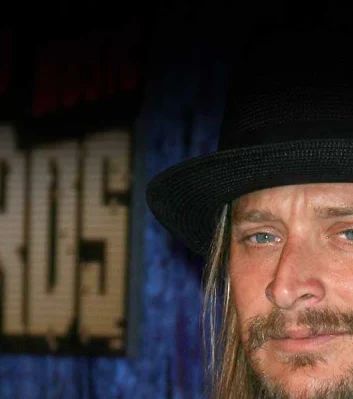
Kid Rock is once again at the center of controversy — and this time, his response was not an apology, a clarification, or even a statement.
After drawing criticism over lyrics in his song “Cool Daddy Cool,” which some listeners have accused of being inappropriate and disturbing, the artist chose an unexpected form of reply: he posted Bruce Springsteen’s song “I’m On Fire.” No caption. No explanation. Just the track itself.
For many, the message felt pointed.
“I’m On Fire,” released by Springsteen in 1985, is a sparse, haunting song that famously opens with the line:
“Hey little girl, is your daddy home?”
The lyric has long been debated in rock history — defended by some as metaphorical and criticized by others for its unsettling framing. By sharing the song in the wake of backlash over his own lyrics, Kid Rock appeared to be drawing a comparison, implicitly or otherwise, between his work and that of one of America’s most revered songwriters.
The lack of commentary only amplified the reaction. To supporters, the post read as a defiant statement about artistic freedom and selective outrage. To critics, it felt dismissive — even provocative — given the nature of the concerns being raised.
Notably, Kid Rock did not issue an apology, denial, or explanation regarding “Cool Daddy Cool.” There was no acknowledgment of the criticism itself. Instead, the Springsteen post stood alone, leaving audiences to interpret its meaning.
This approach is consistent with Kid Rock’s long-standing public persona. Throughout his career, he has often responded to controversy indirectly — through symbolism, music references, or silence — rather than traditional public statements.
The moment also fits into a broader pattern surrounding the artist’s recent public profile. Kid Rock has increasingly positioned himself as resistant to what he views as cultural policing or selective moral outrage, often framing criticism as hypocrisy rather than accountability.
By invoking Springsteen — an artist often associated with moral authority, Americana, and mainstream critical respect — Kid Rock may have been highlighting what he sees as a double standard in how lyrics are judged depending on who writes them.
Still, critics argue that invoking a decades-old song doesn’t address present-day concerns, especially when those concerns involve discomfort rather than censorship.
Whether intentional or not, the absence of words became the statement itself.
With no caption and no follow-up, the post left space for interpretation — and intensified the debate rather than closing it. Fans and critics alike quickly dissected the move across social media, framing it as everything from clever provocation to tone-deaf deflection.
As of now, Kid Rock has not expanded on the post or addressed the backlash directly. Until he does, the Springsteen share remains his only response — a quiet gesture that spoke loudly, depending on who was listening.