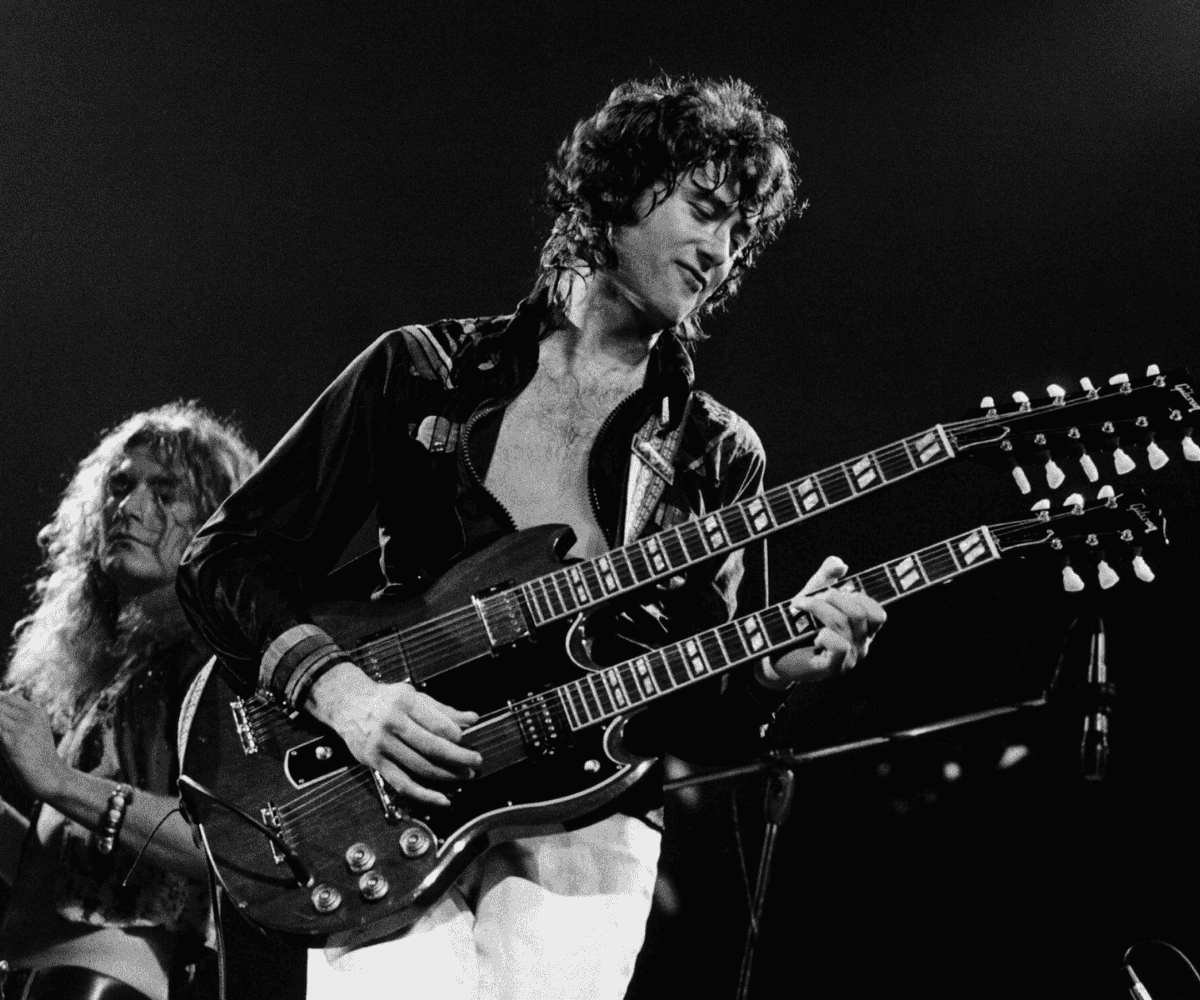
Throughout their meteoric rise, Led Zeppelin often found themselves embroiled in controversy over the originality of their music. Accusations of plagiarism weren’t rare—and some even landed them in court, where settlements typically ended in hefty payouts. Yet one of the most striking claims of musical theft never went to trial, even though the evidence was crystal clear.
Across their eight studio albums, Led Zeppelin built a musical empire that shaped the sound of rock for decades. But while they revolutionized the genre, the band members—particularly Jimmy Page—weren’t shy about flaunting their influences. In some cases, though, admiration blurred into imitation.
One artist who believed Page had directly lifted from his playbook was Scottish folk icon Bert Jansch. A pivotal figure in the British folk revival of the 1960s, Jansch’s intricate fingerpicking and melodic sensibility left a deep impression on generations of musicians. His self-titled debut is considered a landmark record, and his work with the group Pentangle helped define a new style of acoustic music.
Johnny Marr of The Smiths, one of Jansch’s many admirers, once told The Guardian: “If you’re into Nick Drake, you’re into Bert. Zeppelin’s acoustic stuff, Neil Young, Donovan—all of it leads back to Jansch. Without him, half of my work in The Smiths wouldn’t exist.”
Led Zeppelin’s “Black Mountain Side” bears a striking resemblance to Jansch’s version of the traditional folk tune “Blackwaterside.” Another Zeppelin track, “Bron-Y-Aur Stomp,” is eerily close to Jansch’s arrangement of “The Waggoner’s Lad.” Despite these sonic parallels, Jansch never pursued legal action against Page or the band.
Page, for his part, has never denied being captivated by Jansch’s music. “At one point, I was absolutely obsessed with Bert Jansch,” he once said. “That first record blew my mind. It was way ahead of anything else I’d heard. No one in the States could touch that.”
During the 1960s, Page reportedly attended many of Jansch’s gigs in Soho, soaking in every nuance of his playing. But for Jansch, those encounters were tinged with discomfort. In a 2007 interview with Classic Rock, he explained: “Every time I see Jimmy, he can’t look me in the eye. He ripped me off—or, let’s just say, he learned a lot from me. I don’t want to sound rude.”
The tension becomes even more apparent when Page talks about his peers. In a Rolling Stone interview, he name-checked several contemporaries: Jeff Beck, Eric Clapton, Pete Townshend, and Alvin Lee. Noticeably absent? Bert Jansch. Page described the British guitar scene of the era but left out the folk guitarist whose style he arguably emulated most.
Jansch, meanwhile, recalled his first brush with Zeppelin’s music in an interview with Uncut. “I’d never heard of Jimmy Page,” he said. “Then a friend told me about this new band, Led Zeppelin. I listened, and I could hear it immediately. But my playing is built for small rooms, maybe a concert hall at most. Anything bigger, and I fall apart. That kind of scale freaks me out.”
In the end, all musicians borrow in one way or another. But Page’s liberal use of Jansch’s techniques—and his inability to face him without unease—suggests a debt that was never fully acknowledged, let alone repaid.