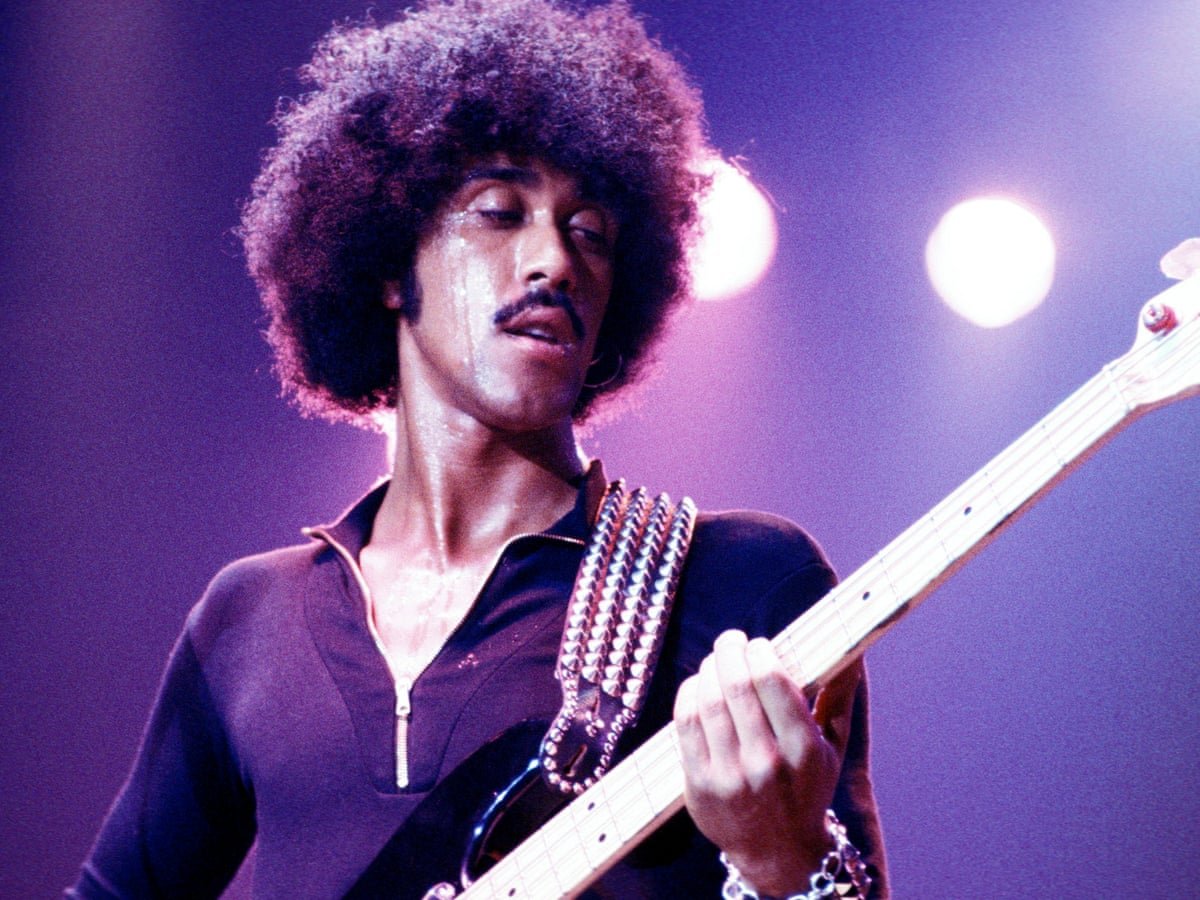
Every year on his death anniversary, the music world pauses to remember Phil Lynott — not just as the frontman of Thin Lizzy, but as one of rock’s most distinctive voices, storytellers, and spirits. Decades after his passing, Lynott remains impossibly present: in the twin-guitar harmonies that still ripple through rock music, in lyrics that read like street poetry, and in the fearless individuality he carried onto every stage he stepped on.
Born in West Bromwich in 1949 and raised in Dublin, Lynott grew up navigating identity, belonging, and resilience — themes that would later define his songwriting. As Ireland’s first Black rock star, he stood out visibly and culturally, but never asked permission to exist. Instead, he carved his own lane, blending Celtic folklore, working-class realism, and romantic fatalism into songs that felt both mythic and deeply human.
With Thin Lizzy, Lynott helped redefine hard rock. Songs like “The Boys Are Back in Town,” “Jailbreak,” and “Emerald” weren’t just anthems — they were stories populated by outsiders, dreamers, fighters, and wanderers. His lyrics had the rhythm of spoken word, the heart of literature, and the swagger of someone who understood that rock music could be tough without being hollow.
But Phil Lynott was more than riffs and rebellion. He was a poet who published verses, a bassist who sang with melodic authority, and a frontman whose charisma came from vulnerability as much as confidence. He could sound triumphant one moment and heartbreakingly fragile the next — often within the same song. That emotional range is why his work still feels alive rather than frozen in nostalgia.
Lynott’s life, however, carried a heavy cost. The pressures of fame, relentless touring, and personal struggles eventually took their toll. On January 4, 1986, Phil Lynott died at just 36 years old — an age when many artists are only beginning to fully understand themselves. His death sent shockwaves through the rock community, not just because of the loss, but because of the sense of unfinished chapters left behind.
Yet legacy is not measured in years lived — it’s measured in echoes. And Phil Lynott’s echo is loud.
You hear it in every band that values melody alongside muscle. You feel it in musicians who dare to be both poetic and dangerous. You see it in Dublin, where his statue stands not as a monument to tragedy, but as a reminder of pride, creativity, and unapologetic individuality.
On this anniversary, Phil Lynott is remembered not for how he died, but for how vividly he lived — with words that mattered, music that endured, and a voice that refused to blend into the background. He didn’t just front a band. He told stories for those who felt unseen.
And as long as those stories are still being sung, Phil Lynott is never truly gone.