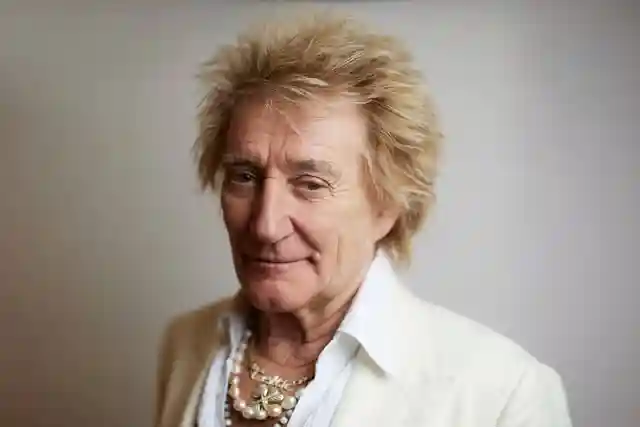
Rod Stewart is one of rock and pop’s most enduring voices: raspy, expressive, and unmistakable. From Maggie May to Da Ya Think I’m Sexy? and Sailing, he has a gift for interpreting songs in ways that feel intensely personal. But even a legend like Stewart has passed on songs that went on to become massive hits — including one that ultimately became a No. 1 pop anthem for another artist.
That song was “I Will Always Love You.” Long before Whitney Houston turned it into one of the biggest selling singles of all time, it was written and recorded by Dolly Parton in 1973. The song was originally a country farewell — Parton wrote it as a goodbye to her mentor and business partner, Porter Wagoner — but its emotional power transcended genres.
When I Will Always Love You began making the rounds among industry insiders in the 1980s, many artists saw its melodic strength and lyrical intensity as potential pop gold. But when the opportunity came for Rod Stewart to record it, he declined.
Stewart passed on the song not because he doubted its quality, but because he didn’t feel a personal connection to the lyrics. Unlike a typical love song, it’s a deeply intimate farewell — a message of gratitude and emotional closure rather than romantic longing. Stewart reportedly felt that the song’s tone and sentiment didn’t fit his own artistic voice or the narrative he wanted to project in his music at the time.
This wasn’t an unusual choice for Stewart, who has always been particular about material that resonates emotionally or thematically with his own life experience.
Years after Stewart declined it, I Will Always Love You found its most seismic moment on the soundtrack for The Bodyguard (1992), performed by Whitney Houston. Houston’s version turned the reflective country ballad into a soaring pop-soul anthem. Her performance was nothing short of transformational — vocal mastery married to emotional release — and it became one of the biggest hits of the 1990s.
Houston’s version spent 14 weeks at No. 1 on the Billboard Hot 100, became one of the best-selling singles in history, and introduced the song to a global audience far beyond its country origins.
Rod Stewart’s decision to skip the song highlights an important truth about great songs: they don’t belong to any one performer. Sometimes a track finds its best interpreter not because it’s the most obvious fit, but because the voice, moment, and emotional context converge perfectly.
Stewart’s instincts weren’t wrong for him — he has enjoyed massive success with material that fits his voice, persona, and stylistic leanings. But the detour I Will Always Love You took on its path to superstardom is one of music history’s great “what if” moments.
Rod Stewart would go on to have a career filled with classic hits across rock, pop, and standards. His knack for interpretation — adding his own personality to songs — has always been part of what makes him distinctive. But this story remains a fascinating footnote: a reminder that even the biggest voices sometimes walk away from greatness — only for it to become even greater elsewhere.
And as it turned out, I Will Always Love You did exactly that: becoming a cultural touchstone, a defining recording of an era, and one of the most iconic vocal performances in pop history — even without Stewart’s unique rasp attached to it.