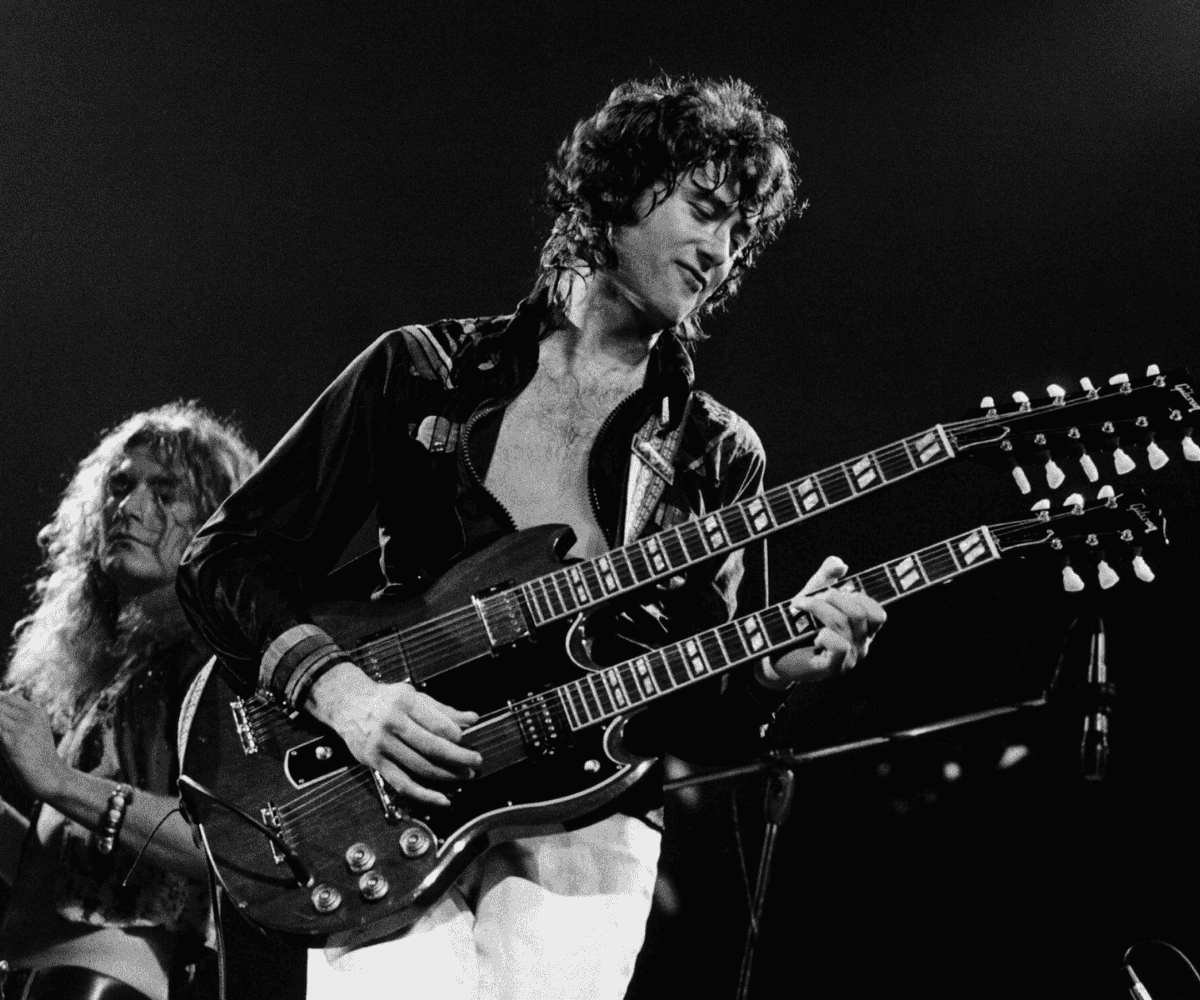
Trying to define Jimmy Page is like trying to catch lightning in a bottle. He’s not just a guitarist—he’s a visionary, a sonic architect who reshaped the very landscape of rock music. If you had to sum him up in a single word, it would be versatile.
From his earliest days, Page chased music that stirred his soul. Like many of his peers, he began by soaking up the sounds of blues and R&B legends. But he didn’t stay there long. His time as a session musician in the 1960s exposed him to a vast range of styles—from skiffle to psychedelia, orchestral pop to experimental rock. It sharpened his skills and expanded his imagination. When it came time to build Led Zeppelin, Page knew exactly what he wanted: a band that could do everything.
He called it “light and shade”—a dynamic musical philosophy that embraced the brutal and the beautiful, the electric and the acoustic. Led Zeppelin didn’t just hammer out riffs; they wandered through folk ballads, Eastern melodies, and mystical textures. Page’s guitar wasn’t bound to one genre—it bent genres to his will.
And he didn’t do it alone. John Bonham brought thunder. John Paul Jones added texture and discipline. And Robert Plant? With that untamed, golden voice, Plant gave Page the freedom to explore any musical path, knowing his frontman could follow.
But even as the Zeppelin years passed into legend, Page kept his ears open. He never stopped searching for voices—the kind that carried real weight, emotion, and range. And when Jeff Buckley emerged in the 1990s, Page heard something hauntingly familiar.
Buckley’s 1994 album Grace didn’t sound like Led Zeppelin, but it echoed the same spirit of musical freedom. Buckley moved seamlessly from raw rock energy to fragile ballads, all while wielding one of the most powerful and expressive voices of his generation.
Page was mesmerized.
“Probably, he was the best singer that appeared in—I’m not being liberal about this—about two decades,” Page once said. That’s high praise from the man who helped launch one of rock’s most iconic vocalists.
In Buckley, Page saw a kindred spirit—an artist who refused to be boxed in, who let emotion drive every note. For the man who once redefined rock with light and shade, hearing Buckley must have felt like hearing his own legacy carried forward.