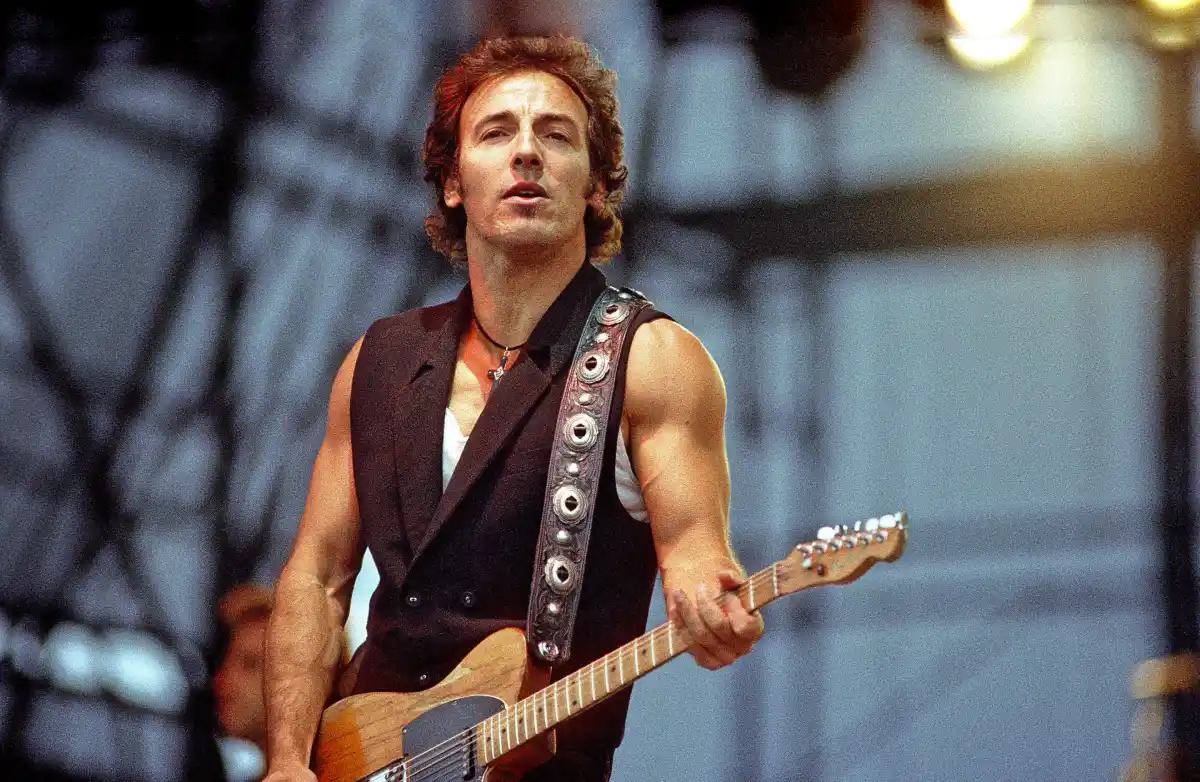
Bruce Springsteen has always carried the American spirit deep in his bones. Though critics and politicians have tried to paint him as too political or too outspoken, few artists have shown more pride—or more love—for their country than ‘The Boss.’ Through decades of music and public life, Springsteen has crafted a portrait of America that is both unflinching and deeply human.
From early on, Springsteen was never one to shy away from holding a mirror up to the flaws of his homeland. For him, being American meant speaking the truth—loudly and without fear. That fire burns through his classic “Born in the U.S.A.”, a song often misunderstood as patriotic bravado when it’s really a blistering critique of how Vietnam veterans were abandoned after returning home.
To Springsteen, songwriting isn’t just self-expression—it’s journalism. Albums like Tunnel of Love dive into personal territory, but his most powerful works, like Nebraska and Darkness on the Edge of Town, are filled with characters fighting quiet battles, scraping by in small towns, and wondering if the American dream was ever meant for them in the first place.
After the devastation of 9/11, The Rising became his way of grieving and rebuilding. While the country staggered with pain, Springsteen reached for healing over vengeance. Instead of fueling division, he gave a voice to the victims, the survivors, and those trying to make sense of senseless tragedy. His focus wasn’t rage—it was resilience, empathy, and unity.
This clarity of voice didn’t appear overnight. In his early days, Springsteen was just another hungry musician playing clubs off the New Jersey Turnpike. But everything changed when he heard Bob Dylan. Springsteen wasn’t just inspired—he was electrified. Dylan, armed with just an acoustic guitar and a fearless pen, showed how music could challenge the world.
One record, in particular, cracked open a new dimension for him: Highway 61 Revisited. “When I heard Highway 61, I was hearing the first true picture of how I felt and how my country felt. And that was exhilarating,” Springsteen once said. Dylan didn’t sugarcoat the truth—he dragged it into the open with biting wit and bold vulnerability. “He took all that dark stuff that was rumbling underneath and pushed it to the surface.”
Tracks like “Like a Rolling Stone” weren’t just songs—they were declarations of independence. Dylan used rock and roll as a megaphone for rebellion, willing to shed the expectations of the folk scene and chart his own unpredictable course. His courage to speak out—no matter the fallout—paved the way for voices like Springsteen’s.
While The Beatles might’ve jumpstarted the American music revolution in 1964, it was Dylan who carved the road for artists who wanted to say something deeper. And a decade later, Springsteen took that blueprint and began telling the forgotten stories of America—its drifters, its dreamers, and everyone caught in between.
Bob Dylan broke the silence. Bruce Springsteen gave the silence a name.