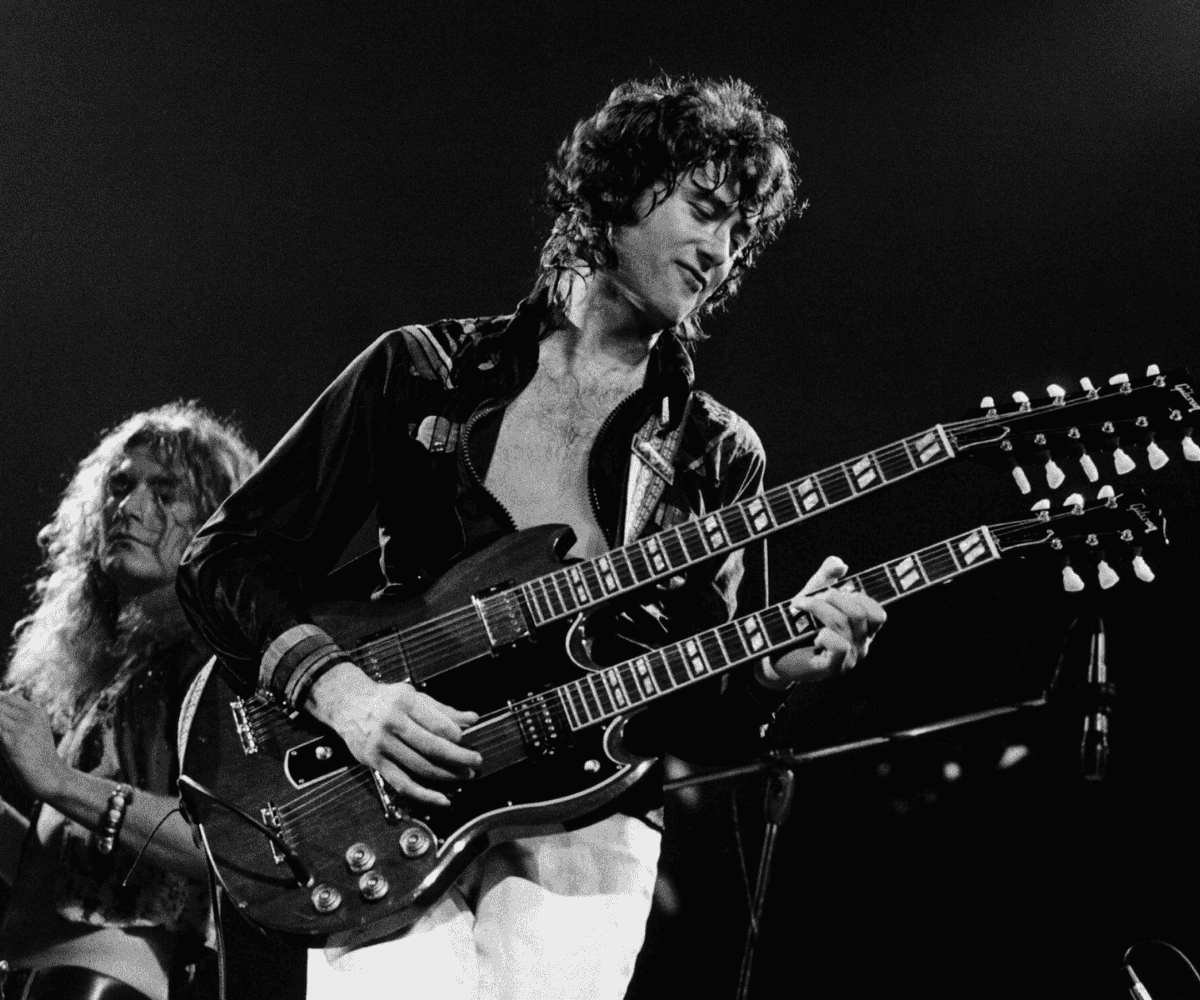
For most rock legends, it’s nearly impossible to appreciate career-defining moments while they’re happening. Artists chase the next big high—striving to outperform their last album, tour, or explosive solo. Jimmy Page was no exception. Even during his reign with Led Zeppelin, he was too focused on pushing boundaries to stop and admire the view. But years later, Page singled out one unexpected performance that, in his words, meant more to him professionally than anything Zeppelin ever did.
Building Led Zeppelin was a massive risk. Supergroups were still a novelty, and no one—Page included—knew whether the alchemy would work or crash and burn. Leaving behind The Yardbirds, Page had a vision of heavy blues laced with thunder and mystique. But visions don’t always translate.
Then came that first crushing riff on Led Zeppelin I. From the bone-shaking double-kick on “Good Times Bad Times” to the proto-metal snarl of “Communication Breakdown,” the band blew the doors off the studio. The blues roots were clear, but something darker and heavier lurked beneath. Suddenly, the gamble didn’t look so risky anymore.
Still, Zeppelin’s real magic never lived just in grooves of vinyl. It was onstage that they truly became monsters. Page wielded his guitar like a sorcerer, whether drawing eerie sounds from a violin bow or stomping through solos that left venues in tatters. Bonham demolished his kit—sometimes literally. Plant howled with a wildness that refused to be tamed. Zeppelin didn’t just play shows—they ravaged them.
And yet, years beyond the chaos and triumph, it wasn’t a classic Zeppelin gig that Page called the peak of his professional life.
In a rare moment of reflection, Page pointed to a global performance where he tore through a full version of “Whole Lotta Love” in front of the entire world. Unlike most primetime gigs, this wasn’t a watered-down snippet. No edits. No cuts. Just the full sonic force—psychedelic breakdowns and all—broadcast live across the planet.
“There have been profound moments in my life, especially the birth of my children,” Page said. “But professionally? It was playing that night. I knew it was being seen worldwide, and it meant everything to bring that full version to life.”
It’s telling that a man who conquered stadiums and rewrote the rules of rock would still find something new to say in a decades-old Zeppelin track. He didn’t need a screaming crowd or walls of Marshall stacks. He needed a moment that reached beyond the usual chaos—a reminder of what made him a legend in the first place.
Jimmy Page wasn’t just showing the world he still had it. He was reminding them why he always did.