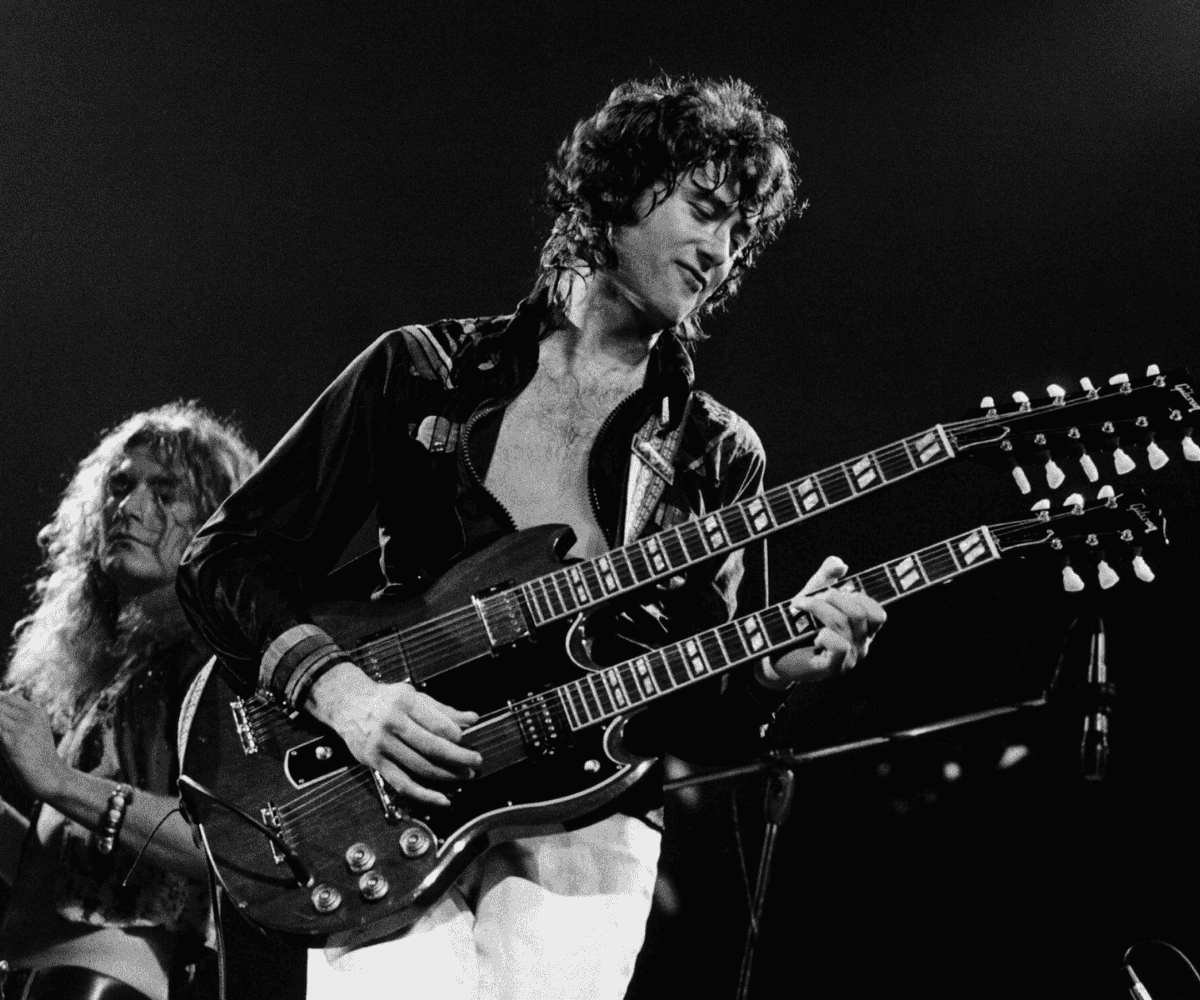
Rock and roll has always thrived on fearlessness. Stepping onto a stage may not seem like a dangerous act, but when you’re filling someone else’s shoes—especially in a legendary band—the weight can be overwhelming. Even the greatest musicians can be rattled the first time the spotlight hits. And believe it or not, even Jimmy Page wasn’t immune to that pressure.
Though he would later become the mysterious, masterful force behind Led Zeppelin, Page wasn’t always the confident figure fans remember. He had already built a solid reputation as a session guitarist, but nothing prepared him for what it meant to be onstage, improvising night after night with a band. Luckily, Page was never the kind of player to stick to the script. For him, the stage was a playground—a place to stretch beyond the limits of the studio and chase new sounds every night.
Classic tracks like “Whole Lotta Love” and “Dazed and Confused” already sounded revolutionary on record. But live? They became something else entirely. In concert, Page pushed those songs into uncharted territory—manipulating feedback, conjuring noise from his theremin, and diving deep into chaotic improvisation. That wild creativity became a signature of Zeppelin’s live experience.
But before the giant riffs and arena-shaking solos, Page had to prove himself in a very different band: The Yardbirds. And when he first joined, he wasn’t even holding a guitar. Instead, he was asked to play bass—a move that even rattled him.
“When I joined The Yardbirds on bass – coming in for Paul Samwell-Smith – that was serious boots to fill,” Page once said. “I was pretty much in awe of his bass playing.”
Paul Samwell-Smith wasn’t just a background player. His basslines were fast, aggressive, and way ahead of their time. He played riffs like a lead guitarist, added muscle to the mix, and brought fire to live records like Five Live Yardbirds. Trying to match that intensity was no easy task—even for someone as skilled as Jimmy Page.
Looking back, Samwell-Smith’s style might seem less groundbreaking today, but in the mid-’60s, it was daring. Playing chords on bass? Melodic riffs in the low end? It was bold, experimental, and unlike anything most rock bands had heard.
Page rose to the challenge, of course. But deep down, he always knew guitar was his true home. Once he stepped away from bass and returned to six strings, everything changed. With Led Zeppelin, he finally had full control over the sound. He wasn’t just a guitarist—he was the architect of every layer of the music. And alongside bassist John Paul Jones, who was no slouch himself, Page created a sound that redefined what rock could be.
What’s most surprising is how candid Page has been about his early nerves. It’s almost comforting to know that one of the greatest guitarists in history once felt overwhelmed—just like every beginner picking up an instrument for the first time.
Even legends have humble beginnings. And Jimmy Page’s story proves that greatness isn’t born overnight—it’s built, one uncertain step at a time.