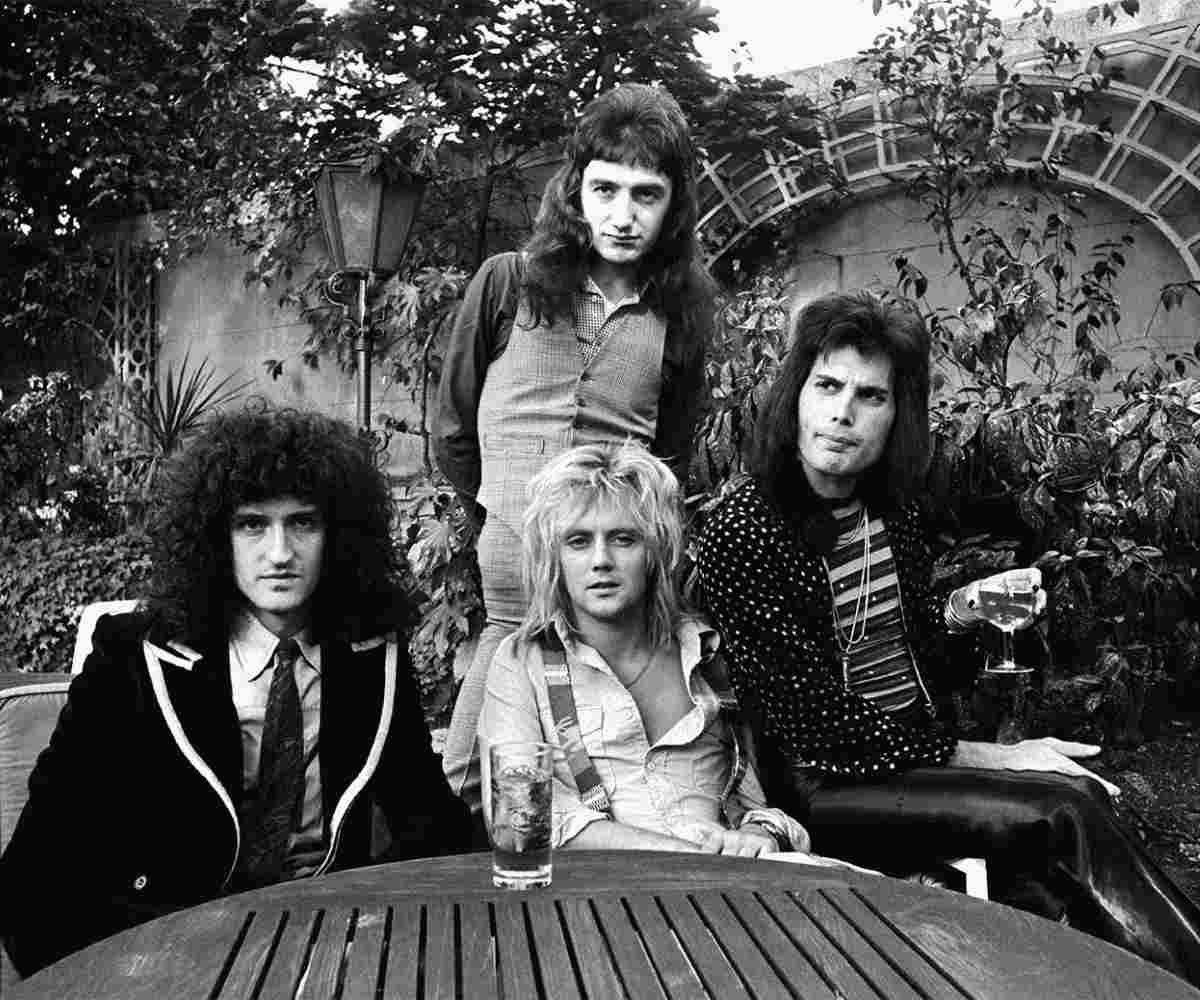
Before Bohemian Rhapsody became a thunderbolt across rock history, Queen were already chasing something wild. Guitarist Brian May points to two earlier tracks — “My Fairy King” and March of the Black Queen — as the hidden groundwork of the masterpiece to come. “People have a hard time understanding how unsurprising ‘Bohemian Rhapsody’ was to us,” May admitted, quietly laying bare how what seemed impossible was simply the next logical step for a band refusing limits.
⸻
For many, the six-minute suite that merged rock, opera and fantasy into one unforgettable song landed out of nowhere. But for Queen, it was far from spontaneous. Brian May recalled how earlier efforts like “My Fairy King” (from the debut album) and “March of the Black Queen” (on the second album) had already stretched the band’s ambitions into operatic territory. “Then you’ve got ‘March of the Black Queen’… which is enormously complicated,” May said. “It’s way more complicated than ‘Bohemian Rhapsody’. So it wasn’t that much of a surprise to us. It was just: ‘We’ll do another one of these things.’”
Those earlier tracks didn’t find the same fate as the 1975 smash. They hovered in Queen’s catalogue as experimental oddities while the band fought financial pressure and uncertain direction. By the time album A Night at the Opera was in motion, they were primed for their breakthrough. “If you look at the first album… you’ve got ‘My Fairy King’, which is very complex and goes all over the place,” May noted with a shrug.
With hindsight, you can trace the path: from ambitious labours to the seemingly effortless legend. The wild structure, vocal harmonies stacked like skyscrapers, and surreal guitar textures weren’t random—they were educated evolution. Yet to fans then, it still sounded like magic. May’s reflection stands as a rare moment of clarity: the masterpiece wasn’t a burst of inspiration—it was the result of years of pushing until the boundaries broke.
Through the legacy of “Bohemian Rhapsody”, Brian May’s modest confession reminds us: sometimes the most monumental works are built on the unpopular drafts nobody cared about. And for those ready to listen, the hidden tracks tell almost as much of the story as the hit itself.