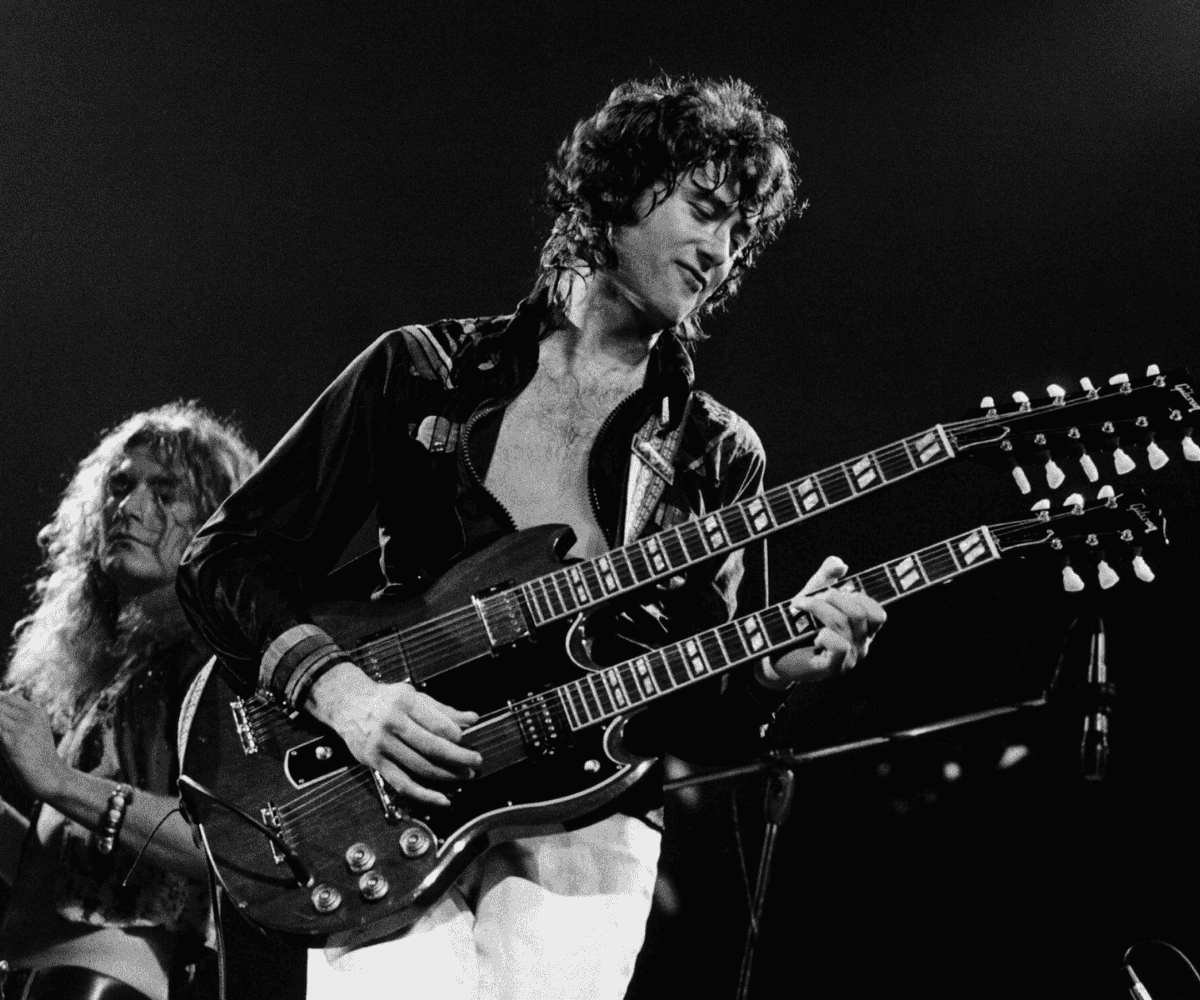
Everything Led Zeppelin touched felt like it came straight from Jimmy Page’s soul. Behind the guitar wizardry and mystique, Page was the architect—meticulously shaping every sound, layering every riff, and guarding the band’s legacy like a mad genius in a sonic laboratory. So when the band took their monumental live energy to the big screen with The Song Remains the Same, expectations couldn’t have been higher.
But not even Page—the man who could wrangle chaos into thunderous harmony—could escape the tangled ambitions of this cinematic experiment.
Onstage, Zeppelin were untouchable. Gods in human form. When they stretched a song like Dazed and Confused into 20-minute marathons, complete with howling theremins and hypnotic solos, it felt like time stopped. The live show was part séance, part riot. Naturally, fans wanted that magic on film. The band delivered—but also wandered into stranger, more self-indulgent territory.
The concert footage? Pure gold. Page’s guitar screamed. Bonham’s drums roared. Plant wailed like a Viking prophet. But the fantasy sequences—ah, that’s where things got weird.
Each member filmed surreal, often bizarre dreamlike vignettes. Robert Plant rode horses like a medieval knight. Page climbed mountain peaks, eyes blazing, holding a sword. Manager Peter Grant played a cigar-chomping gangster. These weren’t just music clips—they were ego-driven fever dreams. And Page, even at the time, wasn’t entirely sold on it.
Speaking years later, Page admitted how isolating and frustrating the process had been:
“When we did our fantasy sequences, nobody was allowed to be around the others while we did them, because they’d all take the piss. It’s a horrible medium to work in. It’s so boring! So slow!”
Film, unlike music, wasn’t fluid. It was rigid. Repetitive. Soul-sucking. Shoot, reshoot, shoot again. And for a band that thrived on instinct and electricity, that grind left a bitter taste.
The final cut still had magic—especially the live scenes—but some of the pomp felt more like a Spinal Tap prophecy than rock immortality. Unlike The Kids Are Alright by The Who, which embraced its absurdity, Zeppelin’s film leaned into grandeur, almost to the point of parody.
And yet, this oddball movie offered something no album could: a window into Zeppelin’s strange, mythical world. Even if parts of it were awkward, even if it didn’t fully land, it showed the band reaching—sometimes too far—for something more than just sound.
Afterward, Zeppelin went back to the studio, where their vision was clearer and less filtered. There, Page could control every frequency, every crescendo. And maybe that’s where Led Zeppelin always belonged—not in front of film lenses, but behind locked studio doors, building storms note by note.