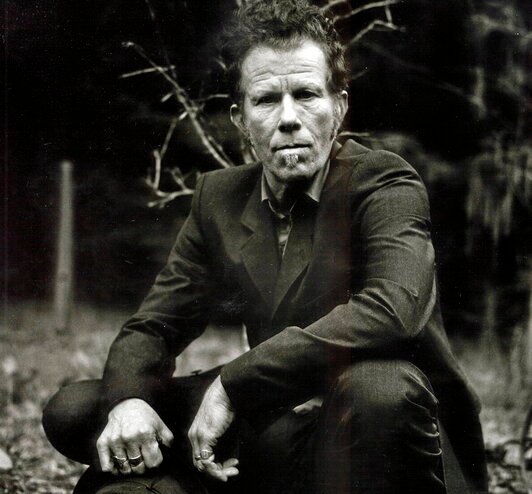
Tom Waits has never been shy about speaking his mind — especially when it comes to music that doesn’t resonate with him. The veteran singer, songwriter and distinctive voice of American rock has built a reputation on authenticity and unconventional artistry, but he hasn’t held back when dismissing certain bands he finds uninspiring.
Long before Tom Waits became known for gravel-soaked vocals, avant-garde arrangements and songs steeped in barroom atmospheres, he was a young artist navigating the early 1970s California music scene. While his own work drew on raw emotion and gritty storytelling, there was one contemporary group whose sound he found flat and unexciting.
Waits has been outspoken about his disdain for the Eagles, the country-rock outfit that dominated the airwaves in that era. The band, led by Don Henley and Glenn Frey, was known for smooth harmonies and radio-friendly melodies — qualities that helped make them one of the 1970s’ most successful groups. But for Waits, whose music was rooted in character studies and off-kilter storytelling, that polish was more than a stylistic difference — it was boredom.
“I don’t like The Eagles,” Waits once said bluntly. “They’re about as exciting as watching paint dry. Their albums are good for keeping the dust off your turntable, and that’s about all.”
His critique went beyond mere musical preference. Waits felt that the Eagles’ work lacked the rawness and emotional immediacy that he prized. He was particularly critical of their cover of his early song “Ol’ 55”, which appeared on their 1974 album On the Border. While the gesture of covering his song could have been seen as a compliment, Waits believed their version lost the rough edges and melancholy that made his original compelling.
Waits described the Eagles’ take on “Ol’ 55” as “a little antiseptic,” arguing that their polished delivery stripped the tune of its emotional grit.
For Waits, music wasn’t something to be smoothed over or radio-ready. His own career was built on embracing the ugly, the strange and the heartfelt — the kind of sounds you might hear in a smoke-filled bar at dawn rather than on mainstream playlists. That perspective informs both his own work and his criticism of artists who, in his view, aim for broad appeal at the expense of soul and character.
In the decades since, Waits has carved out a legacy as an icon of outsider art — a musician who refuses to be confined by commercial expectations and instead lets the music emerge from the textures and imperfections of real life.