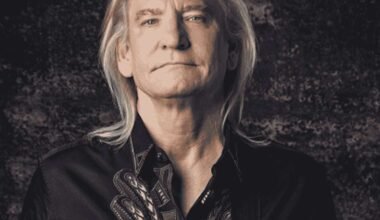

In a revealing new interview, Sammy Hagar — singer, guitarist and rock survivor — offers a deeply personal look back at his extraordinary life and career, from his early days in Montrose through his chart‑topping years with Van Halen, and into his broader worldview on everything from spirituality to extraterrestrial possibility.
Hagar, now in his 70s, has lived a life many rock fans can only imagine: gritty club shows, arena‑filling glory, hard‑won wisdom, and a willingness to speak candidly about both triumph and turmoil along the way.
Hagar first broke through as the frontman for Montrose, a band formed in the early 1970s that fused hard rock grit with fiery musicianship. The self‑titled Montrose debut became one of the most beloved American hard‑rock albums of the decade, inspiring future heavyweights and earning Hagar his first taste of real musical acclaim.
Looking back, Hagar describes that era as formative and fearless — a time when he honed his voice, stage presence and songwriting chops. His swagger wasn’t just style; it was survival in a hard‑charging industry that demanded both personality and performance.
When Hagar joined Van Halen in 1985 — replacing original frontman David Lee Roth — fans were split, critics were skeptical, and expectations were colossal. What followed was arguably the most commercially successful period in the band’s history, with chart‑toppers like Why Can’t This Be Love, Dreams, When It’s Love and Right Now dominating MTV and rock radio.
For Hagar, the transition wasn’t simple. “There’s pressure, of course,” he told the interviewer. “You step into a band with that kind of reputation and legacy — you’ve got to bring everything you’ve got.” And that’s exactly what he did: five platinum albums, global tours and thousands of sold‑out shows later, the world had embraced what became known as the “Van Hagar” era.
But success didn’t erase tension. Hagar was candid about the strain that came with joining a band so deeply associated with another iconic singer (Roth), and how creative disagreements, personal differences and the perpetual pressure to top yourself can weigh on any group — even at the top of the charts.
Still, he called the time a blast, full of energy and unforgettable moments, and said he wouldn’t trade it for anything.
After parting ways with Van Halen in the late 1990s, Hagar continued to evolve. He formed Chickenfoot with guitar hero Joe Satriani and other rock vets, released solo material, and built an impressive business presence — including his Cabo Wabo tequila brand and his music venues that became destinations in their own right.
“That chapter opened a lot of doors,” Hagar said, reflecting on his ability to keep creating and reinventing. “If you just ride the coattails of past success, you fade. You’ve got to keep pushing.”
Beyond music, Hagar’s interview ventured into philosophical territory — including thoughts on spirituality, purpose, and the vast mysteries of existence. When asked about the possibility of life beyond Earth, he didn’t shy away from imagination: “There’s a whole universe out there… I think it’d be arrogant to believe we’re the only ones.” His take wasn’t wild speculation, but rather a grounded curiosity: a belief that exploration — scientific and personal — keeps life interesting.
Similarly, Hagar spoke about the importance of gratitude, resilience and staying present. “If you wake up and you’re thankful for where you are — even with the rough stuff — that’s winning,” he said. It’s a perspective shaped by years of highs and lows alike.
For many fans, the interview reinforces why Hagar remains such a compelling figure in rock history. He’s not just known for anthems, belting vocals or arena stages — he’s known for authenticity. There’s no mask, no manufactured persona; what you hear in his music aligns with what you get in his reflections: real thoughts, real stories, real life.
From the sweat of clubs in the ’70s to the lights of stadium tours, from chart domination to tequila distilleries, Hagar’s story isn’t just one of success — it’s a story of evolution, resilience, and a genuine love for life in all its complexity.
At the close of the conversation, Hagar’s message was simple but powerful: keep rolling with the punches, embrace the unknown, and never lose sight of the joy that started you on the journey in the first place.