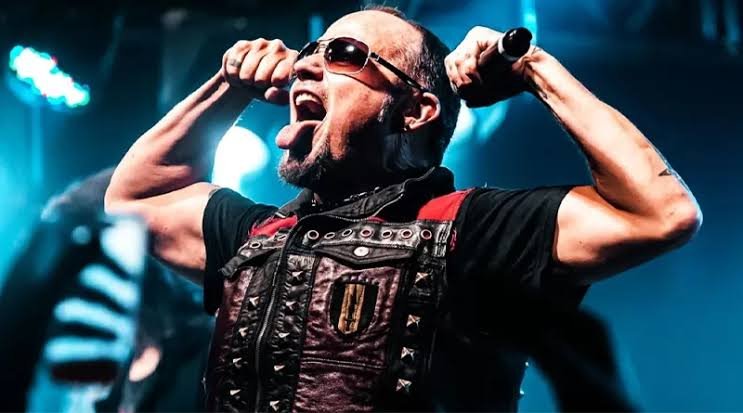
Tim “Ripper” Owens is not pretending the wounds around his Judas Priest years are healed. In a new interview, the former Priest frontman said he regrets the way the band has effectively wiped his era from the mainstream story of the group, even while insisting he loved the time he spent in the band. Owens fronted Judas Priest from 1996 to 2003, appearing on Jugulator (1997) and Demolition (2001) before Rob Halford returned. Those two albums are now the only part of Priest’s catalog that remain absent from major streaming services.
Owens’ central complaint is simple: it makes no sense to bury records that fans could still discover and enjoy. He said the band has chosen to “erase” the albums, and argued that the decision leaves money and visibility on the table because people who want to hear those songs have to go hunting for them instead of finding them on Spotify or similar platforms. He also pointed out that Priest’s recent $500 box set did include both records, which only sharpens the contradiction in his eyes: if the albums can be packaged for collectors, why not make them available to the wider audience?
The part of Owens’ comments that is likely to set off the most argument is his suggestion that there may be more going on than simple business strategy. He told Whiplash that the band’s decision feels like it might be tied to discomfort around the material itself, and he used the phrase “wokeness in metal” as part of his explanation. He later said he did not want to hurt anyone’s feelings, but he clearly believes the choice reflects something deeper than just a catalog-management decision.
Even so, Owens did not sound bitter about the people. Quite the opposite. He called his former bandmates “fantastic guys,” said he had “the time of my life,” and described Judas Priest as his “college,” meaning the years with the band functioned as a life-changing education. He also stressed that the personal relationships were good and that the band members were friends, even if the business side has left him feeling ignored and erased.
That tension — gratitude mixed with frustration — is what makes Owens’ remarks land so hard. He understands why Halford’s return eventually pushed him out, and he even said he accepted the dismissal as “a business.” But he is still clearly bothered that the years he spent helping carry Judas Priest through a difficult era are treated as if they barely happened. His point is not that he should have stayed forever; it is that the records, the shows, and the work should still be acknowledged.
Owens also widened the argument by comparing Judas Priest to Iron Maiden, saying Maiden does a better job of handling legacy material and lineup history. He argued that Priest’s management choices have hurt the band’s public presence, while Maiden’s approach has helped keep their catalog more visible and their live draw stronger. It is a sharp criticism, and one that turns this from a personal grievance into a broader shot at how one of metal’s biggest bands handles its own history.
For now, Owens seems content to let his solo shows do the talking. He said the songs from Jugulator and Demolition go over well live, and that fans who want to hear them can come to his own gigs. That is the irony at the heart of the story: Judas Priest may have pushed that era to the margins, but Owens is using the setlist itself as proof that the music still matters.