
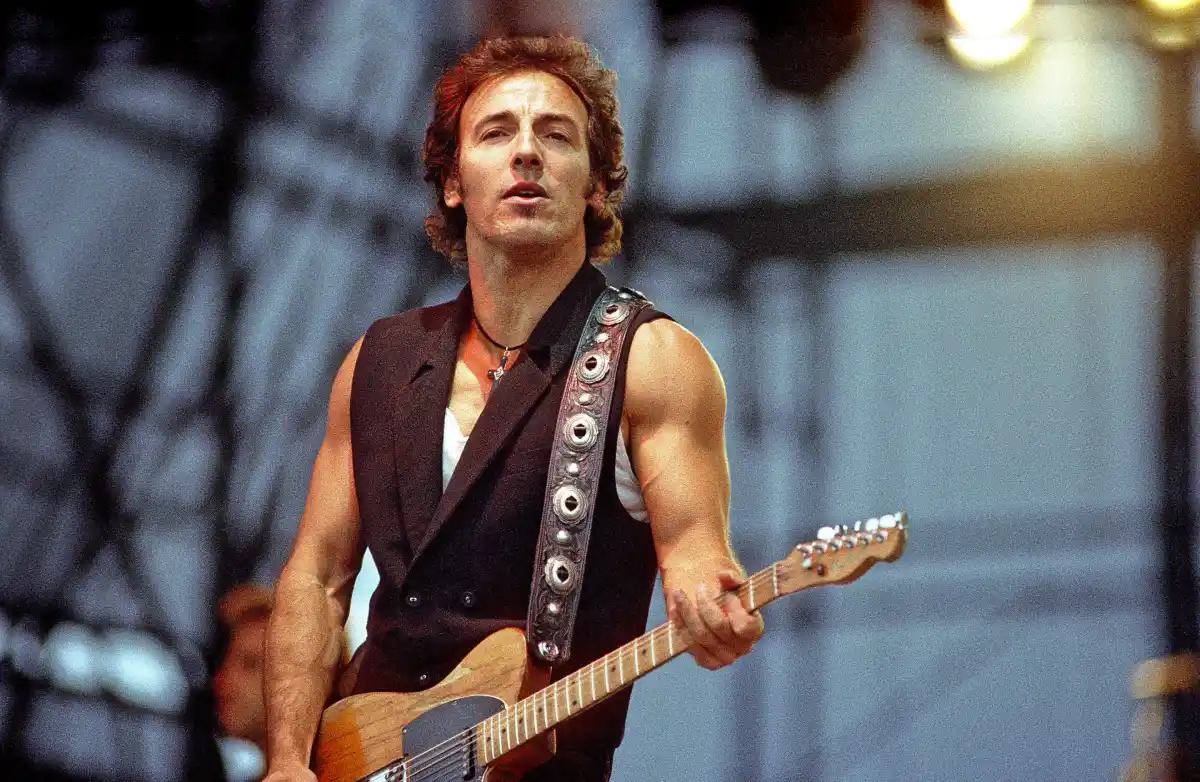
When Bruce Springsteen took on Bob Dylan’s ‘Knockin’ on Heaven’s Door’, the result wasn’t just a cover—it was a revelation. Even Dylan himself admitted it took him by surprise.
“He did that song like the record, something I myself have never tried,” Dylan said, reflecting on Springsteen’s performance. “I never even thought it was worth it. Maybe I didn’t have the manpower in the band, I don’t know. To tell you the truth, I’d forgotten how the song ought to go.”
Dylan’s praise touched on something deeper—what makes Springsteen so compelling to so many. His music has the rare ability to stir memory and emotion, a transportive power that few artists possess.
“I’m not a nostalgic person,” Dylan continued, “but for a second there it all came back—Peckinpah, Slim Pickens, Katy Jurado, James Coburn, the dusty lawless streets of Durango, my first wife, my kids when they were small. It was that powerful.”
That power—tapping into human experience and memory—is at the heart of Springsteen’s songwriting. Deeply inspired by Dylan in his early years, Springsteen took the lessons of lyrical honesty and emotional truth and built a sound that’s as grounded in personal struggle as it is in working-class dreams.
From small-town stories to grand political statements, Springsteen carved out a space in music where emotion and conscience collide. His songs echo with the hopes and heartbreaks of real people—and that resonance still connects decades later.
But not everyone in rock shares that admiration. Despite his influence and widespread acclaim, Springsteen’s music hasn’t landed with every artist. One surprising critic? Keith Richards of The Rolling Stones.
“Bruce, that’s a tough one because I like the guy,” Richards once said. “But, oh, the music, that apparently is where the problem lies.” He added, “I’m the toughest taskmaster of all time. I’m going to annoy a lot of people… Too contrived for me. Too overblown. These are just my opinions.”
Richards’ blunt take might seem unexpected, especially considering Springsteen has shared the stage with the Stones more than once. But Richards has always valued simplicity in his approach—riff-driven, raw, and straight to the point. His music is built for feeling good, not overthinking.
So while Springsteen crafts grand narratives with poetic ambition, Richards prefers tunes you can dance to. In a way, they represent two sides of rock music: one grounded in introspection, the other in instinct.
Even if they differ in method and message, both artists have shaped the sound of generations. Whether you’re drawn to Springsteen’s depth or Richards’ grit, it’s clear both have left a permanent mark on music history.