Every aspiring guitarist dreams of the moment they can light up a stage with a blistering solo. The adrenaline rush of a crowd reacting to a roaring amp and fingers flying across the fretboard is unmatched. But for all the showmanship and technical prowess that comes with lead guitar, Angus Young of AC/DC was never under any illusion about who the real engine behind his band was.
AC/DC never built their sound on complexity. They drew their earliest inspirations from the primal energy of pioneers like Chuck Berry and Little Richard—artists who proved that attitude and a handful of chords were enough to blow the roof off. Tracks like Highway to Hell weren’t intricate, but they didn’t need to be.
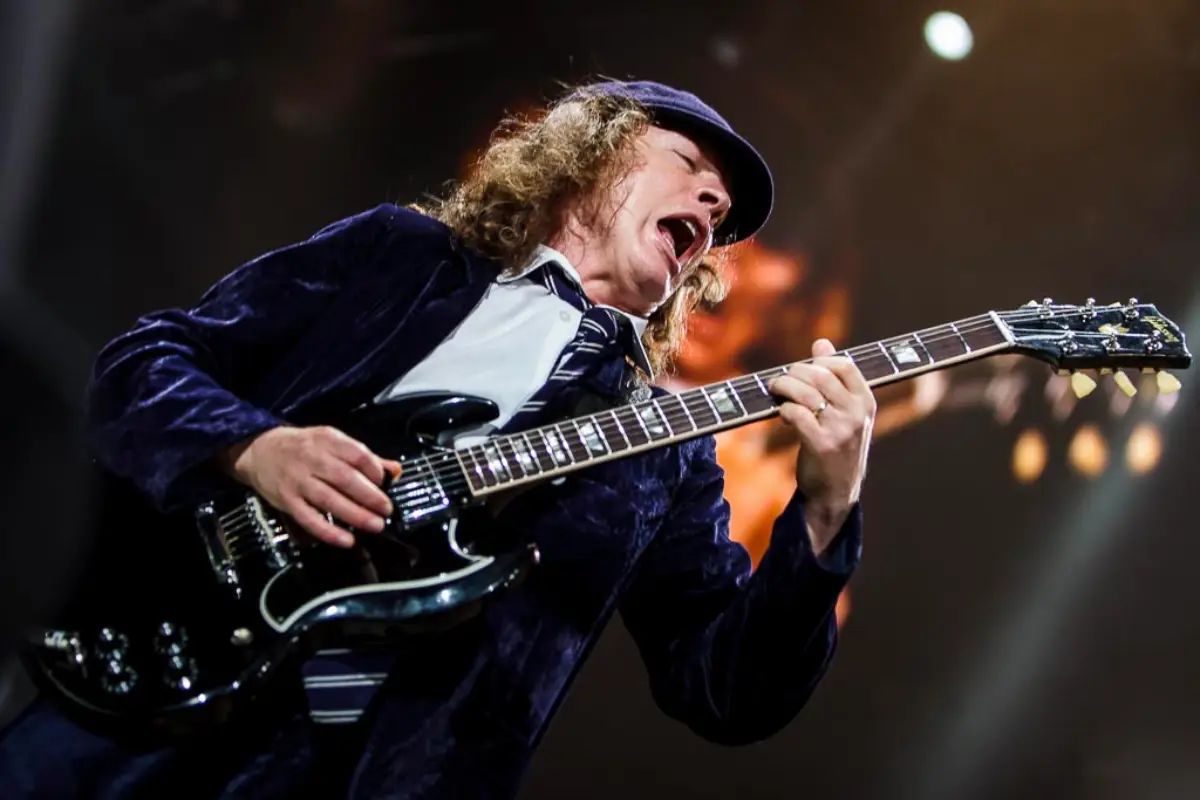
What made AC/DC truly electric wasn’t just the riffage or the solos—it was the chemistry. And at the heart of that was the interplay between Angus and his older brother Malcolm Young. While Angus became iconic for his schoolboy outfit and high-octane stage antics—duckwalking, rolling on the floor, practically combusting mid-solo—Malcolm stood planted at the back, silently anchoring the entire operation.
Malcolm didn’t need the spotlight. With iron-fisted rhythm playing, he turned downstrokes into cannon blasts. By the end of a show, his guitar picks were often shredded from sheer force. AC/DC didn’t rely on layers of effects or distortion—what you heard was power, precision, and groove, and Malcolm was the one driving it.
Angus has never shied away from crediting his brother. “People like Malcolm—they’re all doing something better than the rest of us,” he once said. While he acknowledged the influence of guitar gods like Eric Clapton and Eddie Van Halen, it was the unsung rhythm work that truly impressed him. “Malcolm is a big inspiration to me; he keeps me on my feet.”
That kind of rhythm playing isn’t just foundational—it’s transformational. Legends like John Lennon and Keith Richards didn’t need to shred to make their bands swing. The way Lennon locked in with Ringo or how Richards meshed with Charlie Watts was enough to push their music into new territory.
So, while lead guitarists might bathe in the spotlight, rhythm players carry the pulse. Without them, the flashier players fall flat. As Angus proved night after night, it’s not just about solos—it’s about the groove, the grit, and the guy in the shadows who makes the whole thing work.