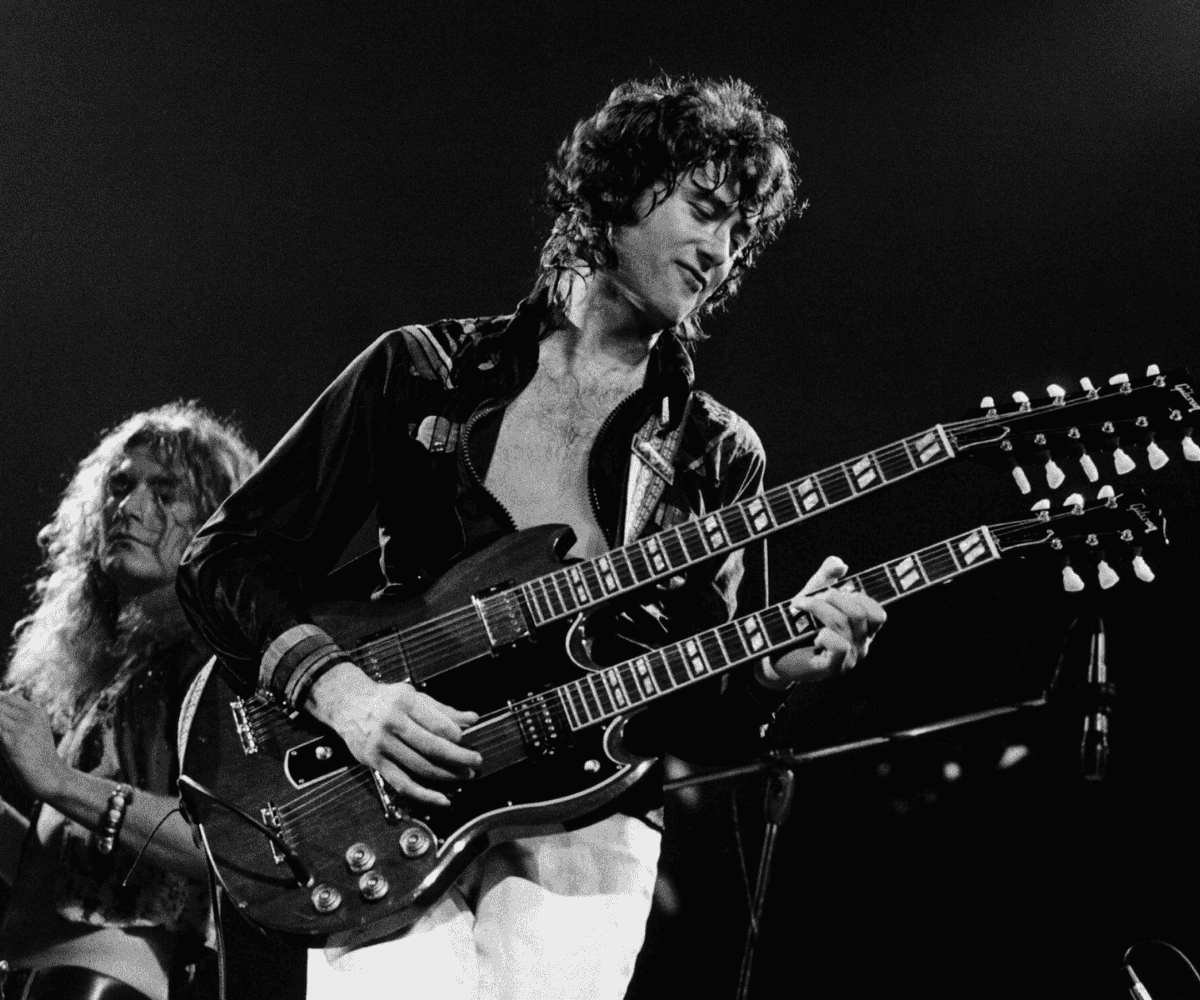
Jimmy Page never responded well to creative restrictions. While Led Zeppelin operated under the guise of a group dynamic, it was no secret who had the final say—Page’s vision always shaped the direction of the band. But before “Dazed and Confused” was his weapon of choice, Page found himself stuck in a frustrating creative corner during his time with The Yardbirds.
Coming from a successful run as a session musician, Page was eager to leave behind the rigid structures of hired work. He craved an environment where experimentation wasn’t just allowed—it was the goal. Initially, The Yardbirds seemed like the ideal setting. With blues royalty like Jeff Beck and a legacy shaped by Eric Clapton, the band had the talent and history to support something new and bold.
But reality clashed with expectation. Despite a handful of adventurous tracks like “Shapes of Things,” Page found himself at odds with management and record executives who were more interested in radio-friendly hits than sonic exploration. The Yardbirds had already carved out a distinct blues-based identity, but management began pushing for pop-driven singles that diluted the band’s essence.
This shift left Page disillusioned. Reflecting on the experience in Guitar Player, he recalled his frustration over being associated with songs like “Ten Little Indians,” lamenting, “Bit by bit, we started to record tracks which we should never have done. The Yardbirds had done all of this magical stuff, and then to do things like ‘Ten Little Indians,’ it was just absolutely wrong. I’m just really annoyed that they’re even out there.”
With Led Zeppelin, Page finally got the freedom he had been chasing. While they also reinterpreted traditional blues, the results were thunderous and urgent—tracks like “Communication Breakdown” and “Good Times Bad Times” sounded like the future crashing through the past. It wasn’t just blues-rock anymore; it was a new language built on distortion, fury, and raw chemistry.
Though Page never embraced the “metal” label, Zeppelin gave him the platform to fully articulate his ideas—far removed from the polished compromises he once had to make. The days of playing along to manufactured singles were behind him. Now, he was breaking new ground—and taking the rest of rock music with him.