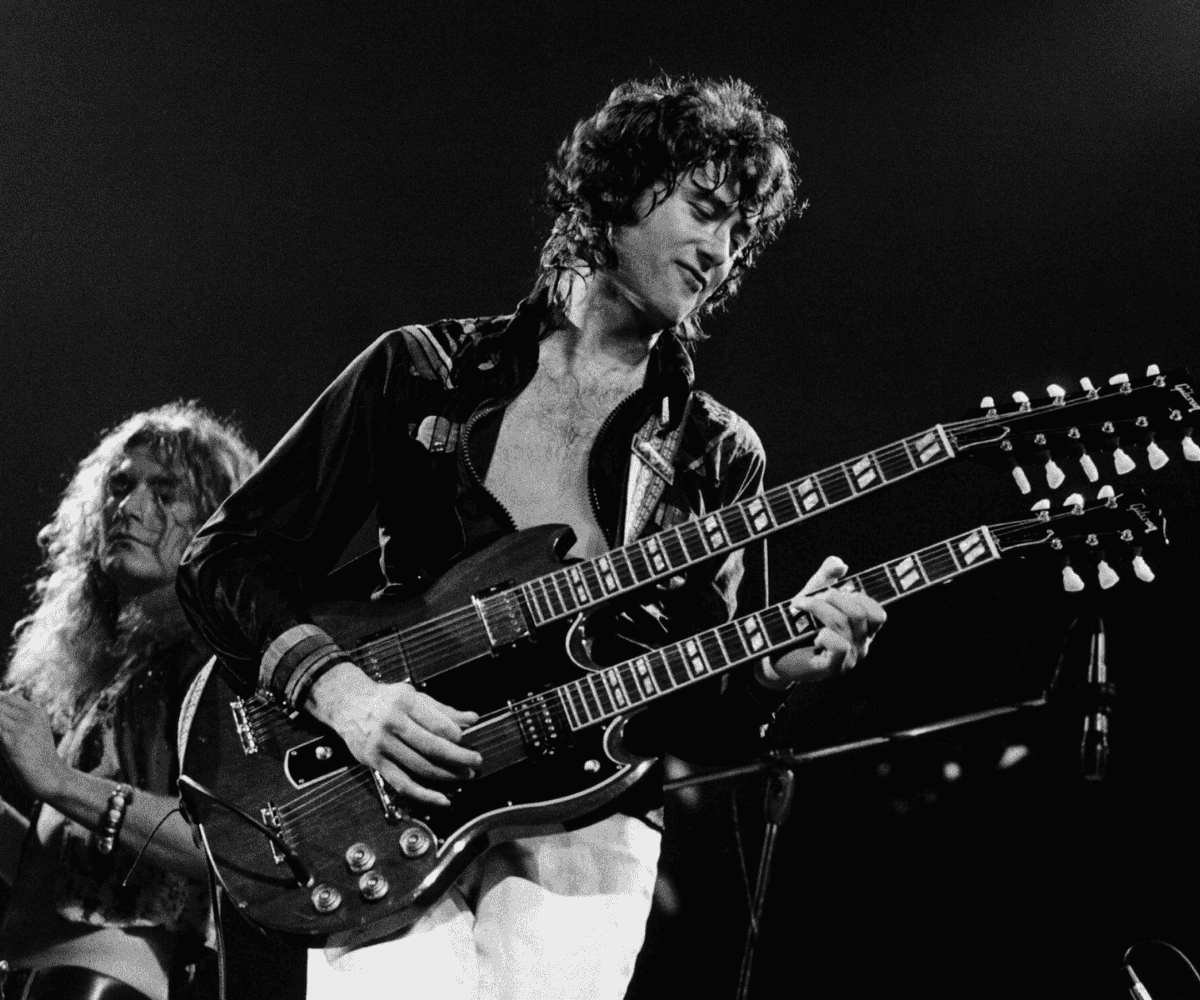
By the time the 1970s were drawing to a close, Led Zeppelin had evolved far beyond their blues-rock roots. What started as Jimmy Page’s last-minute project to fulfill a touring commitment as a Yardbirds successor turned into one of rock’s most seismic forces. Over a decade, Zeppelin helped define hard rock and set the stage for heavy metal. But behind the thunderous riffs and sold-out arenas, the band was slowly unraveling.
The late-’70s weren’t kind to the group. Touring had worn John Paul Jones to the brink of quitting before Led Zeppelin IV. Robert Plant was hit by personal tragedy in 1977 with the death of his son Karac, pulling him away from the limelight. Meanwhile, Page had fallen into a dangerous spiral with heroin, and John Bonham’s battles with alcohol were becoming unmanageable. Yet, despite punk rock and new wave threatening to dethrone them, Zeppelin still stood tall as the world’s most dominant rock band by 1978.
When they entered ABBA’s Polar Studios in Stockholm to begin work on In Through the Out Door, internal fractures became impossible to ignore. Two factions emerged: Plant and Jones, sober and determined, versus Bonham and Page, both weighed down by addiction. As Page’s creative grip loosened, a new dynamic took shape—Jones and Plant stepped into the driver’s seat, taking the band’s sound in a different direction.
For the first time in the band’s history, Page was absent from the writing credits on several tracks. Jones, who had rarely taken the lead in composition, brought in fully-formed songs. “He had verses, choruses, bridges—everything,” Page told The Guardian in 2015. “It was a revelation. He hadn’t done that before.”
Despite Jones’ creative resurgence, Page was conflicted about the end result. “We thought In Through the Out Door was a bit too mellow,” he admitted in a 1993 Guitar World interview. One track in particular, ‘All My Love’, drew his ire. “I could just picture fans waving their arms in the air, and I thought, ‘That’s not us.’”
Page and Bonham began talking about making a return to their heavier roots, aiming for a more aggressive follow-up. In fact, Page and Plant even checked out a Damned show to absorb the energy of punk and see where they might fit in the evolving musical landscape.
But those plans would never materialize. Bonham’s untimely death in 1980 brought an abrupt and tragic end to Led Zeppelin. In Through the Out Door became their final studio statement—a record that divided the band internally, but also showed their capacity for reinvention.
Though Page might’ve viewed it as too soft, for many fans, the album remains a poignant and bold farewell from a band that never stopped evolving.