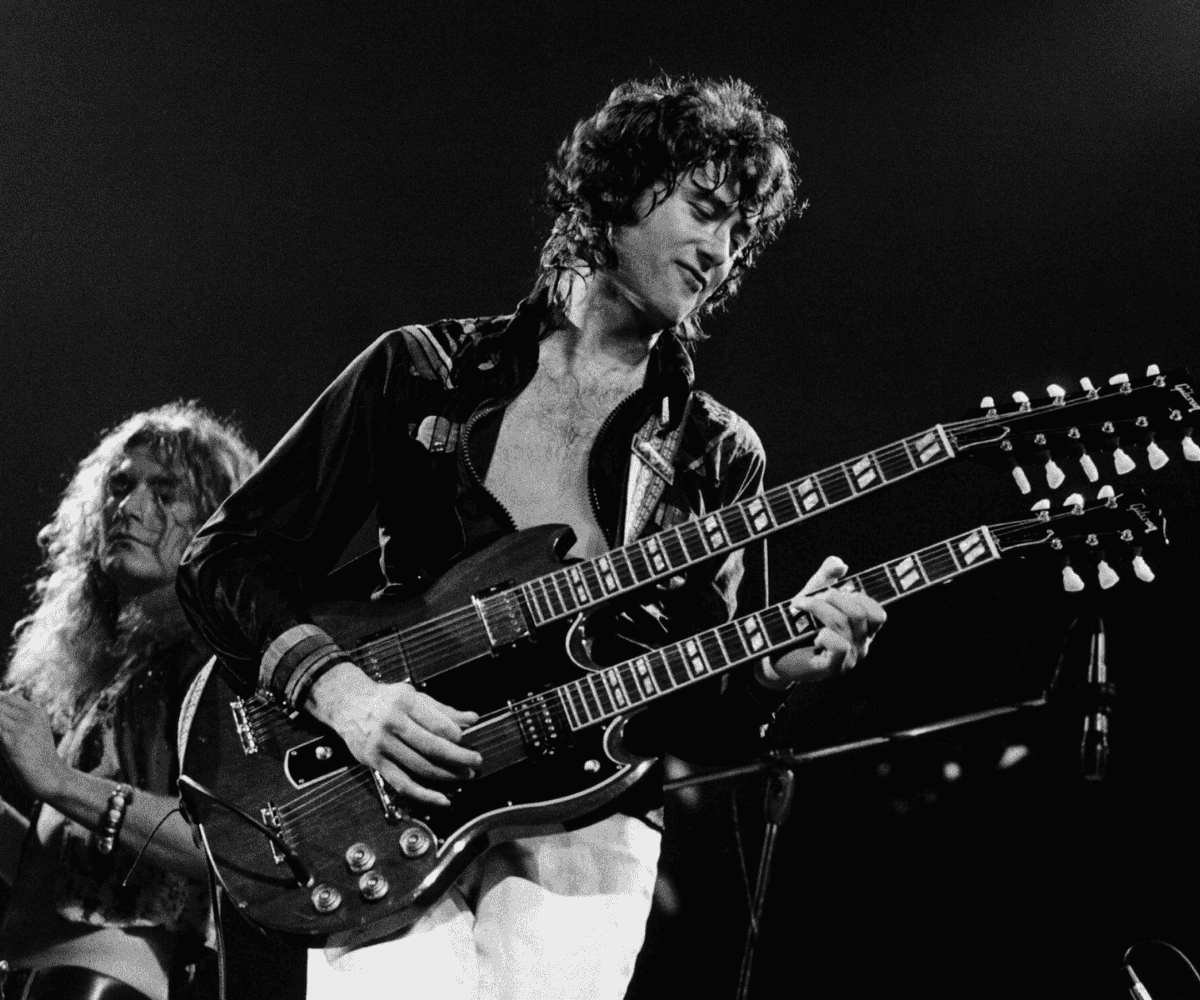
Led Zeppelin may be remembered for their wild backstage antics and seductive, innuendo-laced lyrics, but not everything they created was built on raw power and hedonism. Beneath the thundering riffs and primal screams, the band also had a tender, introspective side—one they weren’t afraid to show when the moment called for it.
Though songwriting was usually a shared task between vocalist Robert Plant and guitarist Jimmy Page, one of the band’s most heartfelt ballads came entirely from Plant himself. On their 1969 album Led Zeppelin II, nestled right after the raunchy blues of “The Lemon Song,” sits a track unlike any other they had recorded at that point: “Thank You.”
It’s not just a love song—it’s a love letter. And it’s deeply personal.
Jimmy Page, knowing the sincerity behind the message, stepped aside completely, leaving the lyrics in Plant’s hands. That decision wasn’t just artistic—it was respectful. The song was Plant’s dedication to his wife, Maureen Wilson, and Page felt it would be inappropriate to interfere with something so intimate.
The result is one of the most emotionally honest pieces in Led Zeppelin’s entire catalog.
With gentle organ flourishes, acoustic guitars, and a voice full of warmth, Plant opens the track with a declaration of devotion:
“If the sun refused to shine, I would still be loving you. When mountains crumble to the sea, there will still be you and me.”
These words didn’t come from a desire to impress or seduce—they came from a place of real connection, from a man trying to capture love in its truest form.
Even as he nods to the heartache of the past — “Little drops of rain whisper of the pain, tears of loves lost in the days gone by” — Plant ultimately paints a picture of lasting commitment. And while their marriage ended in 1983, after 15 years, the song remains a lasting artifact of their time together.
In contrast to the band’s heavier and more provocative tracks, “Thank You” is soft, pure, and unabashedly romantic. There’s no bravado here—no coded language or suggestive metaphors. Just a simple, beautiful message: love, in its rawest form, deserves a spotlight too.