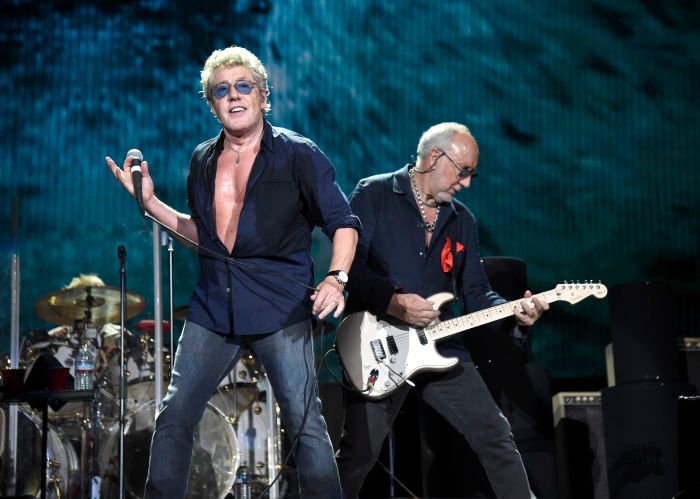
For a band as legendary as The Who, it might come as a surprise that Pete Townshend and Roger Daltrey — two of the band’s defining figures — only wrote one song together in their entire career. That rare co-written track is 1965’s “Anyway, Anyhow, Anywhere,” a single that helped define The Who’s early sound and remains a milestone in their catalog.
Townshend and Daltrey’s partnership was never simply harmonious. Despite working together for almost six decades, their personal and creative relationship fluctuated between mutual respect and outright tension. Townshend was the band’s primary songwriter and ideological force, while Daltrey — as frontman and charismatic singer — often commanded the stage and attention the band received. These differences sometimes created friction, yet also fueled the creative energy that made The Who so explosive in their early years.
In the band’s earliest phase, their dynamic was particularly strained: Townshend was focused on establishing the band’s identity through his songwriting, while Daltrey, eager to lead, pushed back on how that music was shaped and presented. They argued, debated and competed, creating a push-pull that was as volatile as it was productive.
Released in May 1965, “Anyway, Anyhow, Anywhere” was The Who’s second single, following their 1964 debut “I Can’t Explain.” While Townshend wrote the first single entirely on his own, this follow-up marked the only time Townshend and Daltrey share official songwriting credit.
Townshend later explained the unusual credit in the liner notes to the band’s 1971 compilation Meaty, Beaty, Big and Bouncy. According to Townshend, he conceived the track’s title while listening to a Charlie Parker record, and the song’s driving energy — with early recorded guitar feedback and call-and-response vocals — was emblematic of The Who’s raw, rebellious sound at the time.
But it was Daltrey’s contribution to the final arrangement and his insistence on toughening up lyrics that earned him half the credit. Townshend said Daltrey “changes quite a few words himself to toughen the song up to suit his temperament,” and described the track as “the most excitingly pig-headed of our songs” — all qualities that helped it stand out among mid-60s British rock singles.
Musically, the song featured some of the earliest guitar feedback on record — a technique that would later become part of The Who’s signature sound. This experimentation helped The Who distinguish themselves from their peers and foreshadowed the explosive live performances that would define their concerts.
Despite this rare co-credit, Townshend and Daltrey never wrote another Who song together. Townshend continued to serve as the band’s main creative engine, writing virtually all of the band’s material — from early singles through rock opera classics like Tommy and Who’s Next — while Daltrey focused on interpreting and performing Townshend’s work.
That doesn’t mean Daltrey never wrote songs at all. He penned a handful of deep cuts for The Who, including “See My Way” (A Quick One While He’s Away), “Here for More” (the B-side to The Seeker) and “Early Morning Cold Taxi,” an outtake from The Who Sell Out later featured on Thirty Years of Maximum R&B.
The infrequent co-writing credit underscores a fundamental truth about The Who’s creative dynamic: Townshend’s songwriting and conceptual vision were largely independent, while Daltrey’s role was to bring those songs to life with his voice and stage presence. It’s a partnership built on tension, differing strengths and mutual reliance — even if their writing credits suggest something far simpler.
Today, “Anyway, Anyhow, Anywhere” stands as a rare example of true collaboration between two rock legends — and a snapshot of The Who at a moment when they were discovering both their sound and their internal chemistry. Beyond that, it highlights the unpredictable balance between individuality and collaboration that lies at the heart of many great bands.